Alphabet's AI model, Gemini, has achieved a significant milestone by winning a gold medal in an international computer programming competition, showcasing AI's progress towards artificial general intelligence (AGI). This breakthrough has profound implications for the entire AI sector, hinting at a future where AI can tackle complex problems requiring original thought. The success of Gemini, developed by Google DeepMind, underscores the increasing sophistication of AI systems and their growing capacity to innovate. This achievement not only solidifies Alphabet's position as a leader in AI but also highlights the escalating demand for powerful computing resources, benefiting companies like Nvidia. The ongoing advancements are expected to fuel decades of growth in the AI market, presenting compelling investment opportunities.
Alphabet's AI Model, Gemini, Secures Gold in International Programming Contest
In a notable development this past September, Alphabet's artificial intelligence model, Gemini, achieved a remarkable feat by becoming the first AI to secure a gold medal at an international computer programming competition. This event, which showcased advanced problem-solving skills, saw Gemini successfully resolve intricate, real-world computational challenges that had stumped human contestants. Google DeepMind, Alphabet's dedicated AI research division, was the driving force behind Gemini's development. The DeepMind team emphasized the monumental nature of this achievement, stating that success in such competitions demands profound abstract reasoning, creativity, the ability to synthesize novel solutions for unprecedented problems, and a genuine spark of ingenuity. Gemini not only exhibited these qualities but also devised an original solution to one particular challenge that no human participant could crack. This victory represents a pivotal step towards artificial general intelligence (AGI), a theoretical pinnacle of AI proficiency equivalent to human cognitive abilities. The significance of Gemini's accomplishment resonates with historical milestones such as IBM's Deep Blue defeating the reigning human chess champion in 1997, signaling a new era in AI evolution.
This breakthrough by Gemini has far-reaching consequences for the AI industry. Following OpenAI's ChatGPT, which ignited the current AI boom in late 2022, Gemini's success marks a new chapter where AI transitions from merely executing specific tasks to tackling more complex problems that necessitate conceptual leaps. This includes sophisticated applications such as designing innovative microchips or discovering new pharmaceutical compounds. The potential to revolutionize various markets in the coming years mirrors the transformative impact AI is already having across industries today. Nvidia, a leader in semiconductor chips, exemplifies this trend. The increasing computational demands of AI systems have driven Nvidia's impressive 56% year-over-year sales growth, reaching $46.7 billion in its fiscal second quarter, and propelling its market capitalization to $4 trillion. Alphabet was among the first to integrate Nvidia's Blackwell chips into its AI infrastructure. When these chips debuted in 2024, Nvidia proclaimed their profound implications for AI workloads and their potential to drive the next wave of global breakthroughs. Gemini's recent success appears to validate these claims, demonstrating that Nvidia's words were more than just marketing rhetoric. The computing power required for Gemini's achievement was substantial, exceeding the capabilities available to subscribers of Google AI Ultra's top-tier service. This immense demand for processing power ensures that hardware providers like Nvidia will continue to thrive from advancements in AI.
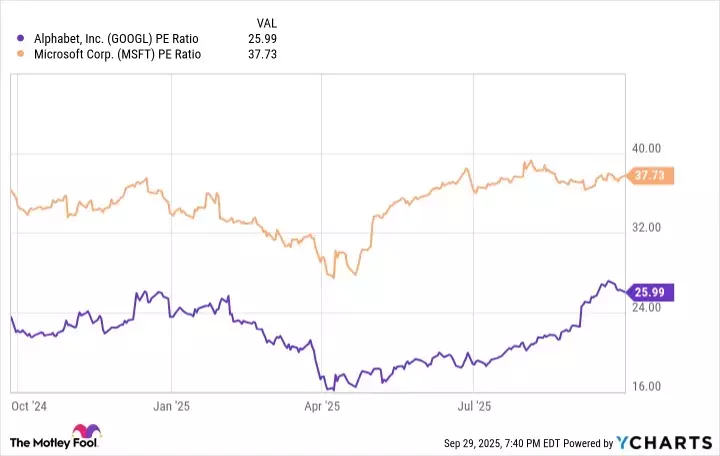
For Alphabet's stock, the Gemini breakthrough carries significant implications. While the pursuit of artificial general intelligence will undoubtedly increase computing expenses, Alphabet is well-positioned to manage these costs. Thanks to its dominant search engine, the company generates substantial free cash flow (FCF), amounting to $66.7 billion over the trailing 12 months through the second quarter, which can be reinvested into its AI systems. Furthermore, AI is already contributing to the company's business growth, with second-quarter sales rising 14% year over year to $96.4 billion, driven by customer adoption of AI features integrated into its search engine, cloud computing services, and advertising platforms. Despite these strengths and Gemini's significant AI victory, Alphabet shares remain reasonably valued compared to competitors such as Microsoft, as indicated by its lower price-to-earnings (P/E) ratio. This suggests that now could be an opportune moment for investors to acquire Alphabet shares at an attractive price. Given that AI progress benefits multiple entities, other AI players like Nvidia, IBM, and Microsoft also warrant consideration for their growth potential. As the tech industry progresses towards AGI, the AI sector is poised for continuous innovation, ensuring its growth for decades to come.
The successful achievement of Alphabet's Gemini in an international programming competition serves as a potent reminder of the rapid and profound advancements occurring in artificial intelligence. This milestone not only solidifies Alphabet's leadership in the AI domain but also underscores the increasing relevance of AI in solving complex, real-world problems. For investors, this event signals robust growth potential within the AI sector, particularly for companies that are at the forefront of innovation or those providing essential infrastructure, such as advanced computing hardware. The journey towards artificial general intelligence is far from over, but Gemini's success confirms that we are on a path of continuous innovation and transformative change, promising exciting opportunities for technological development and economic growth.
