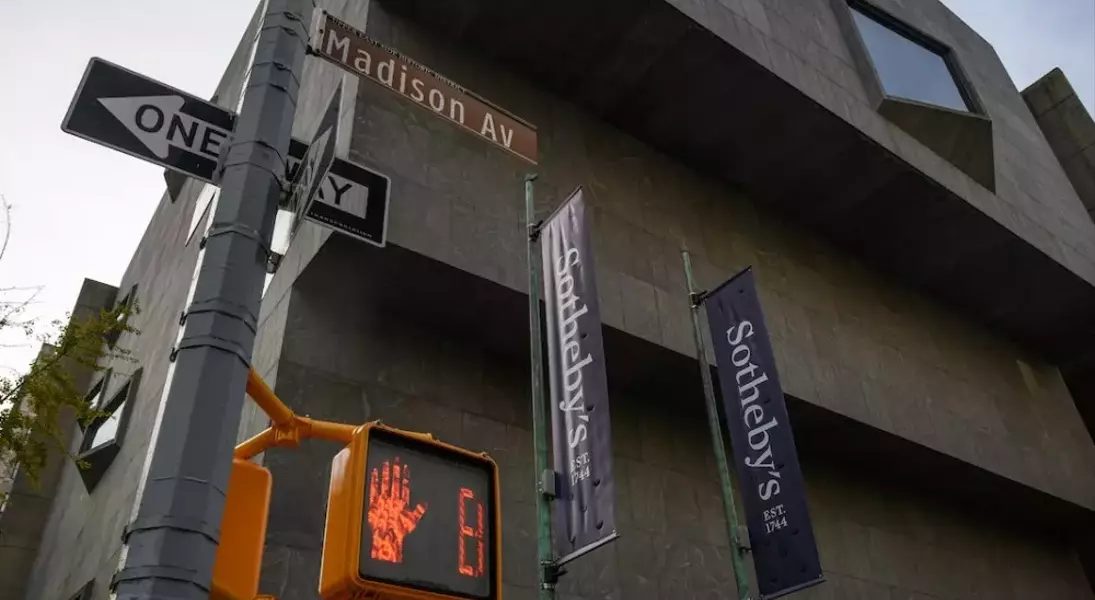
In a significant development within the art world, a collector has initiated a lawsuit against Sotheby's, one of the most prominent auction houses globally. The dispute centers on a painting attributed to Amedeo Modigliani, whose authenticity has become a contentious issue. This legal challenge underscores the ongoing complexities and risks inherent in the high-stakes art market, particularly concerning works by artists frequently targeted by forgers. The case highlights the critical role of provenance and expert assessment in establishing the value and legitimacy of artistic masterpieces.
Dispute Arises Over Modigliani Portrait's Authenticity and Resale Agreement
In November 2025, amidst Sotheby's preparations for its high-profile New York art sales featuring works by Frida Kahlo and Gustav Klimt, a legal challenge emerged. Charles C. Cahn, Jr., a collector, filed a lawsuit against Sotheby's in the Supreme Court of the State of New York. Cahn alleges that the esteemed auction house refused to resell his Amedeo Modigliani painting, 'Portrait de Leopold Zborowski,' which he acquired for $1.55 million in 2003.
The core of the dispute revolves around Sotheby's raising authenticity concerns regarding the 1917 portrait. Despite these doubts, Cahn's legal team presented an agreement from 2016 between Cahn and Sotheby's. This document purportedly outlined terms for the resolution of an unspecified prior matter and granted Cahn the option to resell the painting through Sotheby's within a 15-year window. The agreement stipulated that, upon consignment, Sotheby's would refund the original purchase price along with a 2.5 percent compound annual interest.
According to Cahn, he attempted to exercise this resale option in June, but his inquiries reportedly went unanswered. A subsequent letter sent by his legal representation in September also failed to elicit a response from Sotheby's. Consequently, Cahn is now seeking $2.67 million from the auction house. Representatives for Cahn have not yet commented on the ongoing legal proceedings, and Sotheby's has stated its policy of not commenting on pending litigation.
The painting, depicting Modigliani's dealer, Leopold Zborowski, boasts a historical presence, having been featured in a 1934 Modigliani retrospective at the Kunsthalle Basel. Its 2003 provenance indicated Zborowski himself as a former owner. However, even at the time of Cahn's purchase, its price point was notably lower than other Modigliani works. For instance, Modigliani's 'Nu couché (sur le côté gauche),' also from 1917, sold for $26.9 million in the same year and later for an astounding $157.2 million in 2018 at Sotheby's, setting a then-record for the artist at the auction house. This discrepancy underscores the prevalent issue of forged Modigliani paintings in the art market, a phenomenon that has frequently led to investigations and legal complications, as highlighted by a 2017 Vanity Fair article terming it a "Modigliani forgery epidemic."
This case serves as a stark reminder of the complexities inherent in art authentication and the potential pitfalls collectors face. It underscores the critical need for meticulous due diligence and transparent communication between buyers, sellers, and intermediaries in the art market. For collectors, the incident highlights the imperative of not only securing an artwork but also meticulously documenting its provenance and securing explicit agreements regarding future resale, especially for pieces by artists frequently subject to counterfeiting. For auction houses, it emphasizes the delicate balance between facilitating transactions and upholding the integrity of the artworks they handle. The outcome of this lawsuit could have significant implications for how authenticity concerns are addressed and how resale agreements are structured within the high-value art trade, potentially influencing practices across the industry.
