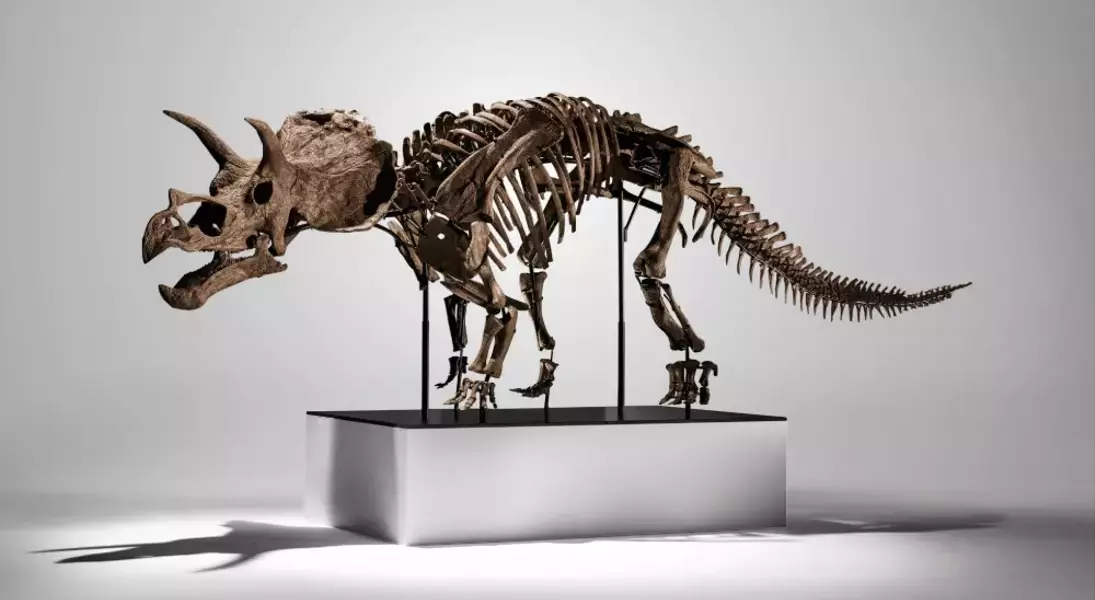
The global art market is experiencing dynamic shifts, marked by robust auction results, strategic expansions by major auction houses, and the increasing integration of artificial intelligence. Recent sales, particularly Phillips' modern and contemporary art auction, underscore a strong appetite among collectors, achieving millions in transactions, including an unexpected sale of a triceratops skeleton. Meanwhile, Bonhams is making a significant move to a larger, more prominent location in New York, signaling ambitious growth plans. Concurrently, the industry is exploring how AI technologies, such as Artsignal, are reshaping art valuation and accessibility, alongside a growing appreciation for previously overlooked artists and emerging trends like the rising demand for female photographers.
Phillips recently conducted its modern and contemporary evening sale in New York, following an impressive week where competitors Christie's and Sotheby's collectively garnered nearly $1.4 billion. Phillips' more focused auction, featuring 33 lots, achieved a total of $67.3 million. Notable pieces included a Joan Mitchell painting, a Francis Bacon diptych, and a juvenile triceratops skeleton, which alone fetched $4.5 million. The sale boasted a high sell-through rate of 94 percent, with only two lots failing to find buyers. Robert Manley, Phillips' chairman and global head of modern and contemporary art, expressed immense satisfaction with the outcome, highlighting the current strength of the market and the desire for more inventory to meet demand.
In other significant developments, Bonhams is preparing to relocate its US headquarters to 111 West 57th Street in February, establishing a new flagship within the meticulously restored Steinway Hall. This move will provide Bonhams with a 42,000-square-foot space, a 30 percent increase from its previous Madison Avenue location. The new headquarters will feature an impressive 80-foot glass atrium and expansive galleries designed for major exhibitions and sales. The restoration of Steinway Hall, a Beaux-Arts landmark, involved careful preservation of its historical elements. Bonhams intends for the building to serve as a public cultural venue, hosting free exhibitions and live performances, reflecting a key phase in the company's US expansion strategy. Lilly Chan, Bonhams' managing director, emphasized the need for a unified base and the strategic importance of 57th Street's cultural corridor, while CEO Seth Johnson described the new space as transformative for broadening the auction house's reach and attracting high-caliber consignments.
Beyond auction house activities, the art world is grappling with broader trends. Arts and culture organizations across the US are reportedly declining grants that restrict their diversity, equity, and inclusion (DEI) initiatives. Publications like ArtReview are delving into the future of art in a post-AI landscape, examining how artificial intelligence will influence artistic creation and appreciation. Additionally, there's a resurgence of interest in artists like the late British painter William Nicholson, often overshadowed by his more famous son, Ben, with new surveys bringing his work into focus. A notable trend is the increasing demand for works by female photographers, prompting discussions about whether their market prices are rising proportionally to this growing interest. The introduction of platforms like Artsignal, an "agentic AI platform" for art and collectibles, aims to democratize market intelligence by providing accessible reports and valuation contexts. Launched with support from Christie's Ventures, Artsignal analyzes auction results, exhibition data, and news to generate pricing "signals," complete with artist biographies, linked sources, and detailed market metrics, making insider knowledge more widely available.
The current art market landscape showcases both continuity and innovation. Traditional auction houses are achieving strong sales, adapting to market demands, and expanding their physical footprints to enhance their presence and offerings. Concurrently, technological advancements, particularly in artificial intelligence, are beginning to redefine how art is valued, analyzed, and accessed by collectors. This period also highlights an evolving appreciation for diverse artists and artistic movements, as seen in the renewed focus on historical figures and the growing recognition of female photographers. These interconnected developments paint a picture of a resilient and forward-looking art world, continuously seeking new ways to engage with art and its audience while preserving its rich heritage.