The global art market is currently experiencing a dynamic period, highlighted by both remarkable successes and significant transitions, as major players like Christie's set new benchmarks while long-standing institutions like Sperone Westwater conclude their storied histories.
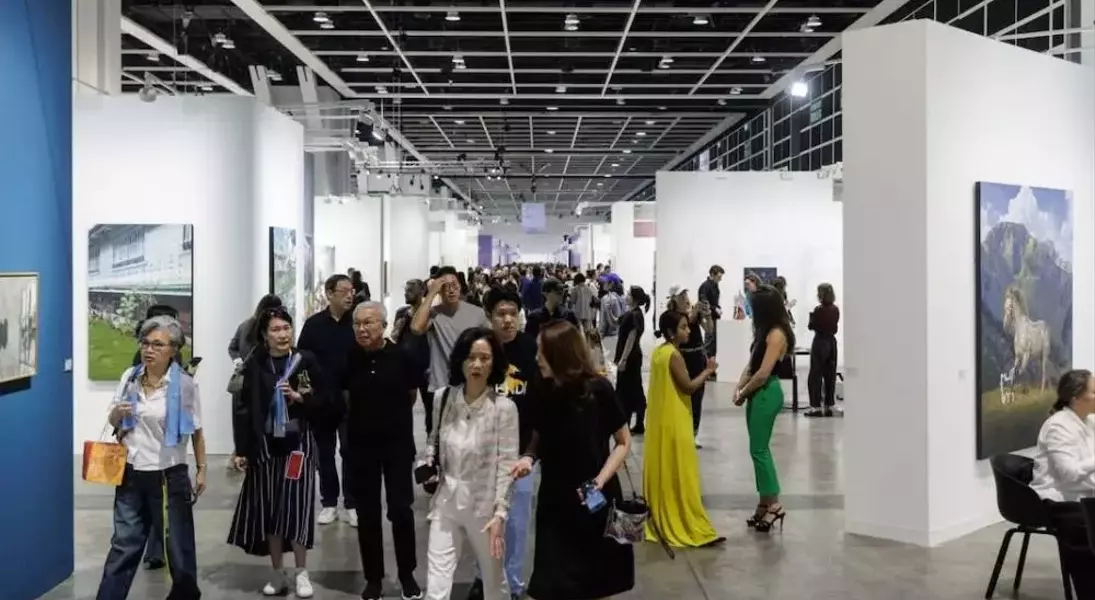
Christie's recently launched New York's fall auction season with an impressive performance, generating approximately $690 million across 79 lots. This result comfortably exceeded the initial lower projections and neared its higher estimates, indicating robust buyer confidence. The event, marked by fervent bidding for numerous pieces, commenced with the esteemed Robert and Patricia Ross Weiss collection, showcasing a range from Cubism to Abstract Expressionism, including works by art masters such as Picasso and Rothko. This strong showing represents a considerable increase over previous auction figures and boasted an exceptional sell-through rate, with only a few items failing to find buyers. Concurrently, the Art Basel Hong Kong fair announced its plans for 2026, confirming the participation of 240 galleries from 42 different regions, signaling its continued importance as a premier international art event.
Despite the overall positive trend in the art market, not all news is celebratory. The iconic New York gallery, Sperone Westwater, is set to close its doors after five decades, a decision that has sent ripples through the art world. Renowned for championing artists such as Bruce Nauman and Francesco Clemente, the gallery's closure on December 31st marks the end of an era. Its founders, Angela Westwater and Gian Enzo Sperone, cited a desire to pursue individual ventures. The gallery, which began in SoHo in 1975, was instrumental in shaping the careers of many artists and will participate in Art Basel Miami Beach for its final showing. Other notable art world developments include the exhibition of a revered Italian Renaissance bible in Rome, considered a masterpiece of illuminated manuscripts, and Marina Abramović's reflection on initial doubts surrounding her acclaimed 2010 MoMA performance, 'The Artist Is Present,' which ultimately became a career-defining work. Additionally, the Qatar Foundation is preparing to open a museum dedicated to the celebrated artist Maqbool Fida Husain, further enriching the global artistic landscape. This period also brings to light fascinating historical visions for urban development, such as Sol Atlas's ambitious but ultimately unrealized plan to transform Ellis Island into 'Pleasure Island' in 1958, envisioning a comprehensive leisure and cultural complex.
The art world is a vibrant and ever-evolving tapestry, woven with threads of creativity, commerce, and cultural exchange. Events like record-breaking auctions and prestigious art fairs underscore its dynamic nature and capacity for growth. While the closure of a renowned gallery signifies the natural cycle of change, it also paves the way for new expressions and opportunities. The continuous unveiling of historical insights and the celebration of artistic achievements, past and present, remind us of art's enduring power to inspire, provoke thought, and connect humanity across time and space. These developments collectively highlight the resilience and transformative influence of art, reaffirming its vital role in enriching our lives and shaping our collective future.
