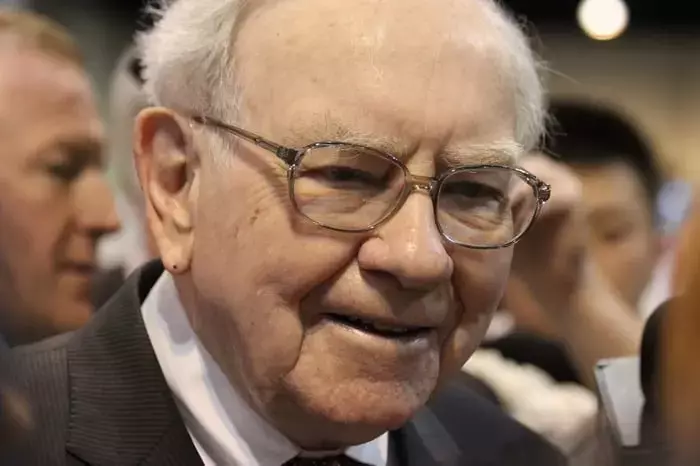
The impending departure of Warren Buffett from his leadership role at Berkshire Hathaway has generated considerable discussion within financial circles. This transition has led to some market apprehension, causing a temporary decline in the company's stock performance. Nevertheless, a closer examination reveals that Berkshire Hathaway possesses inherent strengths and a strategic framework designed for long-term prosperity, even in the absence of its iconic leader. The conglomerate's diversified asset base, encompassing publicly traded equities and wholly-owned businesses, coupled with a philosophy of patient capital deployment, underpins its resilience. This current market sentiment, characterized by a misunderstanding of the company's intrinsic value, may present a strategic entry point for astute investors before the broader market fully recognizes its enduring potential.
Despite the recent stock fluctuations influenced by the announcement of Warren Buffett's retirement as CEO of Berkshire Hathaway, the company's foundational strengths remain robust. Many investors are concerned that Buffett's absence will diminish the conglomerate's historical outperformance. However, the organization's unique structure, which blends characteristics of a mutual fund and a private equity firm, allows for a flexible and opportunistic investment approach, unconstrained by typical market pressures. Furthermore, Buffett's extensive teachings and established corporate culture provide a clear roadmap for future leadership, ensuring continuity in strategy and values. This confluence of structural advantages and a deeply ingrained ethos suggests that Berkshire Hathaway is not merely dependent on a single individual but is built to sustain its trajectory of growth and value creation, making the current market weakness potentially short-lived and offering a compelling prospect for long-term investment.
Berkshire's Enduring Strength Beyond Its Leader
The impending retirement of Warren Buffett from the helm of Berkshire Hathaway has sparked investor concerns, resulting in a temporary dip in the company's stock performance. However, such anxieties overlook the deep-rooted resilience of the conglomerate. Berkshire's unique operational model, which combines a substantial portfolio of publicly traded equities with a diverse array of wholly-owned businesses like Geico and Dairy Queen, insulates it from the typical vulnerabilities associated with leadership transitions. Buffett's legacy extends beyond his direct oversight, having instilled a profound investment philosophy and operational principles that guide the company's management team. This robust structure, characterized by long-term holding periods and decentralized management, ensures that Berkshire Hathaway is built to flourish independently of any single individual.
Berkshire Hathaway's ability to thrive post-Buffett is anchored in several key aspects. Firstly, Buffett has not merely been a CEO but a profound educator, meticulously articulating his investment wisdom and ethical guidelines. These principles are deeply ingrained in Berkshire's corporate culture, providing a clear and consistent framework for decision-making for its executives. Secondly, the company's organizational design is unlike conventional investment vehicles. It operates as a unique hybrid, acting as both a large-scale mutual fund with diverse stock holdings and a private equity firm that acquires and retains businesses indefinitely. This distinct model grants Berkshire the flexibility to allocate capital strategically, making patient, long-term investments without the pressure of short-term shareholder demands. This allows the conglomerate to patiently await optimal opportunities, as evidenced by its substantial cash reserves, positioning it for strategic acquisitions when the timing is right. Therefore, the conglomerate's intrinsic value and future trajectory are underpinned by its systemic strengths rather than solely by the presence of its celebrated leader.
An Opportune Moment for Investment
While the market has reacted with some negativity to the news of Warren Buffett's stepping down, this period of underperformance for Berkshire Hathaway's shares represents a potential buying opportunity for discerning investors. The current apprehension largely stems from a misunderstanding of the company's fundamental stability and its well-established operational framework. With the market gradually recognizing that Berkshire's long-term success is not solely reliant on Buffett's day-to-day involvement, the tide is beginning to turn. The conglomerate's robust financial health, strategic diversification, and the enduring influence of Buffett's investment philosophy are strong indicators that its stock is poised for recovery and continued appreciation.
The market's initial bearish response to Buffett's succession announcement has led to a temporary undervaluation of Berkshire Hathaway shares. However, this reactionary dip provides a strategic window for investors seeking long-term growth. Berkshire's strength lies in its meticulously constructed portfolio of assets and its commitment to a time-tested investment discipline. The company's leadership team has been thoroughly mentored by Buffett, ensuring a continuation of his prudent capital allocation strategies. Furthermore, Berkshire's substantial cash reserves underscore its capacity to capitalize on future market opportunities, reinforcing its inherent value. As more investors come to understand that the conglomerate's intrinsic value is grounded in its resilient structure and enduring principles, rather than solely on its founder's presence, the stock is likely to regain momentum and continue its upward trajectory. Therefore, acting swiftly to acquire shares during this period of perceived weakness could yield significant long-term benefits.
