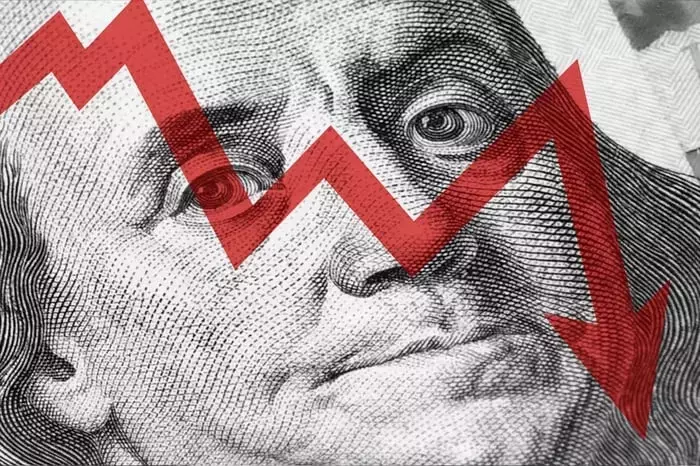
Warren Buffett's Berkshire Hathaway has been significantly divesting from the stock market, signaling apprehension regarding market valuations. Over the past 11 quarters, the conglomerate has been a net seller of equities, amassing a substantial cash reserve of $344 billion. This cautious strategy, alongside the S&P 500's elevated cyclically adjusted price-to-earnings (CAPE) ratio of 38 and a 48% probability of recession within the next year, according to a Moody's algorithm, suggests a potentially challenging period for the stock market. Historical data indicates that similar high CAPE ratios have often preceded negative returns over subsequent one to three-year periods, prompting investors to exercise prudence and prioritize valuation analysis in their investment decisions.
Insight into Market Trends: Berkshire Hathaway's Strategy and Economic Indicators
In a significant move that has caught the attention of financial markets, Warren Buffett's Berkshire Hathaway has consistently reduced its stock holdings over the past 11 quarters, accumulating an impressive $344 billion in cash and U.S. Treasury bills. This strategic shift, initiated shortly after the market bottomed out in 2022 following President Trump's tariff announcements, marks a stark contrast to Berkshire's previous buying spree during the bear market. The company's decision to sell off $177 billion worth of stock is widely interpreted as a clear indication that Buffett and his investment team perceive current stock valuations as excessively high, making it difficult to find attractive investment opportunities.
Adding to this cautionary outlook is the S&P 500's cyclically adjusted price-to-earnings (CAPE) ratio, which recently stood at 38. This valuation metric, which smooths out earnings volatility over a decade, is notably high. Historical analysis reveals that an S&P 500 CAPE ratio exceeding 37 has occurred in only about 5% of all months since 1957. Historically, such elevated valuations have been associated with negative returns in the subsequent one, two, and three-year periods. Specifically, past instances suggest potential declines of 3% in one year, 12% in two years, and 14% in three years following similar CAPE readings.
Furthermore, the economic landscape appears to be on uncertain ground. Recent weakness in the jobs market and the unpredictable effects of President Trump’s tariffs contribute to a shaky economic environment. A machine learning algorithm developed by Moody's, renowned for its accuracy in forecasting recessions, currently indicates a 48% probability of a recession within the next 12 months. This algorithm has a strong track record, having correctly predicted every economic downturn since 1960 whenever its reading surpassed 50%. These combined factors emphasize the need for investors to approach the current market with heightened awareness and a focus on robust valuation principles.
The confluence of Warren Buffett's cautious investment strategy, the S&P 500's high CAPE ratio, and looming economic uncertainties serves as a critical reminder for investors. It underscores the importance of thorough due diligence and a disciplined approach to valuing assets. While market timing is notoriously difficult, these indicators collectively suggest that a period of more modest or even negative returns could be on the horizon. This environment calls for careful consideration of investment risk, a potential shift towards more defensive portfolios, and a readiness to capitalize on future opportunities that may arise from market corrections.
