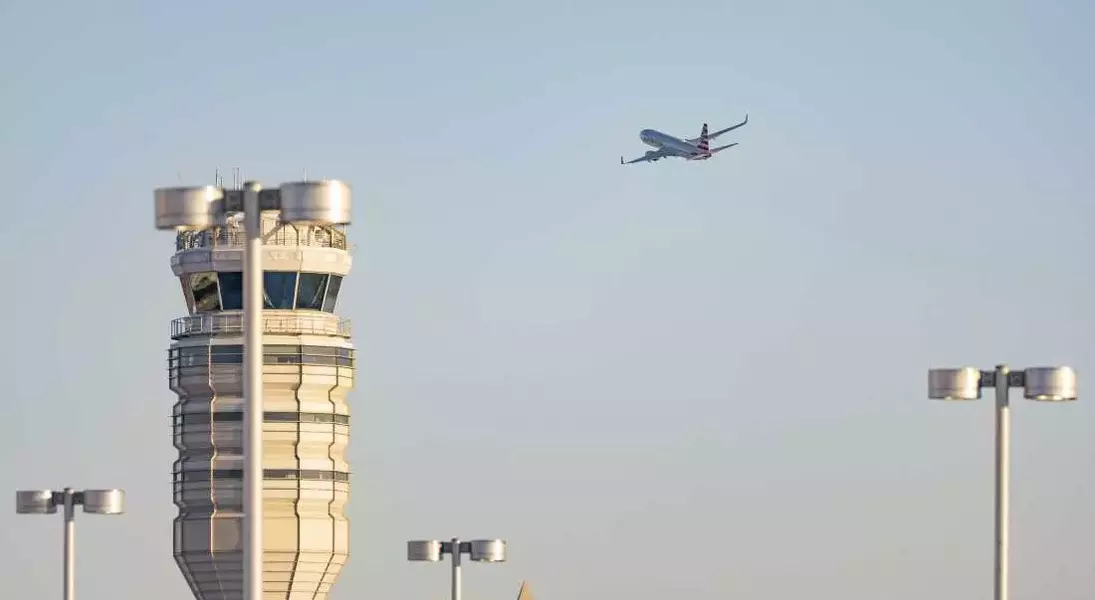
In response to a tragic accident and multiple close calls, the Federal Aviation Administration (FAA) has introduced enhanced safety regulations for air traffic operating around major airports. These new measures primarily focus on eliminating the practice of visual separation for aircraft, particularly helicopters, in congested airspace. The agency aims to proactively mitigate risks by shifting from pilot-dependent visual assessments to more robust radar-based separation methods, ensuring a higher degree of safety for the traveling public.
New Safety Directives for Airport Airspace
The Federal Aviation Administration has recently enacted more stringent safety guidelines for air operations in the busy airspaces surrounding major airports. A key change involves discontinuing the use of visual separation between helicopters and fixed-wing aircraft. This proactive step was prompted by a critical re-evaluation of existing safety protocols, particularly after a devastating mid-air collision and subsequent incidents highlighted the limitations of relying on pilots' visual judgments. The FAA's Administrator emphasized the necessity of these revisions to avert future accidents and ensure the integrity of air travel safety. This shift signifies a move towards a more technologically driven and systematic approach to air traffic control, reducing the margin for human error in high-density environments.
This significant policy update by the FAA on Wednesday directly addresses concerns raised by a fatal incident that occurred over a year ago near Ronald Reagan Washington National Airport, where a U.S. Army Black Hawk helicopter collided with an American Airlines regional jet, resulting in the loss of 67 lives. Beyond this tragic event, two other recent close encounters further underscored the urgency for revised protocols: one involving a commercial jet and a police helicopter at San Antonio International Airport in February, and another between a Beechcraft 99 and a helicopter at Hollywood Burbank Airport in March. These events collectively highlighted a dangerous over-reliance on visual separation as a primary safety mechanism, particularly in areas with heavy air traffic. The FAA's new mandate dictates that air traffic controllers must now employ radar technology to actively maintain specific separation distances between aircraft, moving away from subjective visual observations to precise, instrument-based control.
Addressing "See and Avoid" Limitations
The core of the FAA's latest safety enhancements lies in recognizing and rectifying the inherent shortcomings of the traditional "see and avoid" principle, particularly when applied to visually separating aircraft in complex and crowded airspace. Data analysis conducted by the agency revealed that this method is insufficient as a standalone safety measure in high-traffic zones, leading to an unacceptable level of risk. This realization has driven the FAA to mandate a transition towards radar-based separation techniques, which provide objective and consistent management of aircraft distances. By doing so, the FAA aims to eliminate the vulnerabilities associated with human perception and reaction times in preventing mid-air incidents.
The decision to abandon visual separation as a primary tool was heavily influenced by the National Transportation Safety Board's (NTSB) conclusive report on the Washington mid-air collision. The NTSB explicitly cited the air traffic system's excessive dependence on visual separation and the helicopter crew's failure to effectively apply visual separation as contributing factors to the catastrophe. Investigators concluded that the helicopter crew likely did not detect the approaching plane before the impact, leading to one of the deadliest aviation accidents in recent decades within the U.S. This finding reinforced the FAA's assessment that visual methods are inadequate for preventing collisions in busy airspace. Consequently, the new regulations require air traffic controllers to utilize radar for precise aircraft management, ensuring consistent and controlled separation and greatly enhancing overall aviation safety.
