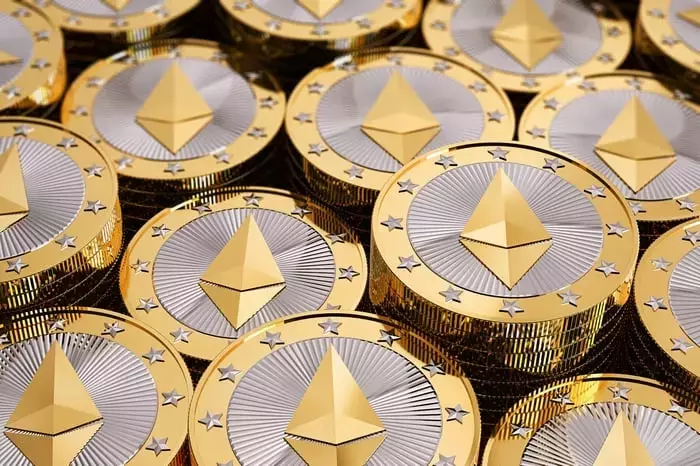
Ethereum, which recently celebrated its 10th birthday, is still going strong.
Ethereum stands as a foundational pillar for a vast array of decentralized applications, colloquially known as dApps. This extensive ecosystem underpins various sectors, including decentralized finance (DeFi), gaming, non-fungible tokens (NFTs), and governance platforms. A significant portion of these innovative applications, particularly stablecoins—a burgeoning force in the blockchain arena—are developed and operate within Ethereum's infrastructure. Analysts from Standard Chartered foresee a monumental expansion in the stablecoin market, anticipating its growth from approximately $230 billion today to an impressive $2 trillion within the next three years. Given that Ethereum currently hosts over half of the existing stablecoin market, according to DefiLlama, it is strategically positioned to reap substantial benefits from this projected surge.
Beyond its role in stablecoin proliferation, integrating Ethereum into an investment portfolio offers exposure to a broad spectrum of cryptocurrency development. Ethereum pioneered the introduction of smart contracts, which are self-executing code snippets that imbue blockchains with programmability. This first-mover advantage has fostered a strong and active community, allowing Ethereum to maintain its leadership in developer activity globally, as evidenced by Electric Capital's 2024 developer report. The platform's commitment to self-improvement is further demonstrated through its consistent upgrades, notably the seamless transition from a proof-of-work to a more energy-efficient proof-of-stake validation system. This significant technical feat, akin to overhauling an engine while a vehicle is in motion, underscores Ethereum's adaptability and forward-thinking approach.
While all cryptocurrencies inherently carry risks, necessitating their inclusion as a minor component of a diversified investment portfolio, Ethereum faces competition from newer blockchain technologies. These emerging platforms often boast superior transaction speeds and reduced costs; for instance, Solana processes thousands of transactions per second compared to Ethereum's dozens. This disparity has spurred the development of Layer 2 solutions designed to enhance Ethereum's performance. However, speed is not the sole determinant of success in the blockchain space. Security and reliability are paramount, especially within financial applications. With a decade-long track record of uninterrupted operation, Ethereum has unequivocally proven itself as one of the most dependable blockchain networks available.
Ethereum's enduring influence and continuous evolution highlight its pivotal role in shaping the future of decentralized technologies. Its capacity for innovation, coupled with a resilient infrastructure, positions it not merely as a participant but as a driving force in the ongoing digital revolution. The journey of Ethereum exemplifies how foundational technologies, through persistent development and a commitment to security, can continue to lead and inspire progress in a rapidly evolving landscape, ultimately fostering a more interconnected and efficient digital world.
