
In the realm of investment strategies, contrarian value investing often presents unique opportunities, albeit with inherent risks. While the market frequently cautions against investing in declining assets, the focus here is on two companies, Kraft Heinz and Winnebago Industries, that offer compelling cases for consideration due to their significant market discounts and robust dividend payouts, rather than being mere 'falling knives'.
Kraft Heinz, a dominant force in the food and beverage sector, has been actively reshaping its business model since a decade-old merger. The company, known for a wide array of household brands, has embarked on a strategic journey emphasizing cost efficiency and product innovation. This includes a substantial savings program aiming for billions in cost reductions by fiscal year 2027 and a significant increase in investment in new product development, evidenced by new offerings contributing approximately 3% to 2024 fiscal sales, with projections for an additional $2 billion in net sales from new products by 2027. Furthermore, Kraft Heinz has prioritized strengthening its financial position by reducing its debt load accumulated post-merger. The company's future plans include a split into two independent entities by the second half of 2026, creating separate businesses for sauces, spreads, and seasonings, and North American grocery. Despite challenges like inflation and evolving consumer spending habits, Kraft Heinz currently trades at a substantial discount compared to its fair value estimates, offering a considerable dividend yield.
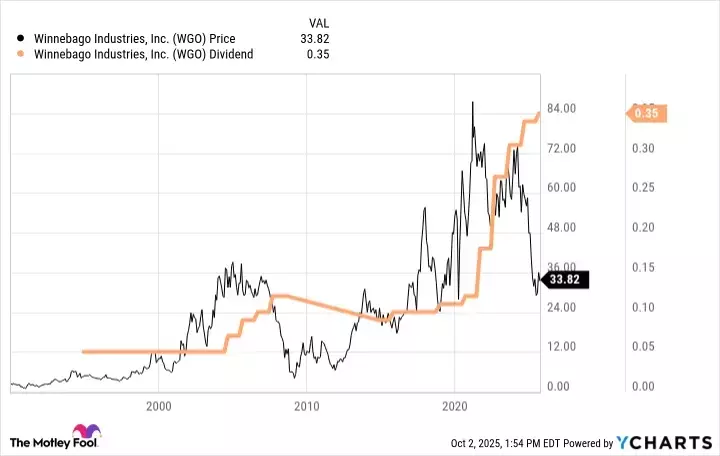
Similarly, Winnebago Industries, a long-standing manufacturer in the recreational vehicle and marine sectors, has demonstrated a remarkable evolution throughout its history. The company has expanded its portfolio through strategic acquisitions, including Grand Design and Barletta, diversifying its presence across motorhomes, towables, and pontoon boats. Winnebago has consistently increased shareholder returns through dividends over the past five years, even during challenging periods such as the pandemic, signaling strong financial health and confidence in its future. Operationally, Winnebago is adopting a leaner manufacturing approach, producing units only after firm orders, which is expected to reduce discounting and enhance profitability. While its market share in North American towables is currently around 10%, there's significant potential for growth given the dominant market share held by its top two competitors. Like Kraft Heinz, Winnebago trades at a considerable discount to its estimated fair value and offers an attractive dividend yield, suggesting it might be an opportune moment for investors to take a closer look.
Both Kraft Heinz and Winnebago Industries, despite recent underperformance against the broader S&P 500 and the inherent challenges within their respective competitive landscapes, present intriguing investment prospects. Their strategic reorientations, coupled with notable market discounts and appealing dividend yields, could position them for future appreciation. For astute investors seeking value and income, these companies warrant deeper investigation as potential candidates for a diversified portfolio.
