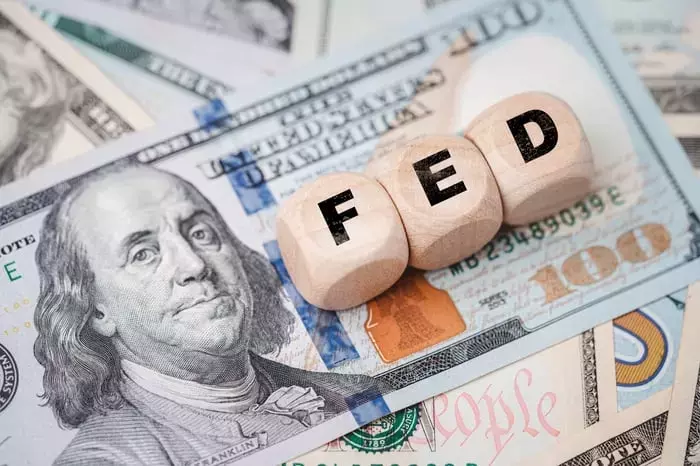
This article explores the Federal Reserve's monetary policy, specifically focusing on interest rate adjustments and their historical and projected impact on the stock market. It delves into how rate cuts are perceived by investors versus their actual historical outcomes, and contrasts this with current Wall Street expectations, particularly concerning the technology sector.
Navigating Rate Cuts: Investor Hopes Versus Market Realities
The Central Bank's Policy Deliberations
The Federal Open Market Committee, the primary policymaking body of the U.S. central bank, is set to conclude its two-day meeting on September 17. Following this meeting, a significant announcement regarding interest rates is expected. Financial markets are largely forecasting a reduction in rates, with a 25-basis-point cut being the most probable outcome. This decision is crucial as it influences various financial instruments, from credit cards to mortgages, impacting the broader economy.
Historical Performance of the Stock Market Post-Rate Cuts
While a decrease in interest rates often elicits a positive response from investors, believing it will stimulate economic growth, historical data presents a more nuanced picture. Since 1990, the S&P 500 has, on average, posted a modest 3% return in the twelve months following an interest rate cut. This performance is considerably lower than the index's average annual growth of approximately 9% over the past 35 years, excluding dividends. This suggests that while rate cuts can be a necessary economic intervention, they do not always signal immediate robust market expansion.
The Mechanism of Federal Reserve's Monetary Policy
The Federal Reserve's dual mandate involves maintaining price stability and maximizing employment. The federal funds rate, which dictates how banks lend to each other overnight, is its principal tool for monetary policy adjustments. Changes to this rate cascade through the financial system, affecting borrowing costs for consumers and businesses alike. The FOMC, comprising 12 members, convenes regularly to assess economic conditions and vote on policy changes. Rate reductions are typically implemented to energize a sluggish economy and boost job creation, while increases aim to temper inflation and slow down an overheating economy.
The Paradox of Anticipated Rate Reductions
The market's anticipation of lower rates, often met with enthusiasm, presents a paradox. Investors desire rate cuts, implicitly hoping for an economy that is struggling enough to warrant such intervention, yet not so severely ailing as to risk a full-blown recession. Recent labor market data, indicating a slowdown in hiring, has strengthened expectations for a September rate cut. Interestingly, the S&P 500 has shown resilience since this data emerged, suggesting investors view the current economic weakness as manageable and sufficient to trigger rate cuts without foreshadowing an immediate downturn.
Wall Street's Optimistic Projections for Future Returns
In contrast to the historical average post-rate cut performance, Wall Street analysts hold a more bullish outlook for the stock market's trajectory. By aggregating median target prices across all S&P 500 companies, FactSet Research projects the index to reach 7,310 within the next year, implying an almost 11% upside from its current valuation. This optimism is particularly pronounced in the technology sector, where analysts foresee a 15% upside, largely attributing this to the ongoing boom in artificial intelligence. Technology stocks also boast the highest proportion of 'buy' ratings among S&P 500 components. However, it's worth noting that the S&P 500 is currently trading at a premium valuation relative to its five-year average, a factor that historically has correlated with potential future losses, advising investors to prepare for market fluctuations.
