
The financial markets recently witnessed a significant event as the Federal Reserve implemented its initial interest rate reduction of the year, a decision that typically sparks optimism among investors. This measure, aimed at bolstering corporate profitability and overall economic expansion, comes after a period of market apprehension earlier in the year, influenced by concerns over trade tariffs and their potential economic fallout. The easing of trade tensions and strong corporate earnings reports have since fueled a rally, propelling major benchmarks like the S&P 500 to unprecedented highs, with leading technology firms and growth-oriented companies such as Nvidia and Palantir Technologies spearheading the ascent.
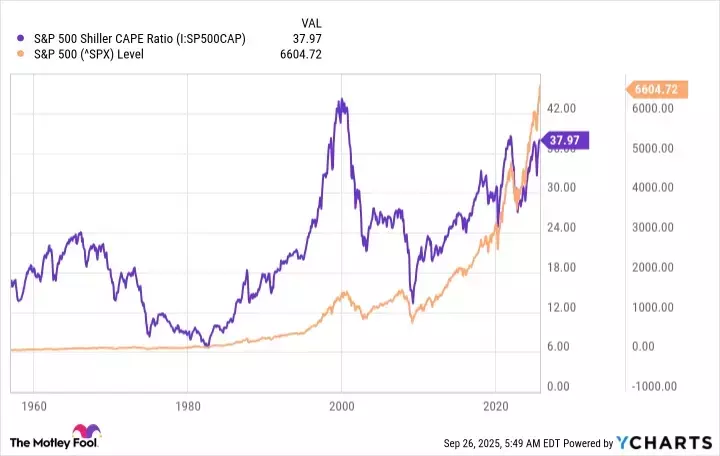
Despite this buoyant market performance, Federal Reserve Chair Jerome Powell recently conveyed a cautionary message to Wall Street, highlighting a critical point for investors to consider. The Fed's latest policy adjustment involved a quarter-point rate cut, signaling the possibility of further reductions by year-end. Such actions generally benefit the market by lowering borrowing costs for businesses and alleviating financial burdens on consumers, thereby fostering a conducive environment for economic activity. Nevertheless, Powell's observation that \"Equity prices are fairly highly valued\" serves as a clear warning. An examination of the S&P 500 Shiller CAPE ratio, which adjusts stock prices for inflation over a decade, reinforces this concern. The ratio has surpassed 37 twice this year, a level reached only a handful of times since the S&P 500 expanded to 500 companies in the late 1950s. Historically, every instance of the Shiller CAPE ratio attaining such lofty heights has been followed by a market decline, suggesting a potential future correction for the S&P 500.
While the prospect of a market downturn might seem daunting, there is a reassuring aspect for long-term investors. Although the exact timing and duration of a potential market pullback remain uncertain, historical trends consistently demonstrate the market's resilience. Following every market contraction, including significant crashes, the S&P 500 has invariably recovered and eventually surged to new record levels. This enduring pattern underscores the importance of a long-term investment horizon. Therefore, even if portfolios experience temporary dips, steadfast investors can typically anticipate their investments to rebound and yield positive returns over time, mitigating the anxieties that Powell's warning might otherwise induce.
The current market landscape, characterized by both record-breaking highs and cautionary signals from economic leaders, underscores the dynamic nature of investing. It highlights the delicate balance between capitalizing on growth opportunities and preparing for potential volatilities. A prudent approach involves not only staying informed about economic indicators and policy shifts but also maintaining a disciplined long-term perspective. This strategy allows investors to navigate short-term fluctuations with confidence, trusting in the historical precedent of market recovery and growth, ultimately contributing to sustained financial well-being and stability.
