
General Motors has undergone a remarkable metamorphosis, transitioning from its past struggles into a lean, formidable competitor in the global automotive landscape. The company's proactive strategies in financial management and operational efficiency have not only fortified its market position but also created an attractive prospect for discerning investors. Despite an undervaluation by the broader market, GM's consistent efforts to enhance shareholder value through significant share repurchases and dividend increases underscore its renewed strength and potential for growth.
General Motors' Strategic Transformation and Investor Appeal
In a compelling turnaround, General Motors (GM) has repositioned itself as a leading force in the automotive sector, shedding its former reputation for inefficiency. Once burdened by overproduction and escalating labor expenses that led to a crisis during the Great Recession, GM has meticulously restructured its operations, achieving substantial cost savings. Since 2023, the Detroit-based automaker has trimmed its cost base by an impressive $2 billion, with further reductions anticipated in the coming year. This aggressive focus on efficiency has drastically lowered the company's breakeven point to approximately 10 million to 11 million vehicle sales in the U.S., assuming stable market share, thus bolstering profit margins and reducing reliance on incentives.
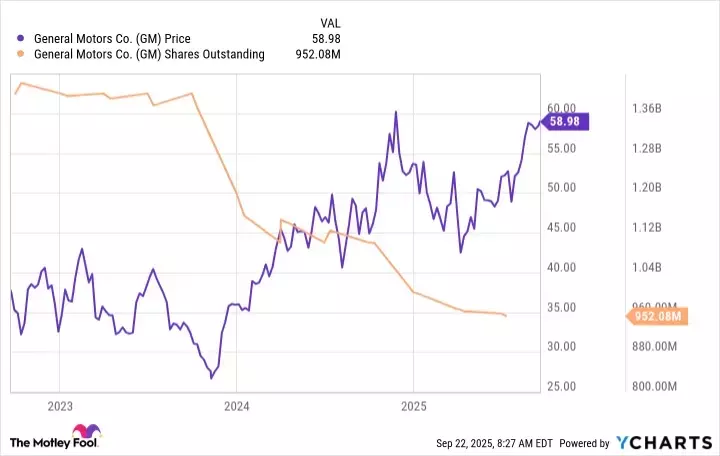
Recognizing the market's slow reaction to its profound transformation, GM has taken decisive action to demonstrate its intrinsic value. The company has executed substantial share buyback programs, amounting to $16 billion since 2023. This aggressive reduction in outstanding shares has been met with a positive stock price trajectory, particularly over the last 18 months. Beyond buybacks, GM has also reinforced its commitment to shareholders by raising its quarterly dividend by 25% earlier this year, alongside initiating a new $6 billion repurchase plan. CEO Mary Barra emphasized that these actions align with the company's capital allocation strategy, which prioritizes profitable reinvestment, maintaining a robust investment-grade balance sheet, and consistently returning capital to investors.
Trading at a modest nine times earnings, General Motors currently presents an appealing valuation for investors. While macroeconomic factors like tariff uncertainties, the costly transition to electric vehicles, and rising competition from Chinese manufacturers continue to influence market sentiment, GM's strategic financial management and operational improvements paint a picture of resilience and future potential. The company's proactive measures to streamline costs and enhance shareholder returns suggest it is well-prepared to navigate these challenges, making it a compelling consideration for those looking to invest in a revitalized automotive leader.
The journey of General Motors from near collapse to a robust and competitive entity offers a powerful lesson in corporate resilience and strategic adaptation. This narrative underscores the importance of not just identifying and addressing core operational inefficiencies, but also actively communicating and demonstrating value to stakeholders, especially when market perceptions lag behind internal transformations. GM's aggressive share buybacks and dividend increases serve as a testament to its confidence in future profitability and its commitment to rewarding patient investors. For others facing similar challenges, the takeaway is clear: meaningful change, backed by tangible actions, can eventually sway even the most skeptical markets.
