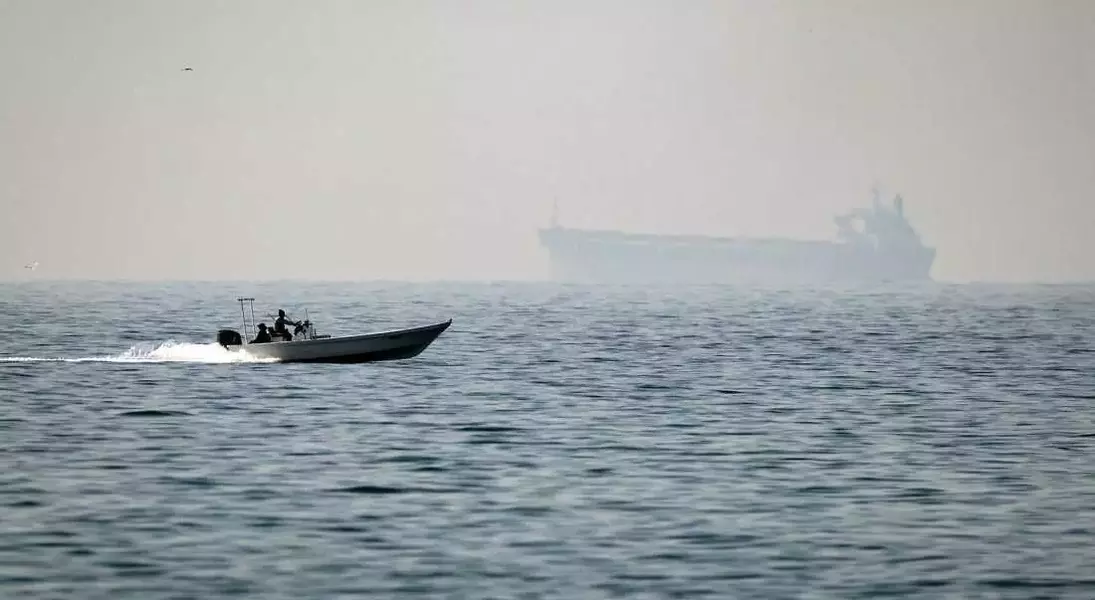
The ongoing conflict in Iran has triggered substantial turbulence across global financial markets, leading to a significant increase in crude oil prices and a notable downturn in stock values. This economic instability is largely attributed to the effective cessation of maritime traffic through the Strait of Hormuz, a vital passageway for a substantial portion of the world's oil supply. The ripple effects of these developments are being felt worldwide, prompting concerns about energy security, inflationary trends, and the broader health of the global economy.
Global Market Volatility Amidst Middle East Tensions
Recent military actions involving Iran have profoundly impacted international financial landscapes, leading to an approximate 8% jump in global crude oil prices and a noticeable decline in stock market performance. This escalation marks the third day of the conflict, and its immediate aftermath saw Brent crude, the international standard, trading in the upper $70s per barrel. The primary driver of this market reaction is the significant disruption of tanker operations within the Strait of Hormuz, a crucial choke point for global oil transportation. This situation has heightened fears of prolonged instability in energy supplies, casting a shadow over economic forecasts and investor confidence worldwide.
The current upward trend in oil prices, while substantial, remains below the most dire predictions from market analysts, who had cautioned that prices could exceed $100 per barrel under a worst-case scenario. Such a scenario would involve sustained disruptions to oil trade or an expansion of the conflict into neighboring countries, potentially damaging vital oil infrastructure. Reports indicate that Saudi Arabia has intercepted drones targeting its oil facilities, and Qatar Energy has confirmed attacks on two of its natural gas installations, signaling the potential for broader regional instability to impact energy production. Concurrently, major stock indices, including the Dow Jones Industrial Average and the S&P 500, have registered declines, reflecting investor anxiety. This concern is amplified by the prospect that rising energy costs could fuel inflation, reversing recent progress made in moderating price increases and adding further pressure to global economic recovery efforts.
Energy Market Repercussions and Future Outlook
The global energy markets reacted sharply to the hostilities, with oil prices briefly surpassing $80 a barrel shortly after trading resumed following the initial attacks. Experts predict a noticeable increase in gasoline prices for consumers, with some estimating a rise of 10-30 cents per gallon on average in the U.S., and potentially up to 85 cents at certain stations. This surge is directly linked to the fact that about one-fifth of the world's oil consumption typically transits through the Strait of Hormuz. With four vessels already affected by the conflict, shipping companies and their insurers are increasingly wary, leading to a reluctance to navigate the strait and further tightening supply.
Beyond crude oil, the Strait of Hormuz is also a critical conduit for liquefied natural gas (LNG), which is essential for heating and electricity generation globally. European natural gas markets have already witnessed price hikes exceeding 20% in response to the disruptions. The United States, a leading exporter of LNG thanks to recent infrastructure investments, stands to see its LNG companies benefit from these elevated prices, though this will likely translate into higher electricity costs for American consumers. The interconnectedness of global energy markets means that the geopolitical tensions in the Middle East have far-reaching economic consequences, impacting not only energy prices but also broader inflationary trends and the financial stability of nations worldwide.
