
Over the past two years, gold has experienced an extraordinary price increase, doubling its value and significantly surpassing the returns of the S&P 500. This impressive growth highlights gold's enduring appeal as a store of value and a compelling investment, even in a market influenced by technological advancements like artificial intelligence. Understanding the forces behind this surge and the various avenues for investing in gold is crucial for those looking to diversify their portfolios.
On October 6th, the price of gold reached an unprecedented milestone, exceeding $4,000 per ounce. This marked a remarkable 51% gain year-to-date, dwarfing the S&P 500's 15.3% increase over the same period. Even more strikingly, gold's value has soared by 116% in just two years, considerably outperforming the S&P 500's 60% climb. This robust performance demonstrates gold's resilience and its ability to deliver substantial returns, even when compared to equities driven by strong sectors such as artificial intelligence.
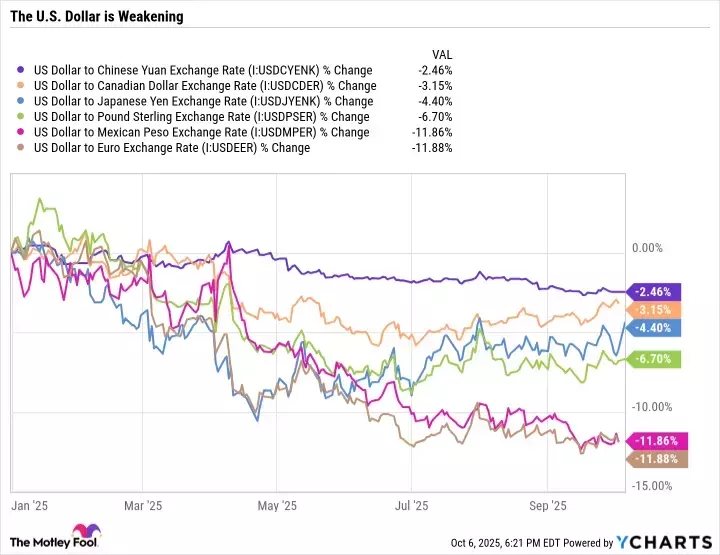
Several factors are contributing to this meteoric rise in gold prices. A primary driver is the strategic shift by central banks, particularly those in nations heavily reliant on the U.S. dollar. These institutions are actively diversifying their reserves, opting for gold over dollar-denominated assets like U.S. Treasury bills. This move aims to reduce their vulnerability to fluctuations in the dollar's value and lessen their dependence on the American currency. The U.S. dollar, after a period of strength, has recently shown weakness against major global currencies including the euro, British pound, Canadian dollar, Mexican peso, Japanese yen, and Chinese yuan, further incentivizing this diversification into gold.
Beyond institutional buying, retail investors are also playing a significant role in the gold rally. Data from WisdomTree indicates a growing appetite for gold, manifesting in increased purchases of gold ETFs and gold jewelry. Interestingly, there's also an emerging demand for gold within the technology sector, particularly for its critical role in high-performance semiconductors essential for the advancement of artificial intelligence.
For long-term investors considering an allocation to gold, Exchange-Traded Funds (ETFs) offer a practical and accessible entry point. Instead of dealing with the logistical challenges, security risks, and insurance costs associated with physical gold, ETFs provide a transparent and relatively low-cost alternative. Funds like SPDR Gold Shares (GLD) and iShares Gold Trust (IAU) hold physical gold on behalf of their investors, essentially allowing individuals to own a portion of a vast gold stockpile. For instance, SPDR Gold Shares ETF manages over 1,013 tonnes of gold, while iShares Gold Trust holds 484 tonnes. The substantial net asset values of these funds, collectively holding over $183 billion in gold, underscore the considerable influence of retail investors in the current gold market.
Another viable option for gaining exposure to gold is through ETFs that invest in gold mining stocks, such as the VanEck Gold Miners ETF (GDX). This type of ETF can offer amplified returns when gold prices are soaring due to supply and demand imbalances. For example, the VanEck Gold Miners ETF has seen an astounding 127% gain year-to-date. While such funds might experience periods of underperformance relative to physical gold, they provide diversification across various mining companies and geographical regions. A key benefit is spreading risk, as only a small percentage of this ETF's assets are in U.S. gold miners, with a greater concentration in Canada and other global locations. Additionally, the VanEck Gold Miners ETF pays an annual dividend, which can offset its expense ratio when compared to physical gold ETFs that do not offer dividends.
The sustained demand from both central banks and individual investors suggests a potential for gold prices to continue their upward trajectory over the long run. However, investors should approach current gold acquisitions with prudence, given the rapid price appreciation in a short timeframe. Such swift gains can increase the likelihood of a market correction or a sell-off if the pace of buying by central banks and retail investors moderates. Therefore, it is advisable for investors to thoughtfully determine their preferred method of gold investment—be it physical, digital, through mining stocks, or a combination—and to build their positions gradually over time, rather than making large, impulsive investments at current record-high prices.
