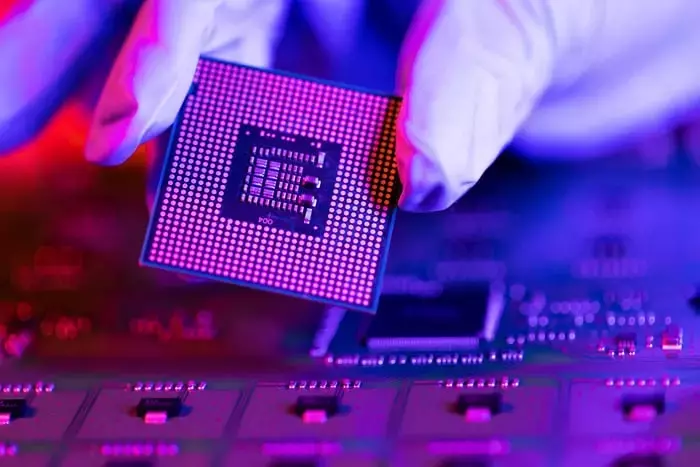
Intel has recently garnered significant investments, amassing approximately $16 billion, fueling optimism for its future in the semiconductor industry. However, a deeper analysis reveals that these capital injections alone may not suffice to overcome the inherent challenges in its core foundry operations. The strategic alliances formed, particularly with Nvidia for advanced chip designs, mark a positive step, yet the manufacturing cornerstone of these innovations remains predominantly with Taiwan Semiconductor Manufacturing Company (TSMC). This disparity highlights TSMC's sustained technological leadership and capacity advantages, positioning it as a more compelling investment opportunity when contrasted with Intel's ongoing struggles in its manufacturing division.
Intel's Strategic Moves and the Enduring Dominance of TSMC
In recent months, Intel, a prominent player in the semiconductor sector, has actively pursued a series of substantial financial endorsements. These include a $2 billion capital injection from SoftBank in mid-August, followed by an $8.9 billion commitment from the U.S. government. September saw another significant development with Nvidia's $5 billion investment, accompanied by a collaborative agreement on new central processing unit (CPU) designs for data centers and personal computers. These considerable investments have spurred a notable increase in Intel's stock valuation. However, despite these positive indicators, the current stock price appears less appealing than the entry points secured by these major investors.
A critical aspect of these partnerships is Nvidia's decision to collaborate on chip design with Intel while continuing to rely on TSMC for manufacturing. Jensen Huang, Nvidia's CEO, underscored TSMC's unparalleled capabilities during a press briefing, affirming no immediate intentions to alter their manufacturing relationship. This stance is particularly pertinent as Intel contemplates scaling back its foundry operations if it fails to secure substantial client agreements for its advanced 14A node process. Nvidia's apparent preference for TSMC after evaluating Intel's process signals a potential boon for TSMC, solidifying its status as a premier semiconductor manufacturer if Intel were to exit the foundry business.
The U.S. government's financial backing of Intel could, hypothetically, sway other chipmakers towards domestic manufacturing. Nevertheless, TSMC is proactively establishing production facilities in the United States to counteract this trend. Even with its fresh capital infusion, Intel faces an arduous journey to match TSMC's technological prowess and production capacity. TSMC's annual investment exceeding $7 billion in research and development, coupled with the construction of a massive new U.S. R&D center and projected capital expenditures nearing $40 billion in 2025, underscores its commitment to maintaining its lead. These efforts ensure TSMC possesses the necessary infrastructure and tools to meet the escalating demand for cutting-edge chips, all while generating substantial free cash flow, thereby cementing its considerable advantage over Intel.
From an investor's standpoint, this report emphasizes the intricate dynamics within the semiconductor industry. Intel's aggressive fundraising and strategic partnerships, while impressive, underscore the fierce competition it faces, particularly from a technologically advanced and financially robust entity like TSMC. The market's initial enthusiasm, reflected in Intel's soaring stock, might overshadow the fundamental challenges in its manufacturing division. For investors, the long-term prospects of a company are often tied to its core competencies and ability to execute. In this evolving landscape, TSMC's unwavering commitment to innovation, substantial R&D investments, and consistent capacity expansion appear to offer a more stable and promising investment trajectory, suggesting that a well-established leader with a clear path for growth might be a more prudent choice over a contender striving to regain its footing in a highly competitive arena.
