
This article explores the intricate relationship between evolving interest rates and their profound influence on various economic sectors, particularly focusing on how anticipated rate reductions could reshape the fortunes of major corporations such as Whirlpool and Tesla.
Navigating Economic Currents: Capitalizing on Rate Shifts for Growth
Understanding Market's Forward Gaze on Interest Rates
The financial markets are actively evaluating the Federal Reserve's monetary policy, specifically eyeing future interest rate movements. While a recent quarter-point rate reduction was broadly expected, the subsequent focus is on the central bank's future trajectory. Bond market indicators suggest a forthcoming environment of lower interest rates. Such a scenario holds considerable positive implications for businesses in interest-rate-sensitive sectors, including prominent appliance manufacturer Whirlpool and electric vehicle pioneer Tesla.
Federal Reserve Actions and Investor Considerations
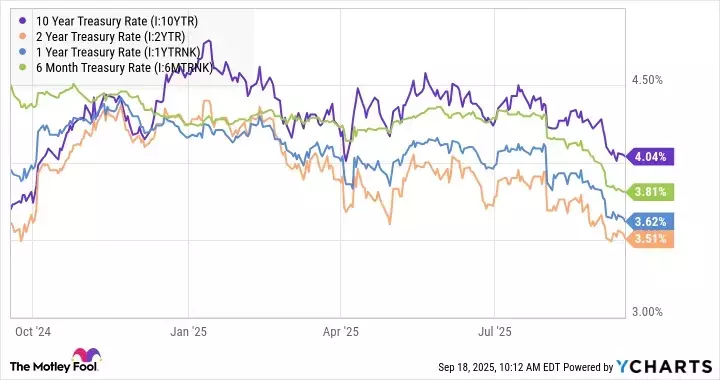
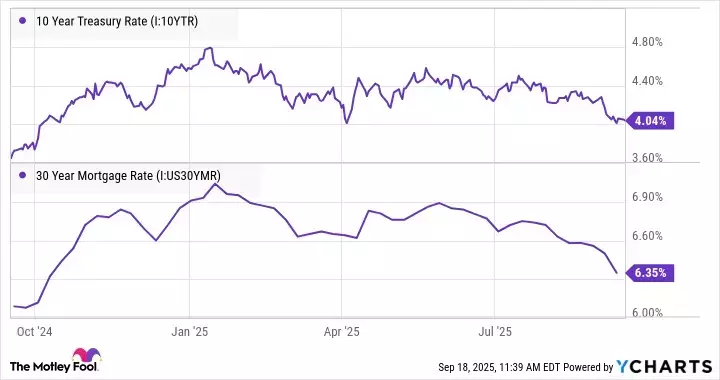
The Federal Open Market Committee recently approved a rate cut, with a near-unanimous vote. This decision coincided with a decrease in the benchmark 10-year Treasury yields and a reduction in 30-year mortgage rates. Furthermore, the bond market's structure, where shorter-term rates (like the six-month Treasury) exceed slightly longer-term rates (one-year and two-year), indicates an expectation among investors for further rate reductions within the next couple of years.
Implications for the Home Appliance Sector Leader
A reduction in mortgage rates generally makes housing more accessible, fostering increased activity in home sales and new construction. This heightened market dynamism directly benefits domestic appliance producers such as Whirlpool. Homeowners frequently undertake renovation projects before selling or after purchasing new properties, driving demand for household appliances, especially for higher-margin discretionary items. Consequently, a rejuvenated U.S. housing market would significantly bolster Whirlpool's sales performance.
Whirlpool's Market Positioning Amidst Economic Shifts
Whirlpool has faced challenges this year due to subdued discretionary spending. An improved housing market would undoubtedly boost its revenue. Additionally, the appliance maker's competitive standing is expected to strengthen, particularly given current tariff policies that favor domestic manufacturing. With a substantial portion of its products manufactured within the U.S., Whirlpool is well-positioned to benefit from these protective trade measures, potentially emerging as a significant beneficiary of administrative trade policies.
Tesla's Trajectory in a Shifting Interest Rate Landscape
Just as housing is sensitive to interest rates, so too is the automotive sector, especially for purchases financed through credit. Discussions surrounding Tesla's recent sales fluctuations have often centered on its leadership's public engagements or the aging design of its vehicle models. However, the market dynamics also reveal that while Model Y sales have experienced a downturn, the more affordably priced Model 3 has seen robust growth. This trend suggests a strong correlation between pricing and consumer demand in the EV market.
Strategies for Electric Vehicle Market Expansion
Tesla is adapting its strategy, with plans to introduce more budget-friendly models in the near future. The expiration of federal tax incentives for electric vehicles by September's end will create headwinds for the market. However, a lower interest rate environment could mitigate this impact, simultaneously boosting the appeal of Tesla's forthcoming lower-cost vehicles, potentially including an economical version of the Model Y and a new, more accessible model (possibly dubbed Model 2) in 2026. Reduced interest rates would make EVs more attractive by lowering the initial financing costs, thereby encouraging broader adoption, especially given the inherently lower running costs of electric vehicles. This scenario could significantly propel Tesla's EV sales in 2026, complementing its ongoing advancements in robotaxi technology.
