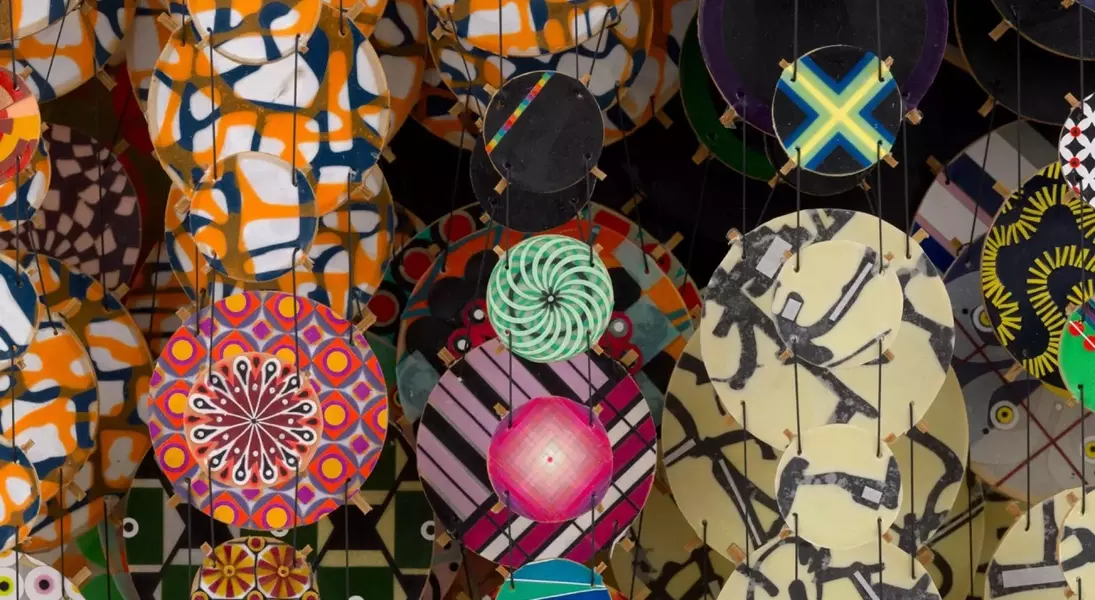
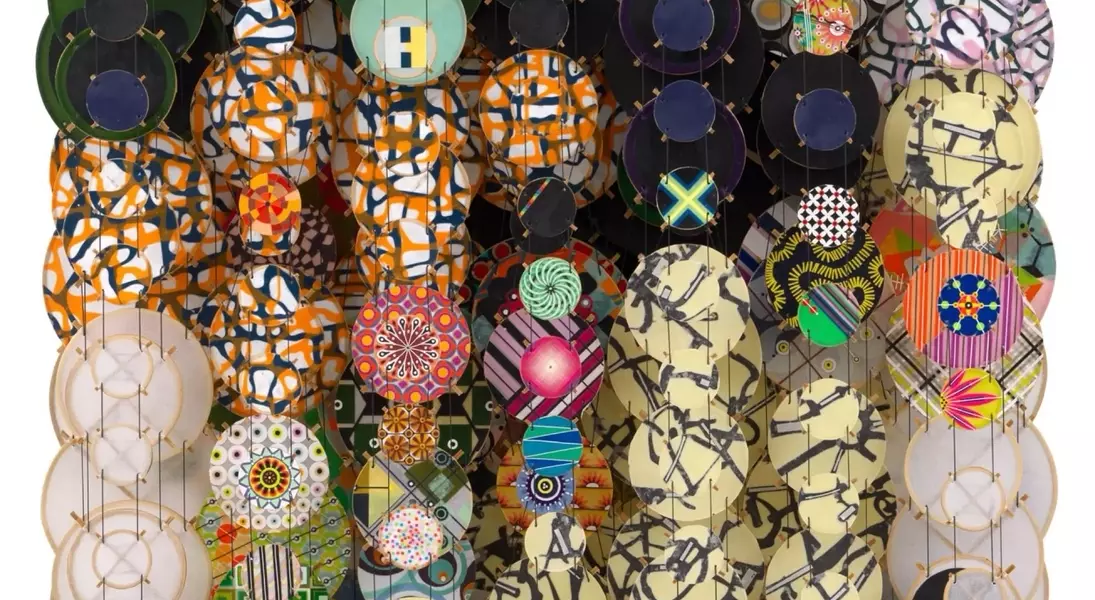
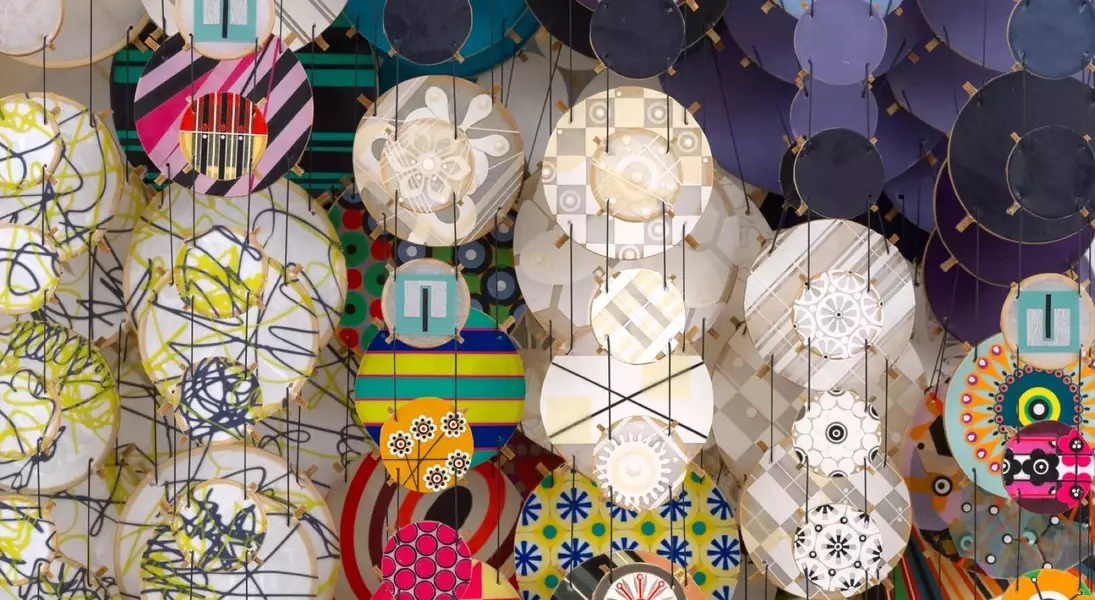
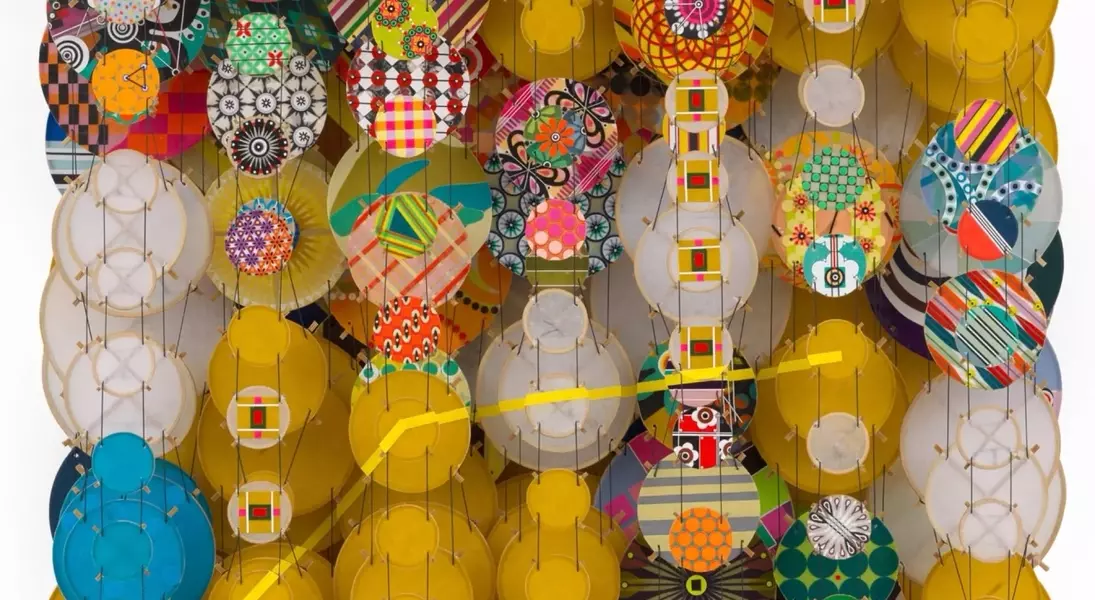
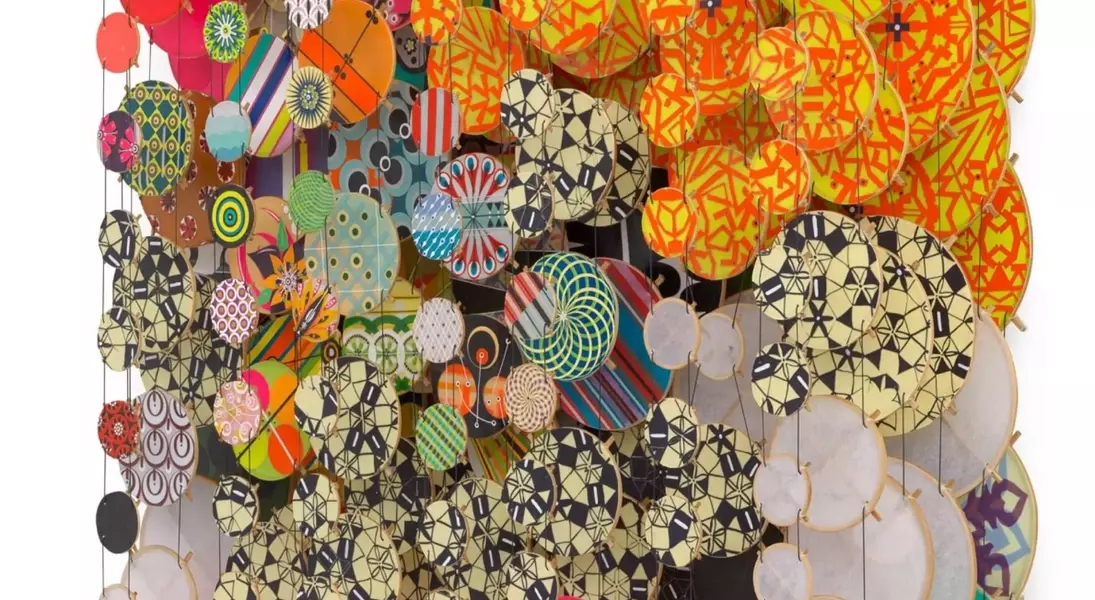
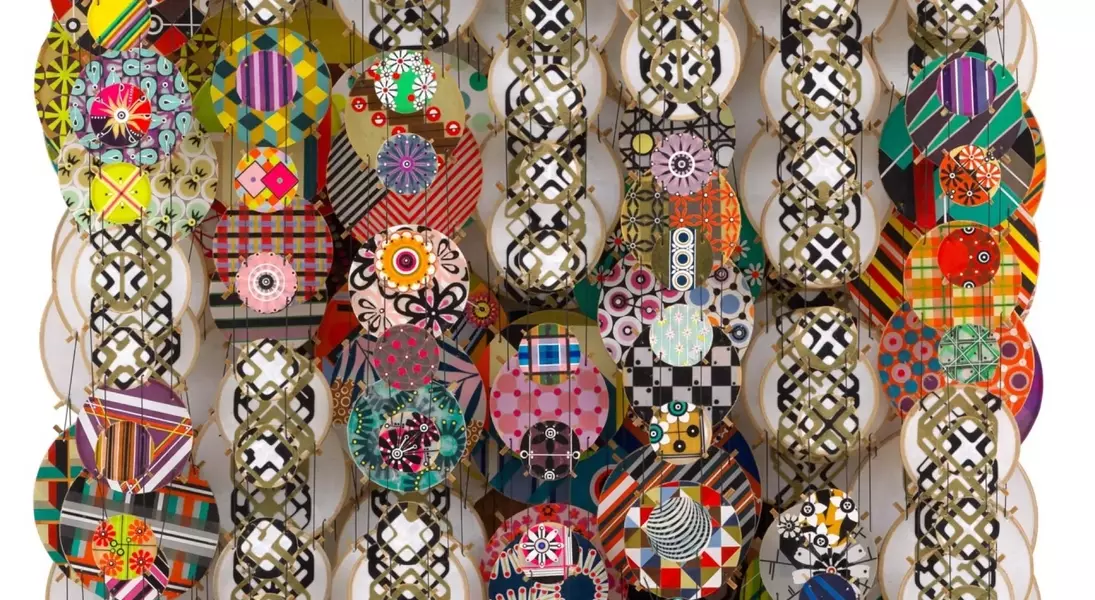
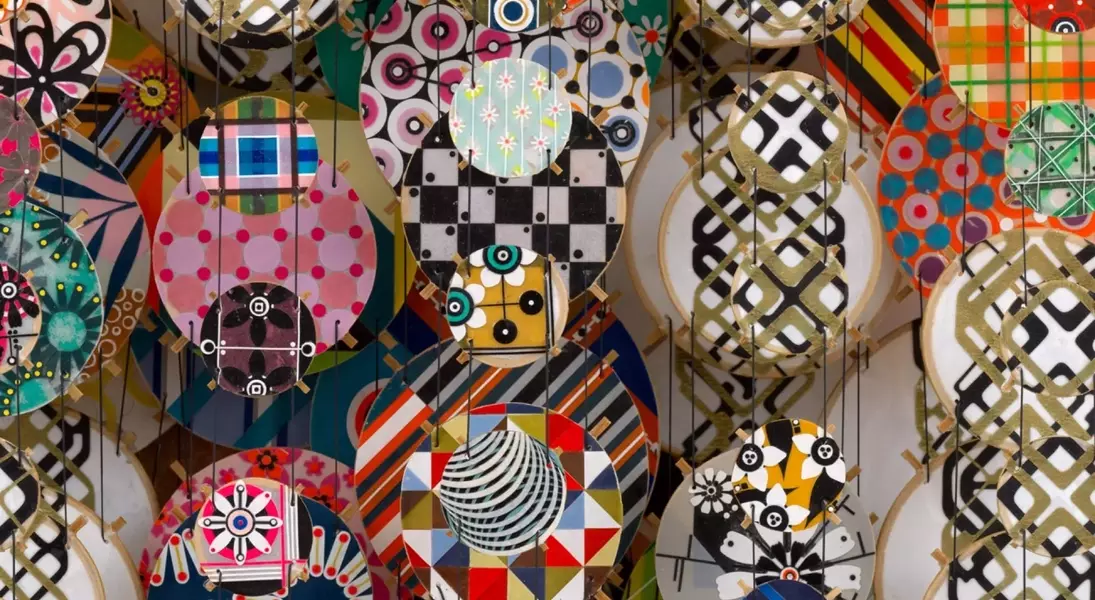
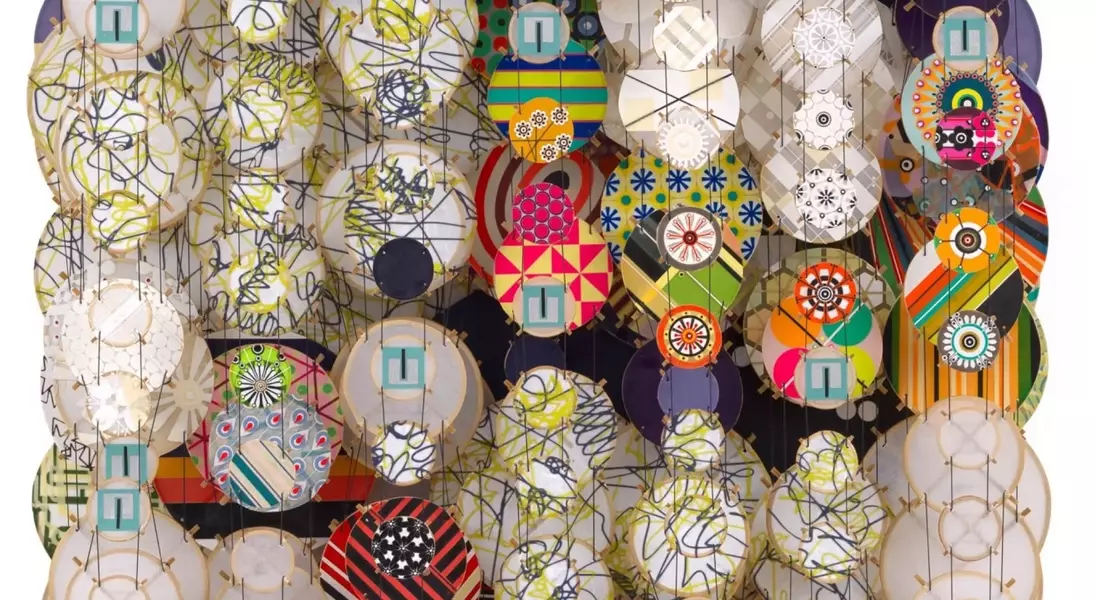
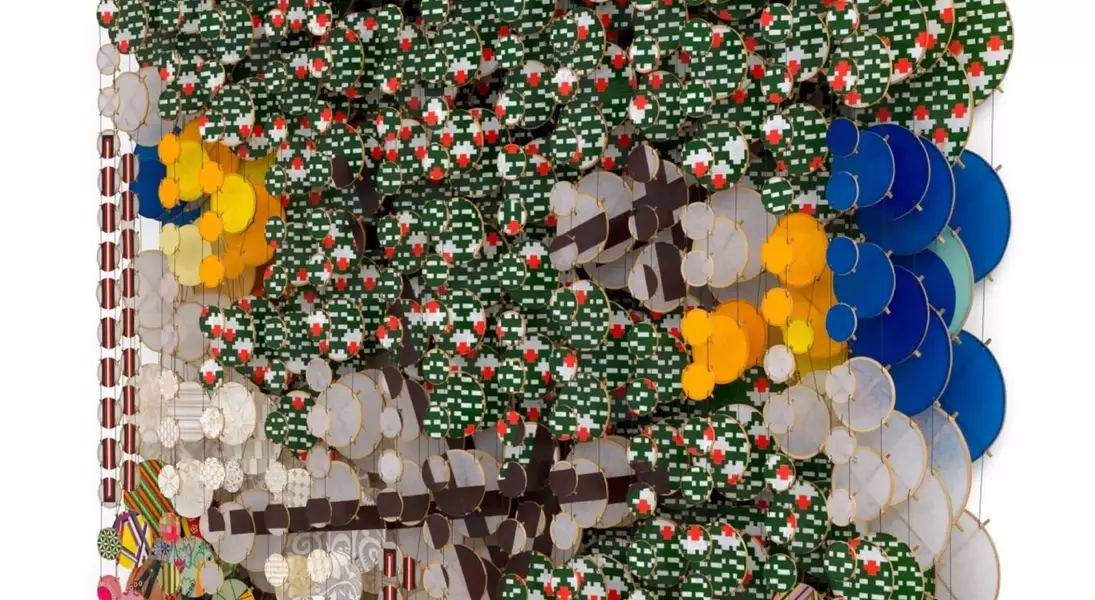
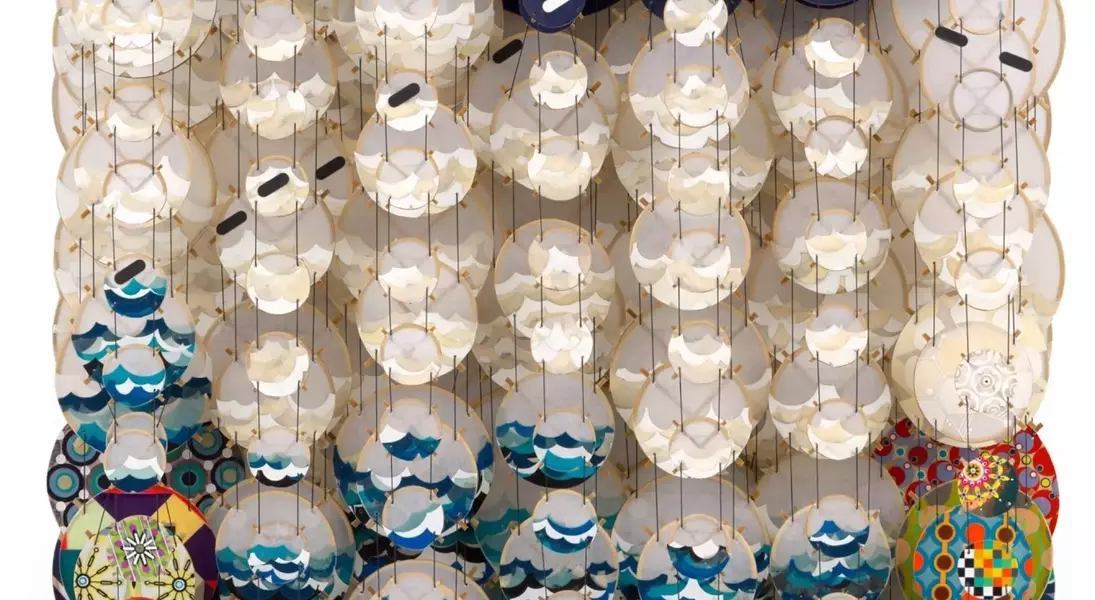
Jacob Hashimoto's artistic endeavors skillfully navigate the complex space between two-dimensional and three-dimensional art. His works are a masterful fusion of various artistic disciplines, incorporating traditional crafting methods with modern painting, printmaking, sculpture, and installation techniques. This distinctive approach allows his creations to transcend typical classifications, offering viewers a rich and multifaceted aesthetic experience.
Hashimoto's signature style involves the use of numerous paper and bamboo discs, often screen-printed with acrylic and arranged in vibrant, layered patterns. These discs, reminiscent of kites, form the foundation of his diverse portfolio, which spans from intricate wall-mounted pieces to monumental, site-specific installations. The meticulous placement of each translucent disc creates compositions where motifs fluidly expand, intertwine, and blend across multiple layers. While an intuitive sense of arrangement is evident, the overall structure is also guided by predefined parameters, much like the boundaries of a canvas, ensuring precision and coherence. For his larger installations, Hashimoto frequently employs 3D computer modeling to meticulously plan these complex layouts, highlighting a blend of artistic vision and technological exactitude.
The artist's solo exhibition, set to open at the Miles McEnery Gallery in New York City, underscores his ongoing exploration of the brushstroke reimagined as a modular element. Through this innovative lens, Hashimoto deconstructs the fundamental principles of painting—such as stroke, mark, and surface—into distinct and observable forms. This exhibition, running from October 30 to December 20, provides a compelling opportunity to witness the intricate beauty and conceptual depth of his creations, inviting audiences to reconsider the possibilities of artistic expression.
Hashimoto's commitment to pushing artistic boundaries exemplifies how creativity, precision, and a thoughtful reinterpretation of traditional elements can lead to profound and inspiring works. His art serves as a testament to the idea that innovation thrives when artists dare to explore the spaces between established forms, offering a fresh perspective on the world around us.