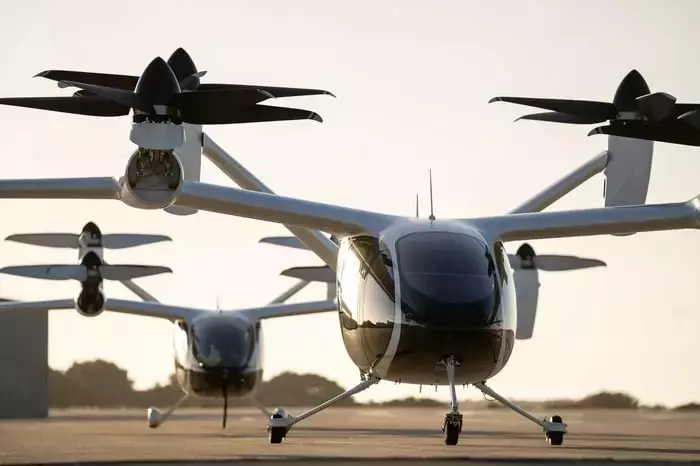
Joby Aviation has experienced a remarkable 73% increase in its stock value over the past year, prompting investors to scrutinize whether this aerospace innovator presents a solid purchasing opportunity. The company is at the forefront of developing electric vertical takeoff and landing (eVTOL) aircraft, aiming to transform urban transportation by offering a solution to traffic congestion. These futuristic vehicles are designed to achieve speeds up to 200 miles per hour, essentially providing an \"Uber of the skies\" experience, though this vision has yet to become a widespread reality. Despite a recent dip of nearly 30% from its peak, the core question remains: is Joby Aviation an undeniable investment at its current valuation?
A compelling argument for investing in Joby Aviation rests on several factors. The company has a notable advantage over competitors, such as Archer Aviation, in navigating the rigorous FAA certification process. Furthermore, Joby has secured significant alliances, including a partnership with Delta Airlines to facilitate air travel for its passengers to specific airports, and a substantial $500 million investment from Toyota, aimed at bolstering certification efforts and commercial production. A pivotal moment for the company occurred this past summer with the successful completion of the inaugural electric air taxi flight between two public airports in California, an event reminiscent of the Wright Brothers' historical achievement. Adding to its positive momentum, the White House recently issued an executive order designed to fast-track the deployment of advanced air mobility solutions, which could significantly aid Joby in obtaining the necessary approvals for commercial eVTOL operations. As of June, the company also boasted a robust financial standing, with approximately $991 million in cash and investments.
However, potential investors must also consider the inherent risks. Joby Aviation is currently in a pre-revenue stage, meaning it has not yet commenced commercial operations or generated income from passenger flights. This status is largely due to the ongoing need for full regulatory certification. The expenditures associated with research and development are substantial, and without a revenue stream, the company's rate of cash depletion poses a considerable challenge to its expansion initiatives. In the second quarter alone, Joby reported a net loss of around $325 million, and with a market capitalization of $12.4 billion, the company carries the weight of high market expectations. Therefore, while Joby Aviation represents a fascinating prospect within the transportation sector, it is best categorized as a speculative investment. It may not be suitable for all investors, but for those with a higher tolerance for risk, it presents an intriguing opportunity to be part of a potentially revolutionary industry.
Considering these dynamics, Joby Aviation stands as a unique proposition in the aerospace industry, blending groundbreaking technology with substantial market potential. The company's innovative eVTOL aircraft promise a future of swift, unhindered urban travel, a vision increasingly supported by strategic industry partnerships and governmental initiatives. Yet, the road to commercial viability is long, marked by the critical need for regulatory approval and the financial demands of pioneering new technology. Investors weighing Joby Aviation should acknowledge its speculative nature, understanding that while the potential for disruption and growth is significant, so too are the inherent uncertainties and challenges of bringing flying cars from concept to daily reality.
