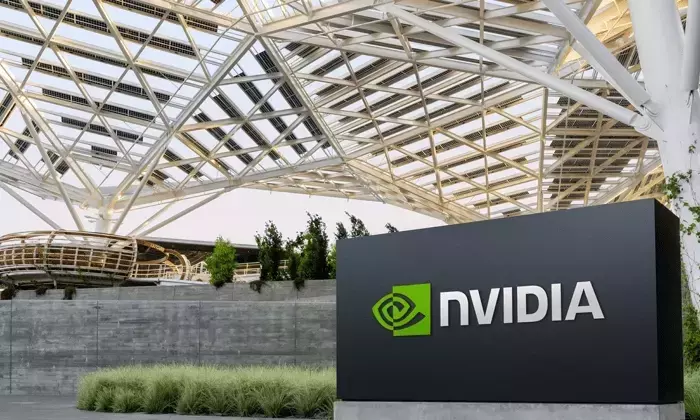
The artificial intelligence sector is experiencing a surge in infrastructure investment, with projections indicating a staggering $2.8 trillion in spending by 2029. Within this rapidly expanding market, Nvidia and Taiwan Semiconductor Manufacturing Company (TSMC) have established themselves as dominant forces, while Samsung endeavors to close the technological gap. This analysis explores the current dynamics of the AI chip industry, showcasing the leaders' strategic advantages and the challenges confronting those striving for market prominence.
AI Chip Dominance: Nvidia and TSMC Forge Ahead as Samsung Struggles to Keep Pace
In the dynamic realm of artificial intelligence, where technological prowess dictates market leadership, two giants, Nvidia and Taiwan Semiconductor Manufacturing Company (TSMC), have firmly seized control. As of October 9, 2025, these companies are not merely participating in the AI revolution; they are actively shaping its trajectory, demonstrating unparalleled innovation and market penetration. Their success is juxtaposed against Samsung's ongoing struggle to maintain competitiveness, particularly in the critical domain of advanced chip manufacturing.
Nvidia, a California-based technology behemoth, has solidified its position as a leading designer of graphics processing units (GPUs), which are indispensable for the demanding computational requirements of AI models. The company's chip designs are the preferred choice for tech giants such as Meta Platforms, Microsoft, OpenAI, Alphabet, and Tesla, securing an estimated 70% to 95% market share in AI data center chips. This dominance has translated into substantial financial growth, with fiscal year 2025 witnessing a 147% surge in earnings per share to $2.94 and a 114% increase in revenue, reaching $130.5 billion. Over the past three years, Nvidia's stock has delivered an astonishing 1,300% return, underscoring its pivotal role in the AI infrastructure build-out.
Complementing Nvidia's design superiority is TSMC, headquartered in Hsinchu, Taiwan, which stands as the world's foremost independent semiconductor foundry. TSMC is responsible for manufacturing approximately 90% of the world's most sophisticated processors, including those designed by Nvidia. The company's relentless pursuit of advanced manufacturing processes, exemplified by its 2nm node technology, allows for an unprecedented density of transistors on a single chip. This technological lead places TSMC significantly ahead of its rivals, including Intel, as noted by industry analysts. TSMC's manufacturing efficiency, with a 90% yield rate for its 3nm chip manufacturing process, contrasts sharply with Samsung's approximate 50% yield, highlighting a critical disparity in production capabilities.
Meanwhile, South Korean conglomerate Samsung, despite being the second-largest semiconductor manufacturer by revenue, is encountering considerable hurdles in the AI race. Jun Young-hyun, vice chairman of Samsung's semiconductor business, publicly acknowledged the company's competitive challenges, signaling a period of introspection and strategic recalibration. While Samsung secured a significant $16.5 billion contract with Tesla for advanced processor manufacturing, its overall manufacturing prowess and deal-making capacity in the AI sector have not yet matched the formidable leads established by TSMC and Nvidia. The current landscape suggests that investors seeking clear beneficiaries of the AI boom would find more compelling opportunities with Nvidia and TSMC, rather than banking on a rapid resurgence from Samsung.
This evolving narrative in the AI chip market underscores the critical importance of continuous innovation and manufacturing excellence. As AI infrastructure spending continues its upward trajectory, the companies that can consistently deliver cutting-edge technology and efficient production will undoubtedly remain at the forefront of this transformative industry.
The rapid acceleration of AI spending highlights a pivotal moment in technological evolution. This report underscores the importance of strategic positioning and relentless innovation in a fiercely competitive landscape. For industries and investors alike, the takeaways are clear: understanding the nuanced strengths and vulnerabilities of key players is crucial for navigating the opportunities and risks presented by the AI revolution. The current trends suggest that adaptability and a forward-looking approach to technological advancement will be paramount for sustained success in this burgeoning sector.
