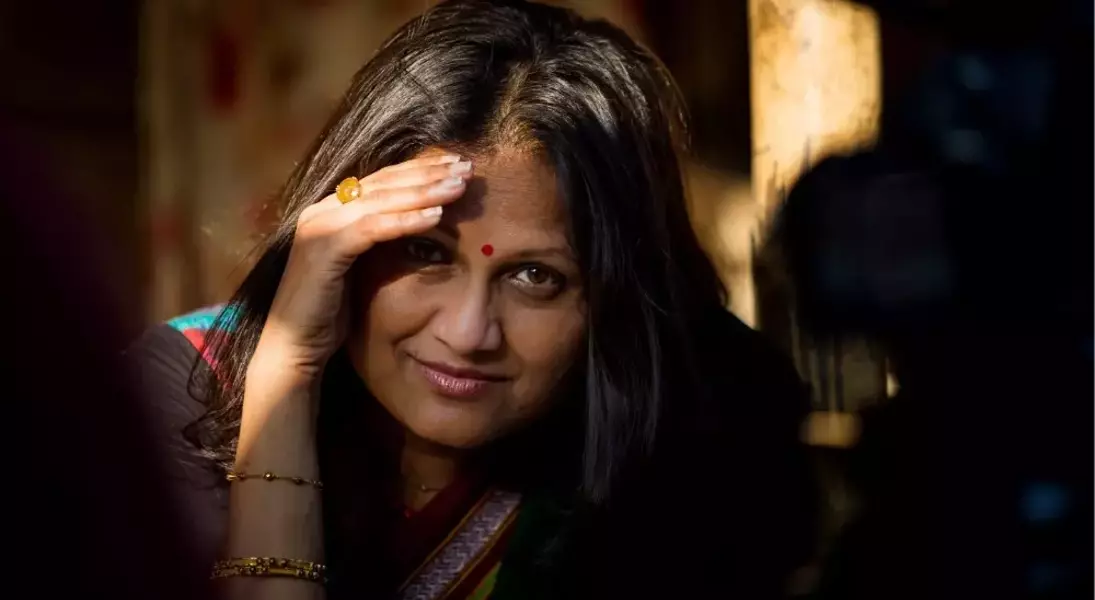
Leesa Gazi, a celebrated Bangladeshi filmmaker, is embarking on an ambitious project: a contemporary cinematic reimagining of Rabindranath Tagore's 1893 short story, "Shasti" (Punishment). This psychological drama, featuring a stellar cast including Pori Moni, Chanchal Chowdhury, Aanon Siddiqua, and Arka Das, aims to explore profound societal themes. The film's production is slated to commence in the vibrant city of Dhaka during October and November. Gazi's previous work, "A House Named Shahana," garnered international recognition as Bangladesh's inaugural female-directed submission for the Academy Awards, setting high expectations for her latest endeavor.
Bangladeshi Director Leesa Gazi Helming Tagore's 'Shasti'
In a significant development for Bangladeshi cinema, acclaimed filmmaker Leesa Gazi announced her next directorial venture, "Shasti" (Punishment), an adaptation of Nobel laureate Rabindranath Tagore's poignant 1893 short story. The project boasts an impressive international production team and a leading cast comprising Pori Moni, Chanchal Chowdhury, Aanon Siddiqua, and Arka Das, supported by Kazi Ruma and Kamrunnahar Munni. Filming is scheduled to take place in Dhaka in the autumn months of October and November.
The narrative of "Shasti" unfolds around the mysterious demise of an influencer named Lucky, with initial accusations pointing towards her sister-in-law, Meera. This incident quickly escalates into a media frenzy, leading to a trial marred by manipulation. The film promises to dissect intricate themes of family secrets, deep-seated betrayal, and the pervasive influence of a society quick to condemn. Gazi's vision is to highlight the stark contrasts between perceived truths and hidden realities, especially in an era dominated by virtual lives and relentless public scrutiny. Her previous film, "A House Named Shahana," which represented Bangladesh at the 98th Academy Awards, cemented her reputation as a filmmaker with a keen eye for compelling storytelling.
The production consortium for "Shasti" includes Komola Collective, Sanat Initiative, Awedacious Originals, Goopy Bagha Productions, Screenxcope Australia, and Black & White Workshop Inc. Leesa Gazi herself is producing alongside Abid Aziz Merchant, Apoorva Bakshi, and Arifur Rahman, with Sakib Iftekhar and Rainbow Fong serving as co-producers. Faisal Gazi and Tulip Kabir are the executive producers, and Abbas Nokhasteh and Kazi Ruma are co-executive producers. The creative backbone of the film involves Gazi and Siddiqua shaping the original story, with the screenplay crafted by Gazi, Siddiqua, and Sadia Khalid Reeti. Alex Unai leads cinematography, Tania Rahman handles casting and line production, Nahid Masud manages on-location sound, Rasheed Sharif Shoaib composes the background score and sound design, Sharmin Doza acts as script supervisor, and Raza Sumit Rahman is the music director for the Maizbhandari song.
Gazi expressed her profound connection to the project, stating, "I have been trying to understand the time we are living in, and this film emerged from that urgency and restlessness. It lives in contrast: between timelines, between perception and reality on actual and virtual life, between what's seen and what's kept hidden. It reflects on truth, justice, and the continuous battles fought in silence by many. Making this film is both a reckoning and a search for hope." The producers echoed her sentiments, emphasizing the film's potential to inspire change and offer a powerful narrative that resonates with contemporary issues. This adaptation also follows a previous version directed by Chashi Nazrul Islam, released in Bangladesh in 2004, indicating a rich history for the story on screen.
This adaptation of Tagore's timeless work by Leesa Gazi offers a compelling opportunity to reflect on enduring human struggles within a modern context. The film's exploration of justice, truth, and societal pressures, particularly through the lens of media and public judgment, is highly relevant in today's interconnected world. It challenges viewers to consider the complexities of perception versus reality, and the silent battles many face. As a filmmaker, Gazi continues to use her platform to ask difficult questions and provoke thoughtful dialogue, reinforcing the power of cinema to illuminate and inspire.
