The Los Angeles Kings' strategy for developing young centers, particularly Quinton Byfield, has come under scrutiny, revealing a persistent organizational pattern. Despite Byfield's initial promise as a top-tier center, his progress has faltered, highlighting a broader issue within the team's approach. Historically, the Kings have often moved drafted centers to the wing, as seen with Gabriel Vilardi and even Adrian Kempe, creating a reactive rather than proactive development environment. This tendency to seek external solutions or modify player roles rather than fully committing to a long-term center development plan has significantly impacted Byfield's journey.
The team's recent acquisitions further complicate the center situation, indicating a lack of clear direction. The arrival of Phillip Danault and later Pierre-Luc Dubois, intended to strengthen the center position, inadvertently led to redundancy and the departure of other drafted centers like Vilardi and Rasmus Kupari. This transactional approach, rather than fostering internal growth, culminated in a challenging season with a coaching change and an early playoff exit. Furthermore, the aging Anze Kopitar, alongside the injured Alex Turcotte, leaves the Kings with a precarious center lineup. Turcotte's potential, though hampered by injuries, now appears limited to a third-line role or a complementary winger, echoing the familiar fate of other drafted centers in the organization.
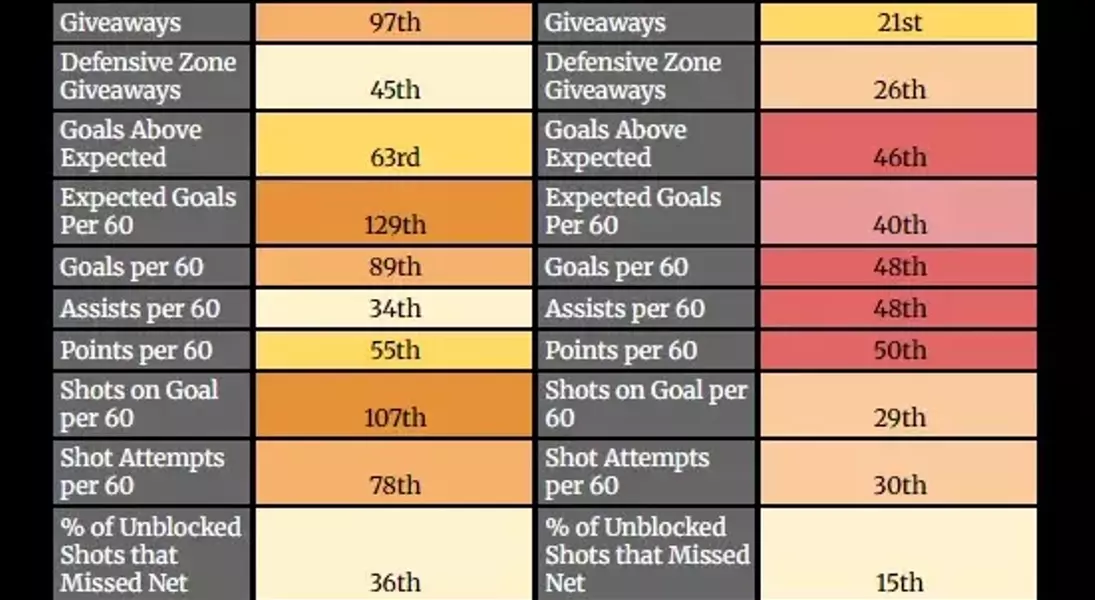
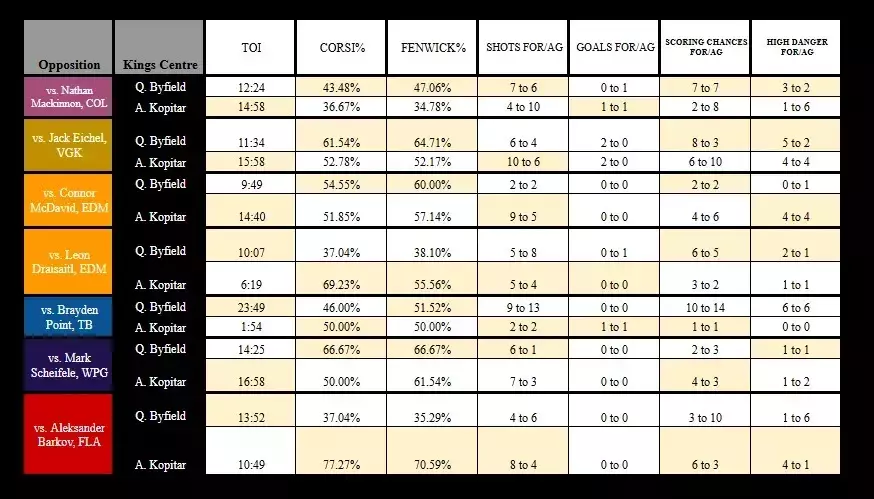
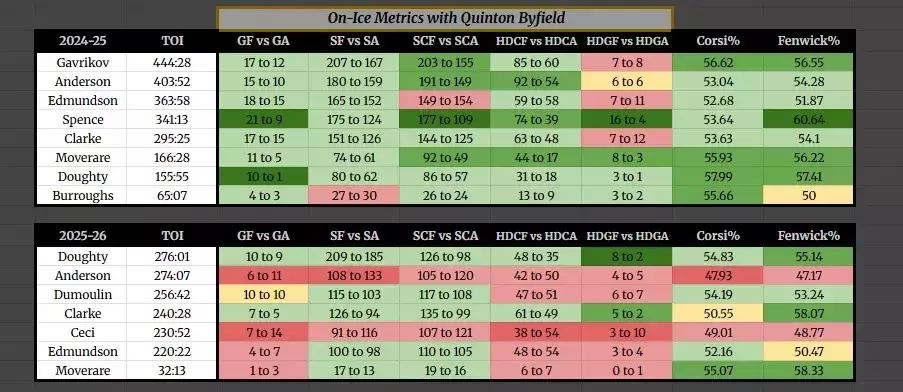
Byfield's recent performance reflects the instability around him, exacerbated by inconsistent linemates and increased defensive responsibilities. While last season showcased his potential as a first-line center, this season has seen a decline in offensive creativity and an increase in defensive zone workload. The underlying statistics reveal a team that is being outshot and losing high-danger chances when Byfield is on the ice, indicating a challenging environment rather than solely a player's regression. The acquisition of Artemi Panarin offers a critical opportunity for Byfield, potentially providing the consistent offensive support he has previously lacked. This season will serve as a definitive test: if Byfield can thrive alongside Panarin, it will validate the organization's long-term patience. However, failure to do so might suggest that the team's foundational center issues were left unaddressed for too long, shifting the focus from systemic problems to individual performance.
Ultimately, the narrative surrounding the Kings' center position, and Byfield's role within it, underscores the importance of a coherent and supportive development pathway. True growth and potential realization stem not only from individual talent but also from a stable and thoughtfully constructed environment that empowers players to excel.
