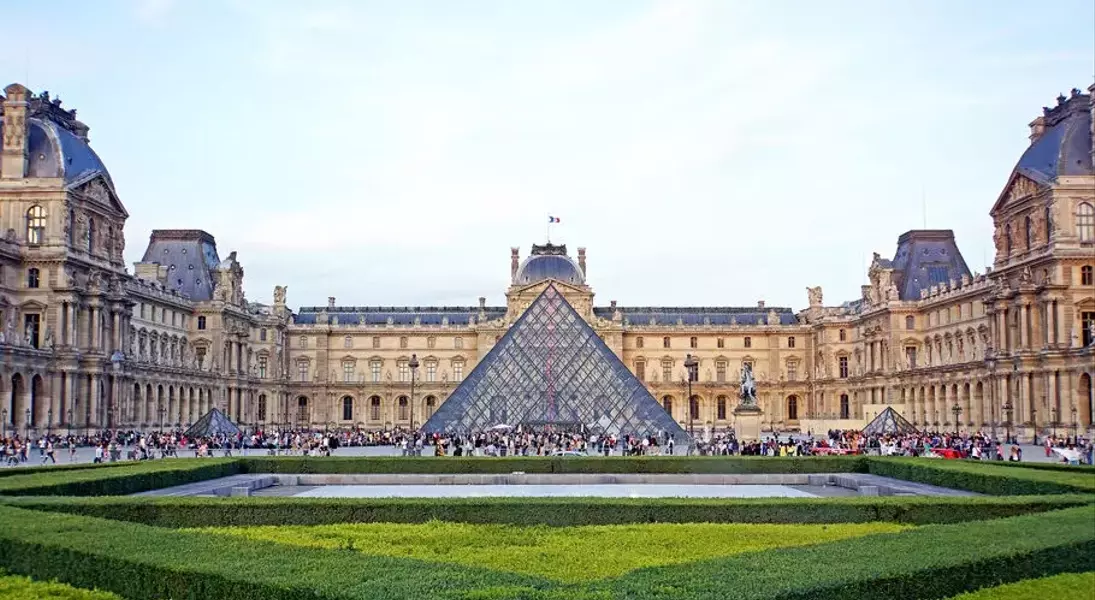
In response to a recent high-profile jewel theft, the Louvre Museum has revealed a substantial €80 million plan to bolster its security infrastructure. This comprehensive overhaul, announced on Friday, comes after years of unheeded warnings regarding the museum's susceptibility to such breaches, culminating in the brazen robbery last month. The enhancements are designed to address critical weaknesses, such as obsolete software and alarmingly simple passwords, one of which was reportedly 'Louvre,' as highlighted by internal audits dating back over a decade.
The museum's President, Laurence des Cars, confirmed the immediate establishment of a new security coordinator position, reporting directly to her office, to oversee these critical changes. The initiative also includes the formation of new security committees and a significant 20 percent increase in funds allocated for staff training. These reforms are a direct consequence of the audacious daytime robbery on October 19th, where four masked individuals infiltrated the Apollo gallery, utilizing a service lift to gain access. They then shattered display cases with angle grinders and absconded within seven minutes, making their escape on scooters. This incident, which occurred during public visiting hours, eerily parallels the 1911 theft of the Mona Lisa, marking the last time the museum experienced a crime of such magnitude.
Authorities later identified the perpetrators as petty criminals from Seine-Saint-Denis, a Parisian suburb, rather than international art traffickers. Two men were apprehended on October 26th, with a 38-year-old woman and a 37-year-old man subsequently charged with theft and criminal conspiracy, despite their denial of involvement. The eight stolen items, valued at $102 million and uninsured, include historically significant pieces such as a tiara and brooch belonging to Empress Eugénie, an emerald necklace and earrings from Empress Marie Louise, and a sapphire set associated with Queen Marie-Amélie and Queen Hortense, alongside another reliquary brooch. The planned upgrades, encompassing digital surveillance, reinforced display cases, and enhanced coordination with French law enforcement, are slated for implementation over the next 18 months, coinciding with ongoing infrastructure renovations totaling €800 million, which include a new exhibition space for the Mona Lisa, driven by President Macron's initiative to address overcrowding and environmental concerns for the museum, which attracted 8.7 million visitors in 2024.
This renewed commitment to security at the Louvre serves as a powerful reminder of the delicate balance between public accessibility and the imperative to protect irreplaceable cultural heritage. By proactively addressing vulnerabilities and embracing advanced protective measures, the museum not only safeguards its invaluable treasures but also reinforces its role as a secure sanctuary for art and history, inspiring confidence in visitors and upholding its global stature as a beacon of human achievement and resilience.