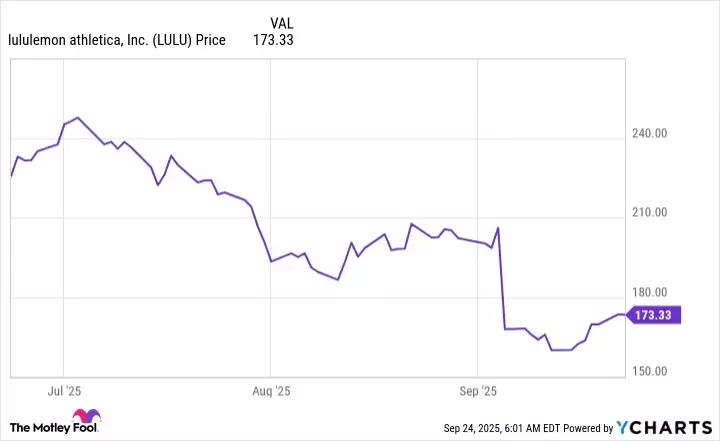

Lululemon Athletica, a leading brand in athleisure wear, is currently experiencing a downturn, yet its foundational business remains promising. While recognized for its athletic apparel, Lululemon's pricing strategy positions it firmly in the luxury fashion market. This distinction is crucial for investors to grasp, as it shapes the brand's operational dynamics and market sensitivity.
Understanding Lululemon's business model reveals it primarily operates as a high-end fashion retailer. This status means the company is particularly susceptible to shifts in consumer tastes and fashion trends. Past incidents of quality control issues or misjudged fashion directions have led to negative public perception and customer migration to competing brands. The recent subdued guidance for the latter half of 2025, partly attributed to tariff concerns, also highlighted a 4% decrease in comparable sales within the Americas. This suggests that the brand's appeal in its core market might be waning, influencing investor sentiment and contributing to the stock's recent decline. However, Lululemon boasts a robust financial standing with no long-term debt and substantial cash reserves, providing it with the resilience to navigate temporary market fluctuations and address fashion-related challenges.
Lululemon pursues growth through two primary avenues: enhancing comparable store sales and expanding its physical footprint. While comparable sales are a critical indicator of store performance, the company's aggressive new store openings contribute significantly to its top-line revenue, often offsetting softer comparable sales figures. For instance, in the second quarter of 2025, despite weaknesses in comparable sales, overall revenue in the Americas saw a 1% increase due to the addition of 14 new stores, bringing the total to 784. The international market represents a substantial growth opportunity, with comparable sales rising by 15% and total international sales up 22%. This geographic diversification, coupled with its expansion strategy, underscores Lululemon's capacity for continued growth even amidst domestic challenges. Following a considerable drop of approximately two-thirds from its peak in late 2023, Lululemon's valuation metrics, including price-to-sales, price-to-earnings, and price-to-book-value ratios, are now significantly below their five-year averages. This could present an attractive entry point for growth-oriented investors or those adhering to a growth at a reasonable price (GARP) investment philosophy.
Lululemon's journey through its current challenging phase demonstrates its adaptability and underlying strength. For investors who appreciate the nuances of a high-end, fashion-driven retail enterprise and are prepared for market volatility, the company's present valuation offers an intriguing proposition. It serves as a reminder that even established brands encounter periods of adversity, and astute investors often find opportunities by looking beyond immediate setbacks to the long-term potential fueled by strategic growth and financial resilience.
