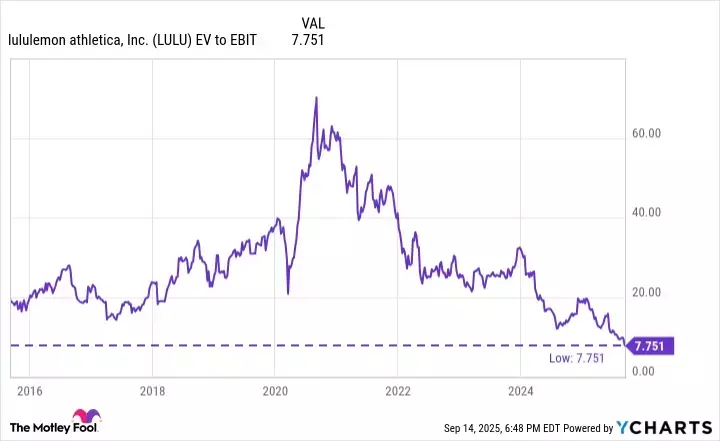

Lululemon's stock has recently faced a substantial decline, with its value plummeting by almost 70% from its all-time highs, marking 2025 as a particularly difficult year for the company's shares. This downturn has prompted investors to reconsider the athleisure leader's trajectory, especially in light of increased competition within the athletic clothing sector and broader apparel industry. However, despite these challenges, Lululemon maintains a strong historical record of growth and has successfully captured a significant portion of the market. The current market conditions have led to the stock trading at one of its lowest earnings multiples in history, presenting both opportunities and risks for potential investors.
A compelling reason to consider investing in Lululemon is its remarkable historical expansion within the highly competitive apparel landscape. Since its initial public offering (IPO) in 2007, the company has witnessed a staggering cumulative revenue growth of 3,910%, soaring from less than $1 billion to $10.9 billion over the past year. This impressive growth is largely attributed to its distinctive athleisure designs and effective brand positioning, which have enabled Lululemon to secure a significant market share in the United States. Furthermore, the company has strategically initiated international expansion, with substantial opportunities identified in regions like China, Europe, Latin America, and other Asian markets. China, being the world's largest apparel market with a consumer base inclined towards fashion spending, has seen Lululemon's Mainland China revenue increase by 24% year-over-year, now contributing 16% to its total net revenue. The potential for further store openings and online adoption suggests that the Chinese market is far from saturated. Similarly, other international regions, currently accounting for only 15% of Lululemon's business, represent fertile ground for future growth.
Another attractive aspect for investors is Lululemon's current valuation. As of September 14, the stock's enterprise value-to-operating income (EV/EBIT) ratio stood at 7.75, which is the lowest it has been in the last decade. This low valuation, combined with management's consistent share repurchases, indicates a potential for enhanced earnings per share (EPS) growth and long-term stock appreciation. The company has reduced its outstanding shares by 15% over the past ten years, with the pace of buybacks accelerating. This strategy, coupled with a discounted earnings ratio, makes Lululemon's stock particularly appealing. However, the current low valuation prompts a closer look at the underlying reasons for investor caution.
The apparel sector is inherently cyclical, characterized by fluctuating trends and consumer preferences. For approximately 15 years, athleisure brands like Lululemon appeared almost impervious to market shifts, enjoying premium valuations from Wall Street, particularly during the COVID-19 pandemic. Historically, Lululemon's EV/EBIT ratio ranged from 30 to 60, significantly above the market average. However, this growth narrative is now being scrutinized. The most recent quarter revealed a mere 1% year-over-year revenue growth in North America, falling below inflation rates. Additionally, the imposition of tariffs on imported goods is anticipated to impact profit margins, potentially leading to a decline in Lululemon's earnings in 2025. Despite maintaining market share within the athleisure category, Lululemon is currently navigating broader consumer headwinds, as other clothing styles gain popularity. This shift highlights the cyclical risks inherent in the apparel industry. Nonetheless, Lululemon's strong brand identity and extensive history of impressive growth, even when considering these cyclical challenges, suggest that the stock could be a valuable addition to a portfolio, especially given its current discounted price during this 2025 dip.
