
This article explores how Lyft, a prominent ride-sharing platform, is defying negative market perceptions and demonstrating strong financial performance. It highlights the company's impressive growth in ridership and strategic financial moves that position it for continued success.
Lyft: Surging Ahead Despite Market Skepticism
Unpacking the Misconceptions Surrounding Lyft's Future
Many market observers hold a pessimistic view regarding Lyft's long-term viability, often citing the impending rise of autonomous vehicle technology. The prevailing narrative suggests that self-driving car fleets could render traditional ride-sharing models obsolete, potentially creating monopolies for technology giants like Tesla. However, this perspective overlooks several critical aspects of the evolving transportation landscape and Lyft's current operational strength.
Challenging the Autonomous Vehicle Monopoly Theory
While the prospect of fully autonomous car fleets is significant, the notion that a single entity, such as Tesla, will dominate this future is overly simplistic. Numerous automotive manufacturers are actively developing self-driving capabilities, indicating a highly competitive future market. In such an environment, platforms like Lyft and Uber would likely retain their value as essential demand aggregators, connecting diverse fleets of autonomous vehicles with consumers. History also suggests that technological disruptions often unfold over longer timeframes than initially projected, providing ample opportunity for existing players to adapt and innovate.
Lyft's Impressive Growth Trajectory and Engagement Milestones
Contrary to the predictions of its decline, Lyft has consistently achieved record-breaking engagement. In the second quarter of 2025, the company facilitated nearly 235 million rides, marking a 14% year-over-year increase and representing its ninth consecutive quarter of double-digit growth. This surge is underpinned by a record 26 million active riders, underscoring the platform's enduring appeal and expanding user base. These figures emphatically demonstrate Lyft's current strength and its ability to thrive even amidst evolving industry narratives.
Assessing Lyft's Appealing Valuation for Investors
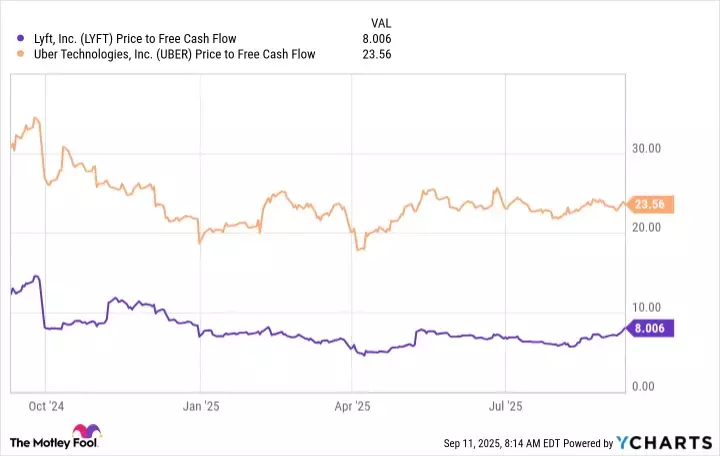
The discrepancy between Lyft's robust performance and its market perception has created a compelling investment opportunity. The company's stock trades at a significantly lower multiple of its trailing free cash flow compared to competitors like Uber. This undervalued status suggests substantial upside potential. The investment community is gradually recognizing this undervaluation, which could lead to a significant re-rating of Lyft's stock. Even if the market continues to undervalue Lyft, the company's management is actively leveraging its strong free cash flow to repurchase shares, thereby increasing the value for existing shareholders. This strategic approach, coupled with sustained revenue growth, positions Lyft to deliver impressive returns for investors in the coming years.
