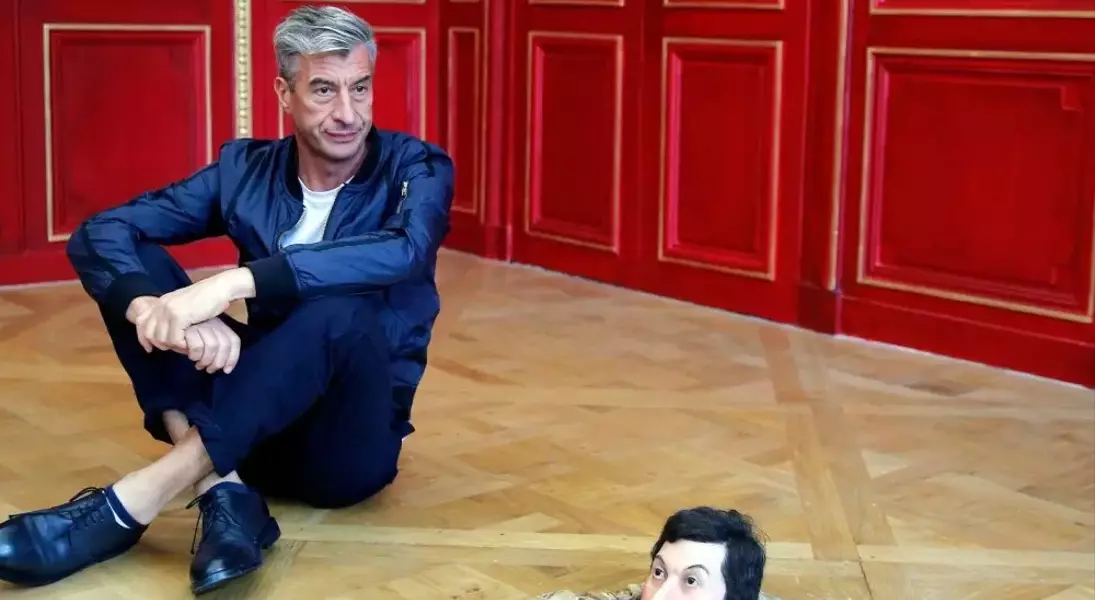
Maurizio Cattelan, an artist renowned for his incisive wit and provocative artistic contributions, has been honored with the 2026 Preis der Nationalgalerie. This prestigious biennial award, bestowed by Berlin's Nationalgalerie, recognizes an influential contemporary artist by providing them with a dedicated solo exhibition within the German institution. The decision was made by a distinguished international jury comprising prominent figures from the art world, including Emma Lavigne from the Pinault Collection, Sam Keller of the Fondation Beyeler, and Klaus Biesenbach from the Neue Nationalgalerie.
Cattelan's artistic output, which spans from sculptural works to installations and conceptual art, is consistently marked by its astute social commentary and often generates considerable discussion. His most recognizable creations include 'La Nona Ora' (1999), depicting Pope John Paul II struck by a meteorite; 'America' (2016), a functioning toilet crafted from 18-karat gold; and 'Comedian' (2019), a banana simply taped to a wall. These works, often met with both acclaim and controversy, probe fundamental questions regarding ethics, authority, and societal values, utilizing a style that is both approachable and profoundly enigmatic. In a testament to his continued relevance, Cattelan was also commissioned to develop the Vatican Pavilion for the Venice Biennale in 2024, further cementing his position as a significant voice in contemporary art.
His upcoming solo presentation at the Neue Nationalgalerie, scheduled to coincide with Berlin Art Week in September 2026, marks a return to the city where he previously co-curated the 4th Berlin Biennale in 2006. The exhibition, co-curated by Klaus Biesenbach and Lisa Botti, a curator at the Neue Nationalgalerie, will be inaugurated with a special ceremony. The jury emphasized that this exhibition provides a timely opportunity to re-examine Cattelan's formative influence within the current social and cultural landscape, especially given Berlin's unique history and its ongoing engagement with complex contemporary issues. They underscored the power of his art to encourage a vital and relevant form of remembrance, particularly in an era of heightened political polarization, asserting that his ironic questioning of authority and 'truth' offers a constructive avenue for reflection and resistance, devoid of moralizing.
Cattelan's work, which challenges established power structures within and beyond the art world, serves as a powerful reminder that provocation and wit are not merely cynical gestures but essential forms of resistance and profound critical engagement. His ability to spark dialogue and challenge perceptions continues to inspire a re-evaluation of institutions and societal roles, fostering a more dynamic and critically aware understanding of our world.