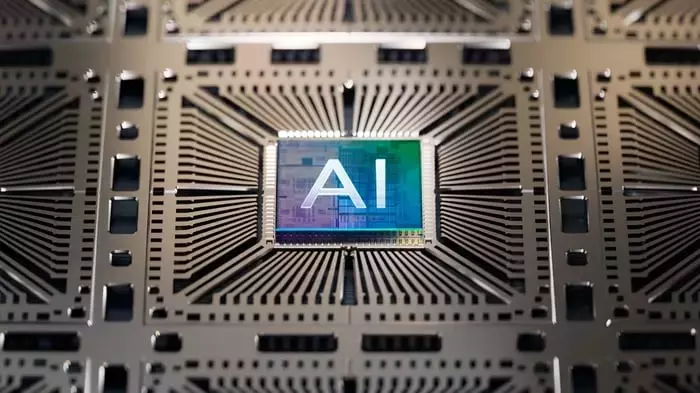
Micron Technology is experiencing an unprecedented surge, driven by escalating demand for High-Bandwidth Memory (HBM) chips, essential components for powering artificial intelligence (AI) accelerators, and robust pricing trends in the broader DRAM market. Despite an initial cautious approach to the HBM sector, Micron has dramatically pivoted, rapidly scaling its production capabilities and positioning itself as a pivotal supplier in this burgeoning field. This strategic shift has fueled a substantial increase in the company's financial performance, marked by significant revenue growth and expanding profit margins, with HBM contributions alone approaching $2 billion quarterly. Nonetheless, observers keenly note the inherent cyclicality of the memory chip industry, suggesting that the current era of elevated profitability might eventually temper, particularly if the ambitious projections for AI infrastructure investments do not fully materialize.
While the immediate outlook for Micron appears exceptionally strong, propelled by the relentless expansion of AI, the company and its investors must remain cognizant of the historical volatility within the memory chip market. The current boom, largely an artifact of intense AI-driven demand, stands in contrast to the more subdued performance seen in traditional PC and smartphone markets. This AI impetus has created a unique scenario where HBM production takes precedence, inadvertently tightening the supply of standard DRAM and consequently elevating its prices. Micron benefits doubly from this dynamic: not only through substantial HBM sales but also from improved DRAM pricing. However, should the anticipated growth in AI infrastructure fall short or face unexpected headwinds, the industry could quickly transition from a period of scarcity and high prices to one of oversupply and steep price declines, potentially echoing past downturns where gross margins have dramatically compressed.
Micron's Ascendance in High-Bandwidth Memory
Micron Technology, once a laggard in the high-bandwidth memory (HBM) market, has undergone a remarkable transformation, becoming a dominant force in this critical sector. HBM chips are indispensable for artificial intelligence (AI) accelerators, providing the immense bandwidth required for efficient AI workload processing. The company's focused efforts have resulted in a rapid escalation of HBM production, alongside aggressive development of its next-generation HBM4 technology. This strategic emphasis on HBM has not only satisfied the surging demand from AI infrastructure but has also created a ripple effect across the broader memory chip landscape. As manufacturers prioritize HBM, the supply of standard DRAM chips has tightened, leading to a significant upward trend in their pricing. Consequently, Micron is now reaping substantial benefits from both the high-value HBM sales and the improved pricing environment for its traditional DRAM offerings.
This surge in demand, driven by the unprecedented growth in AI, has propelled Micron to achieve blockbuster financial results. The company's total revenue for the fourth quarter of fiscal 2205 soared to $11.3 billion, representing a 46% increase year-over-year. A significant portion of this revenue, approximately four-fifths, was attributed to DRAM, a category that includes HBM. Notably, revenue generated solely from HBM approached $2 billion in the quarter, indicating an impressive annual revenue run rate of $8 billion for this product line—a remarkable achievement given that HBM contributions were negligible just a short while ago. Looking ahead, Micron projects that its standard DRAM bit supply growth for calendar 2025 will be outpaced by industry demand. Coupled with a general improvement in market demand and constrained supply growth from other manufacturers, the company anticipates that DRAM supply will remain tight into 2026, thereby sustaining upward pressure on pricing and ensuring continued profitability.
Navigating the Cyclical Nature of Memory Chips
While Micron's current trajectory is undeniably impressive, fueled by the insatiable demand from the artificial intelligence sector, it is crucial for investors to acknowledge the inherent cyclicality of the memory chip industry. Historically, memory chips have been regarded as commodities, leading to predictable boom-and-bust cycles. The current "mother of all up cycles" is largely an anomaly, driven almost entirely by the AI boom, which has overshadowed the otherwise weak demand from mature markets like personal computers and smartphones. The frenetic pace of AI infrastructure investments, with technology giants allocating hundreds of billions to AI data centers, has created an environment where HBM production is prioritized, inadvertently tightening the supply of standard DRAM and pushing prices higher. This dynamic has led to an explosion in Micron's profit margins, with adjusted gross margins reaching 46% and operating margins at 35% in the fourth quarter, a significant departure from historical averages.
However, the sustainability of this extraordinary growth hinges precariously on the continued, rapid expansion of AI demand and the realization of ambitious infrastructure investments. The current spending spree by major tech players like OpenAI, Oracle, Nvidia, Microsoft, and Meta is predicated on projections of future AI computing needs and the evolving capabilities of AI models. Should these expectations prove overly optimistic, or if the anticipated demand for AI computing falters, the industry could face a significant oversupply of HBM chips. Such a scenario would inevitably trigger a sharp downturn, potentially as severe as past cycles where Micron has reported negative gross margins due to plummeting prices. Although forecasting the long-term future of the AI industry is challenging, the fundamental principle of the memory chip market remains: periods of robust profitability have invariably given way to contractions. Therefore, investors considering Micron must factor in this cyclical nature, understanding that while the present looks bright, the landscape can shift rapidly.
