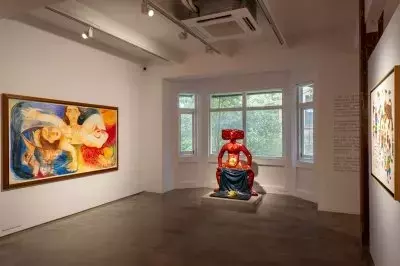
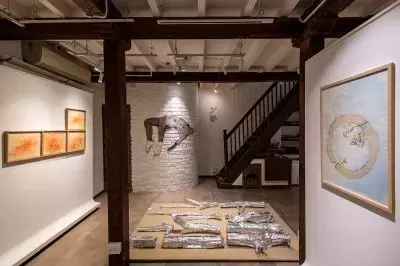
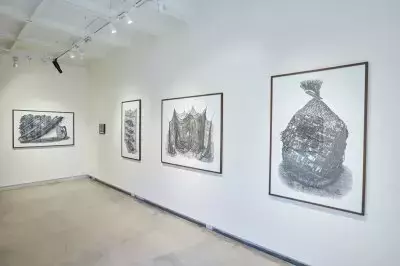
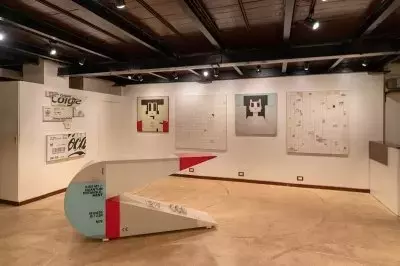
Mumbai's vibrant art scene is undergoing a significant transformation, driven by robust economic growth and an influx of new talent and discerning collectors. While the established modern art sector continues to thrive, contemporary art is rapidly gaining prominence. This evolution is largely powered by a wave of innovative young gallerists, many of whom are millennials with diverse professional backgrounds, fearlessly using their platforms for socio-political commentary. These pioneering spaces are not merely exhibition venues; they are becoming crucial hubs for dialogue and artistic exploration, fundamentally reshaping Mumbai's identity as a global art capital.
Spotlight on Mumbai's Avant-Garde Art Spaces
As the much-anticipated third edition of Art Mumbai prepares to open its doors from November 13 to 16, a constellation of five groundbreaking galleries stands out, each contributing uniquely to the city's artistic renaissance. These establishments, strategically located across Mumbai's bustling art districts and burgeoning new locales, embody a forward-thinking approach to art curation and community engagement.
Art & Charlie, founded by Ayesha Parikh in 2019, initially operated as a nomadic pop-up before settling into a charming Portuguese colonial-era house in Bandra in 2022. Parikh, with a background in corporate consulting, intentionally chose Bandra to attract a new generation of art enthusiasts from various professional spheres. The gallery challenges conventional norms, exemplified by its collaboration with the India Art Fair to showcase an anti-caste installation by Yogesh Barwe. Art & Charlie represents a compelling roster of emerging artists, including Saviya Lopes, Kumar Misal, and Sukanya Ayde. Its growing influence is further cemented by its nomination to co-organize the upcoming Mumbai Gallery Weekend.
Chemould CoLab, established in 2022 by Atyaan Jungalwala, represents an organic extension of the esteemed Chemould Prescott Road gallery. Housed within the historic Sugra Manzil in Colaba, this residential setting offers a uniquely intimate experience for artists and visitors. Jungalwala's vision was to create a dynamic space for younger practitioners, fostering experimentation and innovative ideas. The gallery has ingeniously utilized its space by hosting artist residencies during traditionally quieter exhibition periods, facilitating workshops and open studios that deepen public engagement with artists like Gurjeet Singh, Tarini Sethi, Jayeeta Chatterjee, and Shailee Mehta.
Fulcrum, launched in January by Ayesha Agarwal, is nestled in the historic Fort district. Agarwal, who previously worked with TARQ and Experimenter, and contributed to the Kochi-Muziris Biennale, views herself as an 'arts worker' rather than a traditional gallerist. Her gallery's inaugural year has featured thought-provoking exhibitions by artists such as Bharathesh GD, Chetan Kurekar, and Amiya Ranjan Ojha, all known for their socio-political undertones. Agarwal envisions Fulcrum as a community gathering point, emphasizing its role beyond mere exhibitions, and focuses on nurturing emerging artists, which influences her strategic decision to forgo immediate participation in high-cost art fairs.
Method, founded by Sahil Arora in 2019, began with a space in Kala Ghoda and later expanded. Arora, leveraging his background in digital marketing, aimed to create accessible art spaces that transcended the traditional collector-centric model. The gallery often showcases artists with backgrounds in graphic design and illustration, always prioritizing authenticity. Method is renowned for addressing India's critical social issues through its exhibitions. Notably, its presentation at the Asia Now fair in Paris, titled 'We were always Neighbors,' featured artists from India and Pakistan, a rare collaborative endeavor. Another exhibition, 'The Parliament is Now in Session,' coinciding with India's Independence Day, offered a powerful expression of dissent.
sub:continent, the newest addition to Mumbai's Fort neighborhood, was established earlier this year by Dhwani Gudka and Keshav Mahendru. Both founders bring extensive international art market experience, having worked in New York before returning to India. Mahendru, initially a collector, studied economics and worked with Paddle8, while Gudka, an art historian with a Fulbright scholarship, gained experience at institutions like the Brooklyn Museum and auction houses Christie's and SaffronArt. Their combined strengths — Mahendru's collector insights and Gudka's academic rigor — underpin their mission to unearth underrepresented voices and fill gaps in art history, spanning both modern and contemporary periods. Their inaugural exhibitions have featured diverse talents, from modernist Haku Shah to emerging artist Hemali Vadalia and Adivasi artist Jangarh Singh Shyam.
These five galleries collectively represent the vibrant spirit of Mumbai's contemporary art scene. Their commitment to emerging artists, socio-political engagement, and innovative exhibition models not only enriches the city's cultural landscape but also positions Mumbai as a vital hub for artistic discourse and discovery on the global stage. Their forward-thinking approaches are poised to continue attracting new audiences and shaping the future trajectory of Indian art.