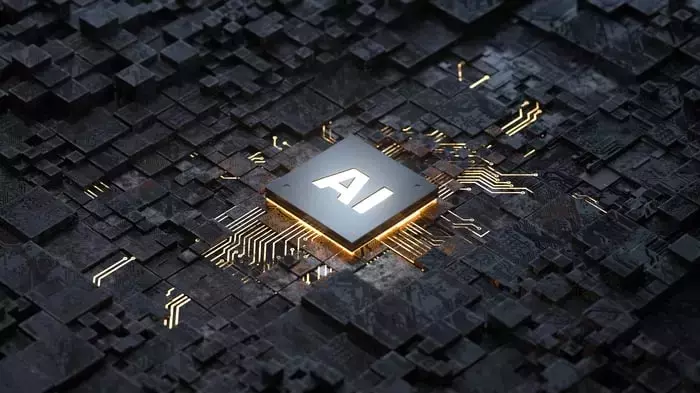
In a groundbreaking development that could redefine the landscape of artificial intelligence and computing, Nvidia has committed a substantial $5 billion investment in Intel. This strategic move is part of a broader, multi-year collaboration focused on co-developing advanced AI-driven data center and personal computer chips. This alliance arrives at a pivotal juncture for Intel, offering a much-needed strategic endorsement amidst its ongoing restructuring, while enabling Nvidia to further expand its technological influence beyond GPUs into the core of CPU architecture.
Nvidia and Intel Unveil Collaborative Vision for Next-Gen AI Processing
On Thursday, September 21, 2025, Nvidia, a dominant force in artificial intelligence, declared its intention to inject $5 billion into Intel. This capital infusion is coupled with an expansive partnership designed to integrate Nvidia's accelerated computing technologies and NVLink interconnect with Intel's foundational x86 CPU architecture. This collaboration will span multiple generations of chips, targeting both data centers and personal computing platforms. The implications of this alliance are far-reaching. For Intel, it signifies a critical validation of its technological trajectory and manufacturing capabilities, offering renewed credibility at a challenging time. For Nvidia, the partnership facilitates deeper integration within the pervasive x86 ecosystem, broadening its platform reach.
Key aspects of this transformative agreement include Nvidia's acquisition of Intel stock at $23.28 per share, pending regulatory clearances. Furthermore, Intel will undertake the development of bespoke x86 CPUs specifically tailored for Nvidia's AI platforms. The collaboration also extends to the creation of x86 system-on-chips for PCs, which will seamlessly incorporate Nvidia's RTX GPU chiplets through NVLink technology. Nvidia's CEO, Jensen Huang, hailed this as a 'fusion of two world-class platforms,' while Intel CEO Lip-Bu Tan emphasized its importance as an affirmation of Intel's strategic direction and role as a manufacturing powerhouse. This union strategically positions Nvidia to access the extensive x86 infrastructure and bolsters Intel's relevance within the burgeoning AI sector.
The immediate and most impactful opportunities for this partnership lie within the data center domain. The efficiency of AI training and inference workloads is heavily reliant on the speed at which CPUs can supply data to GPUs. Nvidia anticipates that the custom x86 CPUs developed by Intel will be integrated into its AI platforms, aiming to enhance bandwidth and reduce latency. Such improvements could significantly lower the total cost of ownership for customers, a critical factor as data center operators globally strive to deploy more efficient AI clusters. This strategic alignment underscores the industry's drive towards optimized and cost-effective AI computing solutions.
Despite this promising collaboration, Intel continues to face considerable financial pressures. The company has grappled with years of declining margins and market share erosion in both data center and PC segments, partly due to manufacturing setbacks and product missteps that created inroads for competitors such as AMD and Arm Holdings. Intel's second-quarter 2025 financial results showed flat year-over-year revenue at $12.9 billion, with management forecasting breakeven non-GAAP earnings for Q3 as part of its operational expense reduction efforts. Against this backdrop, Nvidia's endorsement provides invaluable credibility, suggesting that Intel possesses the inherent scale, global manufacturing prowess, and extensive customer base to play a pivotal role in the AI era. Should Intel effectively harmonize these strengths with Nvidia's advanced platform, it could mark a significant turning point in its recovery trajectory.
For investors holding Intel stock, this collaboration is unequivocally positive news. It offers Nvidia new avenues to scale its platform across diverse computing environments, from data centers to personal computers. Simultaneously, it provides Intel with a vital partner and a clearer path to regaining prominence in the AI-driven future. However, successful execution remains the paramount challenge. Intel must demonstrate that these design victories can translate into profitable, high-volume production. Expectations for Intel are currently subdued, reflected in its valuation metrics, such as a price-to-book value of 1.4 and a price-to-sales ratio of 2.5, which stand in stark contrast to Nvidia's ratios of 44 and 27, respectively. With its stock having underperformed over the past five years, Intel has largely missed out on recent tailwinds enjoyed by other chip manufacturers. Nvidia's involvement brings not only capital and a product roadmap but also a culture of innovation, offering encouragement to investors, employees, and management alike. If Intel can meticulously execute these product plans and achieve scalable success, the company could once again realize substantial profits, potentially driving significant appreciation in its stock value. Nevertheless, this outcome is not guaranteed and will necessitate considerable patience from stakeholders.
This strategic alliance between Nvidia and Intel represents a fascinating convergence of two technological giants, each bringing unique strengths to the table. From a journalistic perspective, this partnership signals a shift in competitive dynamics within the semiconductor industry, moving towards collaboration even among traditional rivals to address the escalating demands of AI. It highlights the immense capital and technical expertise required to innovate in this space, suggesting that such large-scale partnerships may become more commonplace. As a reader, I am particularly struck by the potential for this alliance to democratize advanced AI capabilities, making high-performance computing more accessible and efficient across various applications. It also underscores the importance of adaptability and strategic foresight in a rapidly evolving technological landscape, where even established leaders must seek new synergies to maintain relevance and drive future growth. The success of this venture will undoubtedly be a benchmark for future collaborations in the tech world.
