
This article delves into Nvidia's central role in the artificial intelligence sector, highlighting its indispensable graphics processing units (GPUs) that power vast AI data centers. It explores how the company's remarkable profit margins set it apart in the hardware industry and examines management's ambitious forecasts for data center capital expenditures. Despite potential challenges, the analysis positions Nvidia as a prime growth investment, projecting substantial revenue increases and a strong market presence over the coming years, underscoring its potential for exceptional investor returns.
Nvidia's Strategic Importance in the AI Landscape
Nvidia maintains its status as a premier investment in the rapidly evolving artificial intelligence arena. Its specialized graphics processing units (GPUs) are fundamental to constructing the extensive computing infrastructure required for AI development. These GPUs are not only critical for their processing power but also for their ability to handle complex computational tasks in parallel, a feature that becomes exponentially more powerful when thousands are linked together in large-scale data centers. This core technological advantage underpins Nvidia's significant market value and influence in the AI domain, making it an attractive prospect for investors keen on the future of AI. The company's unique position at the nexus of hardware and advanced AI computation ensures its continued relevance and growth as the AI sector expands.
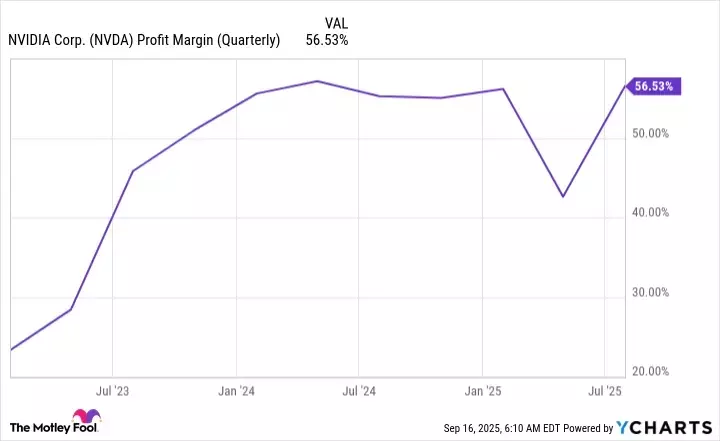
The company's GPUs are essential for high-performance computing, enabling AI hyperscalers to build the massive data centers that drive AI innovation. Nvidia's hardware facilitates parallel processing, allowing for the simultaneous execution of numerous calculations, which is crucial for AI workloads. Connecting hundreds or even thousands of these GPUs forms supercomputers that are the backbone of modern AI infrastructure. This technological superiority has allowed Nvidia to command impressive profit margins, consistently exceeding 50% in recent years, a rarity in the hardware industry. This robust profitability is a key driver behind the stock's significant appreciation and its potential for sustained growth, making it a compelling investment for those bullish on the future of AI technology.
Projected Growth and Future Outlook for Nvidia
Nvidia's leadership has articulated an optimistic outlook, forecasting a dramatic increase in global data center capital expenditures to between $3 trillion and $4 trillion by 2030. Given that AI hyperscalers currently invest approximately $600 billion annually, and Nvidia captures a substantial portion of this spending (estimated at around one-third), these projections imply an astounding potential for the company's revenue to soar. Should these estimates materialize, Nvidia's annual revenue could reach $1 trillion to $1.3 trillion by the end of the decade, representing an impressive annual growth rate of at least 37%. Such a trajectory would significantly outperform the broader market, solidifying Nvidia's position as an exceptional growth stock and a critical player in the ongoing AI revolution.
Management's ambitious projections for data center spending highlight the immense potential for Nvidia's expansion, suggesting an annual growth rate that could dramatically surpass typical market returns. While these forecasts are compelling, they do come with certain conditions. Achieving these targets would require Nvidia's major clients to continue allocating a significant portion of their capital to AI infrastructure, necessitating a strong return on investment for them. Moreover, the projections encompass the entirety of data center spending, meaning Nvidia would need to maintain its dominant market share against potential competitors. Even if the company's growth falls slightly short of these lofty predictions, its foundational role in AI technology and its current valuation suggest it remains an attractive investment opportunity for those who believe in the enduring growth of artificial intelligence.
