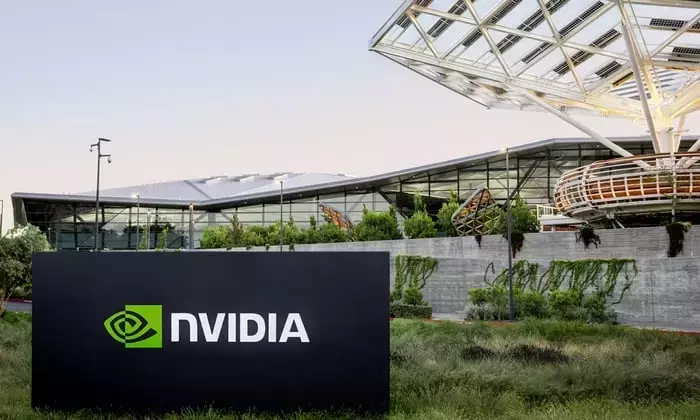
Nvidia has experienced remarkable growth over the past five years, propelled by its pioneering role in the artificial intelligence (AI) chip sector. The company's revenue has surged by over 600%, with its stock value skyrocketing by an astonishing 1,200%. This impressive performance is largely attributed to Nvidia's early entry and strategic positioning in the AI market, which is already a multi-billion dollar industry and is projected to reach trillions by the decade's end. Looking ahead, Nvidia is expected to solidify its leadership in providing chips for data centers and expand into emerging trillion-dollar markets such as robotics, potentially reaching a $10 trillion market capitalization.
Nvidia's Continued Ascent: AI Leadership and Future Horizons
In the last half-decade, Nvidia, under the ticker NVDA, has demonstrated extraordinary financial expansion. Its dedicated efforts in artificial intelligence have been a primary catalyst, with the company's graphics processing units (GPUs) becoming indispensable for AI computations. These high-performance chips are crucial for critical AI tasks, including the training and inferencing of models, forming the backbone of AI data centers.
As of October 9, 2025, industry observers like Adria Cimino highlighted Nvidia's sustained trajectory. The ongoing infrastructure build-out for AI is anticipated to continue for several years, with CEO Jensen Huang forecasting AI infrastructure spending to reach an astounding $4 trillion by 2030. Given the indispensable role of GPUs in data centers, Nvidia is strategically positioned to reap substantial benefits as major technology corporations, including Alphabet and Meta Platforms, significantly ramp up their AI investments.
Nvidia's commitment to innovation is a cornerstone of its enduring market leadership. The company plans to release annual GPU updates, such as the upcoming Vera Rubin system, ensuring that its offerings remain at the forefront of technological advancement. This continuous pursuit of cutting-edge technology is expected to deter competitors and keep customers loyal to Nvidia's powerful chip solutions.
Beyond its core AI contributions, Nvidia is also making significant strides in nascent markets. Its burgeoning work in robotics, a sector that Huang believes could evolve into a trillion-dollar industry, represents a substantial new growth avenue. A key application within this domain is self-driving vehicles, where Nvidia's chips are integral for software training and in-car functionalities. The company has already secured partnerships with prominent automakers like Mercedes-Benz and Toyota, integrating its self-driving platforms into their future models.
These converging factors are poised to drive Nvidia's earnings and stock valuation even higher. Projections indicate that the company could achieve a staggering $10 trillion market value. To meet this ambitious target, Nvidia would need to generate approximately $380 billion in annual sales by 2030, aligning its price-to-sales ratio with current levels. Despite the rapid growth seen in recent quarters, with revenue climbing 56% in the latest period and consistent double- or triple-digit gains, experts believe such a goal is attainable. The robust demand for Nvidia's GPUs and the anticipated surge in AI infrastructure spending suggest that any deceleration in growth will be moderate.
Consequently, in the next five years, Nvidia is expected to maintain double-digit revenue growth, fueled by its advanced GPUs and related product ecosystems. Furthermore, substantial progress in new frontiers like robotics could cement its status as one of the world's most valuable companies, pushing its market capitalization toward the $10 trillion mark.
Nvidia's journey exemplifies the power of strategic foresight and relentless innovation in a rapidly evolving technological landscape. By anticipating market needs and consistently delivering advanced solutions, the company has not only secured a dominant position in AI but has also laid the groundwork for future expansion into transformative sectors like robotics. For investors and industry watchers alike, Nvidia's trajectory offers a compelling case study in capitalizing on technological megatrends and maintaining a competitive edge through continuous development. The story of Nvidia reinforces the notion that companies that invest in fundamental research and cultivate a culture of adaptability are best positioned to thrive in dynamic global markets.
