
This article explores the sustained growth potential of Nvidia within the artificial intelligence sector. Despite its recent impressive performance, many believe the company is poised for even greater success. The increasing demand for AI computing power, coupled with ambitious projections for global data center expenditures, underpins this optimistic outlook. Even significant investors are increasing their stakes, signaling strong confidence in Nvidia's future trajectory. The analysis suggests that investors, both new and established, could see substantial returns if these forecasts materialize, highlighting Nvidia's critical role in the evolving AI landscape.
Nvidia's Projected Dominance in the AI Era
In a recent market analysis, financial expert Keithen Drury highlighted Nvidia's ongoing ascent in the artificial intelligence (AI) domain, a sector where its Graphics Processing Units (GPUs) are indispensable. On September 16, 2025, Drury's insights brought to light the company's remarkable journey and its promising future. Despite Nvidia's substantial growth since 2023, the sentiment among analysts and major investors is that its expansion is far from over.
A notable endorsement comes from Daniel Loeb of Third Point, who, at the beginning of 2025, strategically invested $442 million in Nvidia shares, accumulating a significant 6% position in his fund. This substantial investment underscores a strong bullish outlook, even as this information is publicly accessible, suggesting that the underlying factors for growth are widely recognized.
The core of Nvidia's continued dominance lies in the burgeoning demand for AI computing power. GPUs, manufactured by Nvidia, are crucial for handling the parallel computations required by modern AI models for training and inference. Projections indicate a dramatic increase in global data center spending, with estimates reaching between $3 trillion and $4 trillion by 2030. Nvidia anticipates capturing approximately one-third of this revenue, which could translate into a staggering $1 trillion in revenue and $500 billion in profits, assuming current 50% profit margins are maintained.
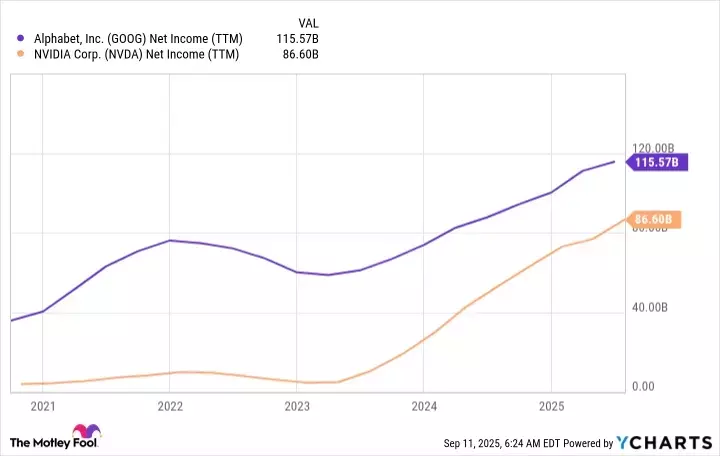
Such figures would position Nvidia far ahead of current industry leaders in profitability, like Alphabet, which reported around $116 billion in profits over the last year. If Nvidia achieves these financial milestones, applying a 30 times earnings multiple would project its market capitalization to soar to $15 trillion. This would represent a more than threefold increase from its current $4.3 trillion market cap, offering immense upside potential for investors. The continued inclusion of Nvidia in indices like the S&P 500 would also broadly benefit the market, encouraging a reevaluation of investment strategies to overweight such high-growth companies.
The consensus among experts is that for those who believe in the sustained growth of the AI sector, investing in Nvidia now could yield significant returns, mirroring the shrewd moves of seasoned billionaires like Daniel Loeb.
The ongoing narrative of Nvidia's exceptional growth in the AI sector serves as a powerful reminder of how technological innovation can reshape market landscapes. It highlights the importance of identifying and investing in foundational technologies that underpin major industry shifts. For investors, this story underscores the potential for substantial returns when backing companies that are not only dominant in their niche but also project ambitious, yet credible, future expansion. Furthermore, it encourages a forward-thinking approach, urging individuals to look beyond immediate gains and consider long-term trends and the visionary leadership driving them. The success of Nvidia could inspire a generation of investors to seek out the next wave of disruptive technologies and the enterprises leading their development.
