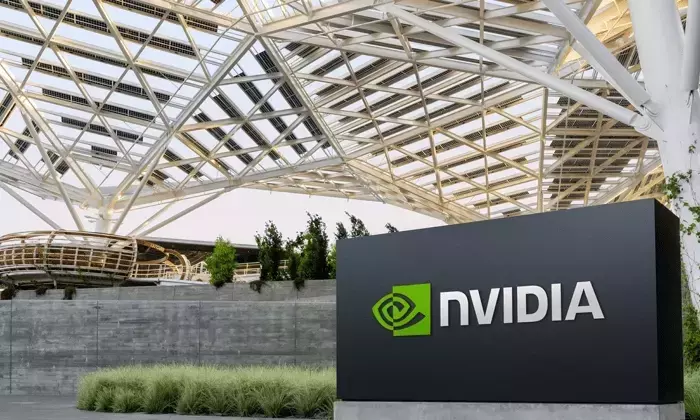
Nvidia, a company that began its journey focusing on graphics processing for the gaming industry, has undergone a remarkable transformation, evolving into a pivotal force in the artificial intelligence and cryptocurrency sectors. This strategic pivot, driven by the inherent power and adaptability of its Graphics Processing Units (GPUs), has not only redefined its market position but also solidified its standing as a global technology leader. The company's journey highlights its capacity for innovation and its ability to capitalize on emerging technological trends.
Established in 1993, Nvidia initially dedicated its efforts to developing advanced graphics solutions for video games. A significant milestone was achieved in 1999 with the creation of the first Graphics Processing Unit (GPU), coinciding with the company's public listing. This innovation laid the groundwork for its future successes, as GPUs proved to be far more versatile than initially conceived. The parallel processing capabilities of these units, originally optimized for rendering complex graphics in games, later became invaluable for other demanding computational tasks.
A critical turning point arrived in 2006 with the introduction of Compute Unified Device Architecture (CUDA). This proprietary platform enabled developers to harness Nvidia's GPUs for general-purpose computing, extending beyond mere graphics rendering. CUDA's ability to facilitate parallel processing for a wide array of applications provided a significant boost in computational efficiency and resource utilization. Although not an overnight success, Nvidia's persistent investment in CUDA eventually yielded substantial returns, positioning the company for future technological shifts.
The cryptocurrency boom, particularly with the advent of Bitcoin in 2009, presented an unexpected new market for Nvidia's GPUs. The proof-of-work mechanism central to Bitcoin mining required immense computational power, and miners quickly discovered that GPUs offered a more efficient solution than standard CPUs. The practice of connecting multiple GPUs to a single motherboard further amplified mining capabilities, leading to a surge in demand for Nvidia's products. This period, however, was not without its challenges, as Nvidia faced a class-action lawsuit in 2018 regarding its disclosure of cryptocurrency-related revenue, culminating in a $5.5 million settlement with the SEC in 2022. Today, the role of GPUs in crypto mining has diminished significantly due to the emergence of specialized Application-Specific Integrated Circuit (ASIC) miners, which offer superior processing power for this specific task.
The most profound shift for Nvidia came with the rise of artificial intelligence. Researchers began leveraging Nvidia GPUs for AI development as early as 2011. A landmark moment occurred in 2012 when Alex Krizhevsky utilized Nvidia GPUs and CUDA to train AlexNet, a neural network that achieved remarkable success in the ImageNet image recognition competition. This event underscored the immense potential of GPU-accelerated machine learning. Further solidifying its position, Nvidia CEO Jensen Huang donated a supercomputer equipped with eight GPUs to OpenAI in 2016. The subsequent global impact of ChatGPT in 2022 provided undeniable evidence of the transformative power of Nvidia's GPUs in the AI landscape.
The AI revolution has been a tremendous catalyst for Nvidia's financial performance. The company has consistently reported exceptional year-over-year revenue growth, surpassing 50% for nine consecutive quarters. In the second quarter of its 2026 fiscal year, ending July 27, 2025, Nvidia reported a staggering $46.7 billion in revenue. A dominant 88% of this, approximately $41.1 billion, was attributed to its data center division, largely driven by corporate AI expenditures, while gaming revenue accounted for $4.3 billion. This trajectory underscores how a company with a strong competitive advantage, particularly in core technology like GPUs, can adapt and achieve unprecedented success by aligning with the most significant technological advancements of its time.
From its origins in gaming graphics to its current preeminence in artificial intelligence, Nvidia's journey exemplifies a company that has masterfully navigated technological paradigm shifts. Its GPUs, initially conceived for immersive gaming experiences, have proven to be adaptable engines for the complex computational demands of cryptocurrency and, more significantly, the groundbreaking advancements in AI. Through strategic investment in platforms like CUDA and a keen awareness of emerging technological needs, Nvidia has not only sustained its relevance but has also emerged as a leader in defining the future of computing. This evolution highlights the critical role of innovation and strategic foresight in achieving enduring market leadership.
