Facing the immense pressure of Olympic competition, American snowboarders deploy a range of fascinating and personal strategies to maintain their composure and optimize their performance. These unique rituals, spanning from intense musical selections to serene meditative practices and even comfort from beloved pets, underscore the psychological depth required to excel at the highest level of sport. This piece delves into the intriguing ways these athletes prepare mentally for their high-flying challenges.
Conquering the Slopes: Innovative Mental Strategies of Elite Snowboarders
Navigating the Heights: The Fear Factor in Olympic Snowboarding
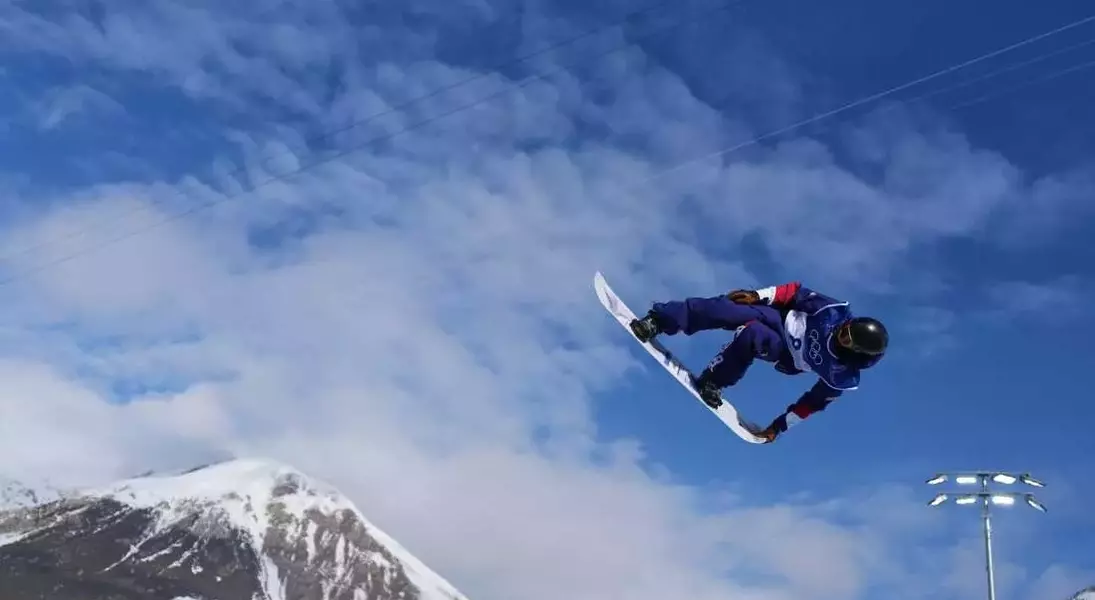
Elite snowboarders competing on the Olympic stage often confront significant apprehension when poised at the summit of formidable courses. Sean FitzSimons, a U.S. snowboarder specializing in Big Air and Slopestyle, candidly admits to experiencing daily fear. The Big Air ramp, an imposing structure towering 55 meters high, equivalent to a 15-story edifice, demands athletes execute intricate flips and rotations. This inherent danger, though constant, is acknowledged as a necessary component of pushing boundaries in the sport.
The Power of Sound: Personal Playlists for Peak Performance
Years of rigorous training in strength, aerial maneuvers, and technical skills culminate in the Olympic arena for these athletes, necessitating equally refined methods for managing stress. Many have cultivated distinct pre-run rituals, prominently featuring carefully curated music selections designed to block out distractions and foster intense focus. FitzSimons, for instance, favors classic Metallica, particularly "For Whom the Bell Tolls," followed by other bands from the genre to ignite his competitive spirit. This acoustic preparation is crucial for entering the required mental state.
Beyond the Noise: Coach's Words and Pop Anthems
Maddie Mastro, a snowboarder from California, engages in a different form of mental preparation. While her coaches offer encouraging words before her halfpipe runs, she often enters a highly focused state, recalling little of their exact phrases but acknowledging their motivational impact. Mastro also personalizes her pre-competition routine by singing pop hits, recently favoring Doja Cat and a resurgence of Natasha Bedingfield, as a means to psych herself up for the challenge.
Feline Comforts and Ancient Wisdom: Unconventional Calm-Keepers
Seventeen-year-old Alessandro Barbieri, a rising star in the halfpipe from Portland, Oregon, incorporates a precise ritual of three claps and a small "ollie" before each run. Uniquely, his preparation also involves photos of his Maine Coon cat, Bella, sent by his mother, which he finds profoundly calming. This personal connection has even earned him the playful moniker "Kitty Kitty Meow Meow" from his teammate Chase Josey. Barbieri's approach highlights the diverse sources of comfort athletes find.
Embracing Qigong: Harnessing Energy on the Snow
The U.S. men's halfpipe team has collectively adopted an ancient Chinese energy practice, Qigong, to enhance their mental and physical readiness. Chase Blackwell from Colorado describes Qigong as a form of meditation in motion that helps him achieve a focused state, calm his nerves, and energize him for his runs. Josey further elaborates that the entire team engages in Qigong to gather and harness universal energy, which they believe enables them to push their physical limits gracefully and effectively in the halfpipe. Even their coaches have joined in practicing "cloud hands," a Qigong movement, underscoring the team's shared commitment to finding tranquility amidst intense competition.
