
Opendoor Technologies, a digital real estate platform, has recently garnered significant investor attention, experiencing a remarkable surge in its stock value. This dramatic rebound, following a period of decline, is largely attributed to a series of strategic changes within the company's leadership and an ambitious plan for business revitalization. However, despite the current market enthusiasm, the underlying challenges of its business model and its valuation warrant careful consideration for potential investors.
Opendoor's Rollercoaster Ride: New Leadership, Ambitious Plans, and a Speculative Future
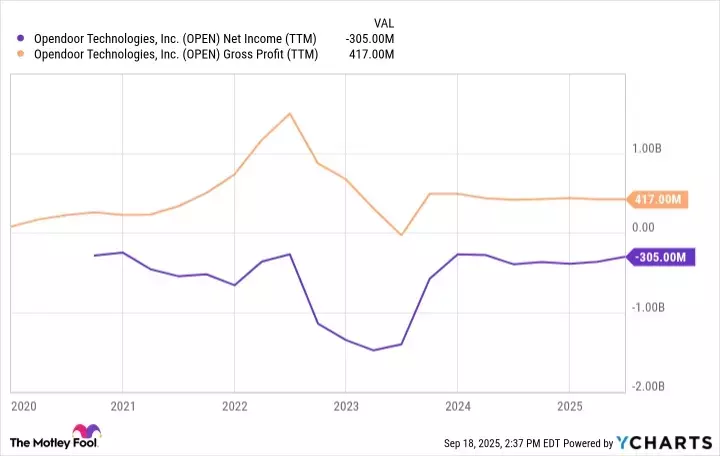
In a significant shake-up that commenced on September 21, 2025, Opendoor Technologies (NASDAQ: OPEN) appointed Kaz Nejatian, formerly the Chief Operating Officer of Shopify, as its new CEO. This leadership transition also saw the reintroduction of co-founders Keith Rabois and Eric Wu to the board of directors. These changes were a direct response to the company's prior struggles with profitability, stemming from its capital-intensive model of buying and selling residential real estate. Nejatian, incentivized by a stock-based compensation plan tied to ambitious stock price targets, immediately signaled a focus on aggressive cost reductions. Rabois publicly stated intentions to drastically cut the workforce from 1,400 to a mere 200 employees, aiming to stem the company's substantial losses, which stood at a negative net income of $305 million over the preceding year. Beyond cost-cutting, the revitalized leadership team is exploring innovative strategies to diversify its revenue streams. This includes expanding software services for real estate agents through its Key Agent app and introducing the Cash Plus model, designed to offer flexible financing options for home sellers. These initiatives, particularly those leveraging artificial intelligence, are aimed at moving beyond simply flipping homes, a model that has historically yielded thin gross profit margins of just 8.2%.
The Road Ahead: High Hopes Versus Harsh Realities
The recent surge in Opendoor's stock price reflects considerable investor optimism regarding its strategic overhaul and future potential. However, this optimism appears to have propelled the company's valuation to levels that may be overly ambitious given its current financial standing. Despite trading at approximately half the market capitalization of industry leader Zillow Group, Opendoor has yet to achieve consistent profitability. Its present market capitalization of $7.5 billion, juxtaposed with a gross profit of $417 million, suggests a valuation multiple of nearly 20 times gross profit. This elevated valuation, coupled with the potential for future shareholder dilution, points to a scenario where the market has already factored in a significant degree of future success. While the new leadership's vision for cost efficiency and innovative product development is compelling, the company remains largely in the realm of "potential" rather than proven performance. For investors, the long-term trajectory of Opendoor's stock remains uncertain, with a high likelihood that the current share price already discounts much of its future growth prospects. Therefore, a cautious approach is advisable for those considering an investment in this volatile stock.
