PepsiCo has been navigating a challenging period marked by lackluster sales and a decline in traditional soda consumption. However, a vibrant new trend, dubbed 'dirty soda,' is emerging as a significant opportunity for the beverage and snack giant. This innovative drink style, coupled with strategic product developments and a focus on operational improvements, is set to inject fresh momentum into the company's performance. Investors are eyeing these developments, especially given PepsiCo's attractive dividend yield, as potential catalysts for a renewed growth trajectory.
The Refreshing Revival: PepsiCo Embraces the \"Dirty Soda\" Phenomenon
For some time, PepsiCo's market performance has been somewhat subdued, attributed to flat sales and a dip in soda consumption, alongside a struggle for market share in its North American snack division. Efforts to diversify into healthier product lines have yet to fully counteract these headwinds. Yet, a burgeoning trend in the beverage sector, known as 'dirty soda,' presents a promising avenue for resurgence.
The 'dirty soda' concept, a nostalgic nod to classic soda fountains, involves enhancing standard sodas, such as Pepsi or Mountain Dew, with cream, flavored syrups, or both. This trend originated in 2010 with Swig, a Utah-based chain, which cultivated a loyal customer base. Its popularity exploded through viral TikTok content, transcending its regional origins. Swig's impressive growth, reflected in over 140 outlets and increasing same-store sales, has caught the attention of major food service players like McDonald's and Yum! Brands' Taco Bell, which are now exploring their own versions, signaling its widespread appeal.
Capitalizing on this shift, PepsiCo is actively integrating the 'dirty soda' trend into its product development, leveraging its existing portfolio of popular soda brands. At an upcoming convenience store trade show in Chicago, the company plans to unveil two new 'dirty soda'-inspired beverages: Dirty Dew and Mug Floats Vanilla Howler. These new offerings follow the success of Pepsi Wild Cherry & Cream, which has already emerged as one of the fastest-growing products in its lineup.
The U.S. soda market witnessed its peak roughly two decades ago, experiencing a subsequent decline as consumers gravitated towards energy drinks, coffee, and flavored waters. However, soda sales have seen a modest upturn in the last two years, partly fueled by the 'dirty soda' and prebiotic soda movements. In a strategic move earlier this year, PepsiCo acquired the prebiotic soda brand Poppi, swiftly followed by the introduction of a prebiotic variant of its flagship cola, aiming to capture this emerging health-conscious segment.
CEO Ramon Laguarta has emphasized that beverage innovation is a cornerstone of PepsiCo's strategic turnaround. The company anticipates improved sales growth in the coming quarters as these new products hit the market, complemented by broader cost-efficiency initiatives. PepsiCo is systematically streamlining operations by closing underutilized facilities, investing in advanced enterprise resource planning (ERP) systems and artificial intelligence (AI) to boost productivity, and identifying procurement savings. These measures are designed to enhance operating margins and provide capital for continued product innovation.
Attention is also being directed towards revitalizing the snack business. Iconic brands like Lay's and Tostitos are undergoing relaunches with an emphasis on authentic ingredients and clearer labeling. The 'permissible snack' category, spearheaded by PopCorners and SunChips, has already surpassed $2 billion in sales, offering a robust platform for PepsiCo to regain market share. Should the snack division stabilize and the beverage segment benefit from the 'dirty soda' momentum, a more substantial growth trajectory appears within reach.
Furthermore, the 'away-from-home' channel remains a key focus for management, as it contributes positively to gross margins and fosters innovation. The 'dirty soda' concept perfectly aligns with this strategy, as restaurants can easily prepare these drinks using existing ingredients. It offers consumers an affordable yet enjoyable treat, positioned between conventional sodas and more premium coffeehouse options, encouraging additional spending without prohibitive costs.
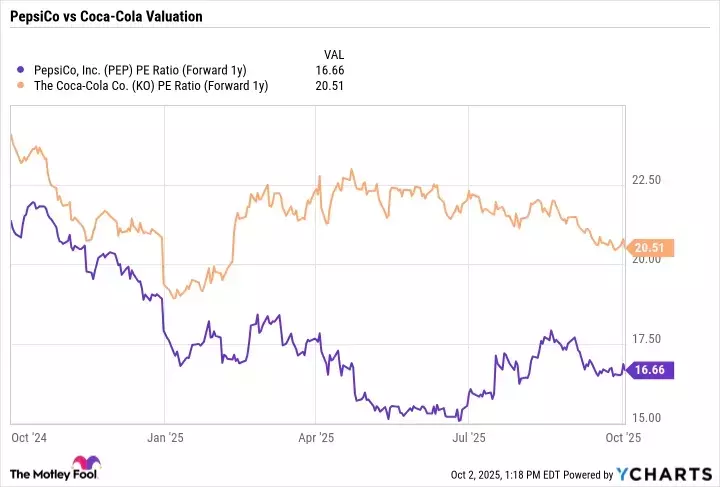
While PepsiCo's stock has not been particularly dynamic recently due to sluggish growth and escalating costs, the combination of 'dirty soda' and prebiotic soda innovations, coupled with a renewed focus on healthier snacks, could serve as powerful catalysts for renewed growth. The stock's current attractive 4% dividend yield, which is well-supported by its free cash flow, offers investors a compelling reason to hold. With the completion of significant capital expenditure on its ERP system, future capital outlays are expected to decrease, thereby improving its coverage ratio. This favorable outlook, alongside its considerable discount compared to rivals like Coca-Cola based on forward price-to-earnings ratios, positions PepsiCo as a potentially undervalued asset.
" "The current landscape suggests a pivotal moment for PepsiCo. The 'dirty soda' trend, initially a niche phenomenon, has proven its capacity to reshape consumer preferences and revitalize a mature market segment. For businesses facing similar challenges of stagnation in core product lines, PepsiCo's strategy offers valuable insights: embrace emerging trends, innovate within existing portfolios, and leverage operational efficiencies to fund future growth. The ability to identify and adapt to evolving consumer tastes, while maintaining fiscal discipline, can transform dormant assets into dynamic growth engines. This scenario underscores the importance of agility and foresight in an ever-changing market, reminding us that even established giants can find new pathways to prosperity through creative adaptation and strategic executio