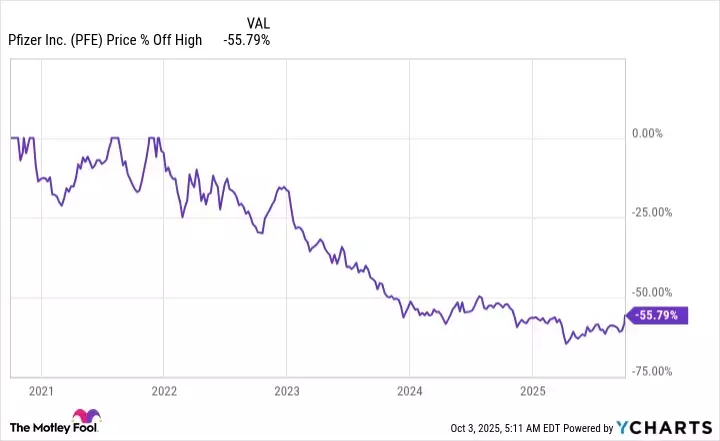

Pfizer, a pharmaceutical industry leader, is currently experiencing a dynamic period in its stock market performance. While its shares have declined substantially from their 2021 zenith, particularly after the COVID-19 vaccine-driven surge, the company has recently witnessed a promising upturn since April 2025. This rebound, alongside a compelling 6.3% dividend yield, has sparked interest among investors monitoring the firm's strategic responses to market challenges. The core of Pfizer's business involves the intricate and costly process of discovering, developing, and commercializing new medications, a cycle continuously influenced by the expiration of drug patents and the subsequent entry of generic competitors. The company's proactive measures, including a significant acquisition in the weight-loss drug sector and a landmark agreement with the U.S. government on drug pricing, suggest a concerted effort to mitigate future risks and foster sustained growth.
Pfizer's Strategic Maneuvers Amidst Market Changes
In the expansive landscape of global pharmaceuticals, Pfizer stands as a formidable entity, grappling with inherent industry complexities such as substantial research and development expenditures and the cyclical nature of drug patent expirations. A critical juncture for Pfizer looms in 2027 and 2028, with key oncology and cardiovascular medications, Ibrance, Eliquis, and Vyndaqel, slated to lose patent protection, potentially leading to a significant revenue decline. In response, Pfizer has embarked on a strategic initiative to fortify its product pipeline. A notable development is the acquisition of Metsera, a move valued at an initial $4.9 billion with potential earnouts, aimed at bolstering Pfizer's presence in the lucrative weight-loss drug market. This acquisition follows a setback with Pfizer's in-house weight-loss drug development, positioning Metsera as a crucial element in addressing future revenue gaps. Furthermore, Pfizer has demonstrated agility in navigating the regulatory environment, becoming the first pharmaceutical firm to reach an agreement with the U.S. government on drug pricing. While the specifics of this accord remain undisclosed, it involves substantial capital investments in U.S.-based assets, a measure designed to avert potential tariffs. These strategic actions, initiated around April 2025, have already begun to shift market sentiment, evidenced by a 20% stock increase from its 52-week low of approximately $22 to about $27. While the company's dividend payout ratio remains high at around 90%, and there's historical precedent for dividend cuts (as seen in 2009 with the Wyeth acquisition), these recent developments paint a brighter picture for Pfizer's long-term viability and potential as a turnaround investment.
Pfizer's recent strategic decisions, particularly its aggressive moves in acquisitions and proactive engagement with regulatory bodies, highlight a crucial lesson for investors: resilience and adaptability are paramount in dynamic markets. The company's ability to pivot and address patent cliffs head-on, coupled with its willingness to make significant investments in new growth areas, demonstrates a robust management approach. While the high dividend payout ratio warrants caution for income-focused investors, the underlying strategic adjustments suggest a concerted effort to create long-term value. This situation underscores that even established giants can face substantial headwinds, but their capacity for strategic evolution ultimately dictates their trajectory. For discerning investors, Pfizer represents a compelling case study in corporate turnaround and strategic foresight, reminding us that market opportunities often arise from effectively navigating challenges.
