

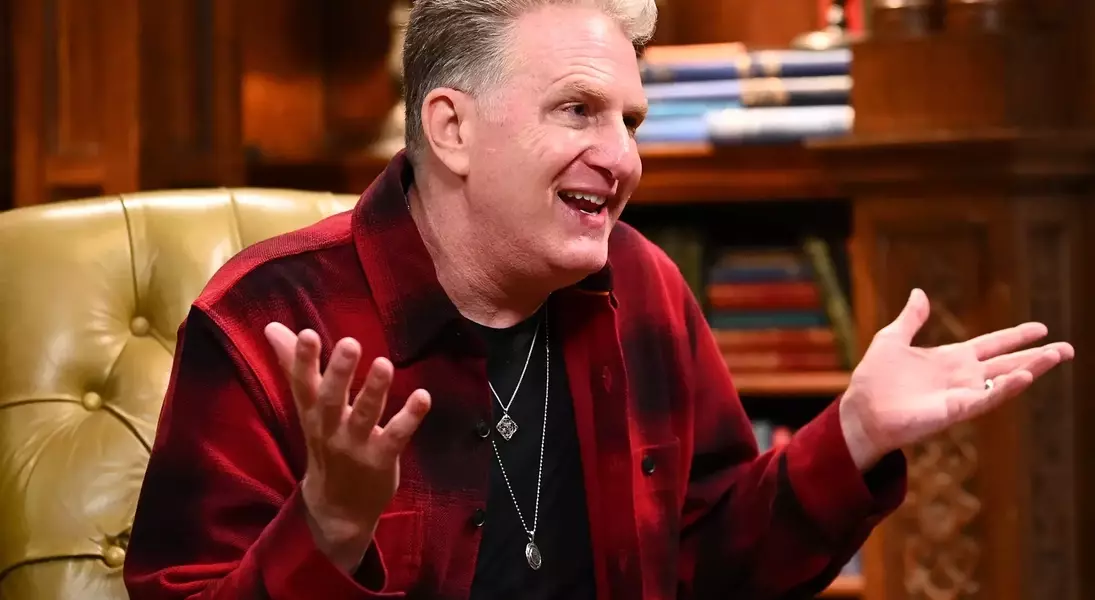
Michael Rapaport, known for his roles in various productions, recently found himself at the center of a social media frenzy due to an unconventional eating habit displayed on the Peacock reality series, 'The Traitors.' Following an intense challenge, cameras captured Rapaport bringing his plate directly to his mouth, seemingly 'shoveling' food in a manner that quickly captivated and, in some cases, appalled viewers across digital platforms.
The actor openly discussed the incident when questioned, acknowledging his peculiar method of consumption. He confessed to engaging in this 'shoveling technique' primarily when unobserved or in private settings, emphasizing that it was not a typical public behavior. He attributed the on-camera display to being alone in the room at the time, driven by a desire to quickly finish his meal and return to the competitive dynamics of 'The Traitors.' Rapaport expressed surprise at the widespread attention his eating style garnered, suggesting he never anticipated such a minor action would become a viral topic.
Beyond the eating spectacle, Rapaport also shed light on an unaired moment from the show, involving an apology he made to fellow contestant Yam Yam. He expressed regret that this sincere reconciliation, which occurred after a disagreement during a roundtable discussion, was not included in the broadcast. Rapaport believed airing this moment would have provided a more complete picture of their interaction, demonstrating a genuine effort to resolve conflict and foster positive relationships among cast members.
This incident, though seemingly trivial, highlights the unpredictable nature of reality television and how even fleeting moments can spark significant public interest and discussion. It reminds us that authenticity, even in its most unusual forms, can resonate deeply with audiences, prompting both amusement and reflection. Furthermore, the omitted apology underscores the curated reality presented on screen, where narratives are shaped, and certain aspects of human interaction, like genuine reconciliation, may be left unseen. Striving for truth and understanding in our interactions, whether on screen or off, fosters a more compassionate and connected community.
