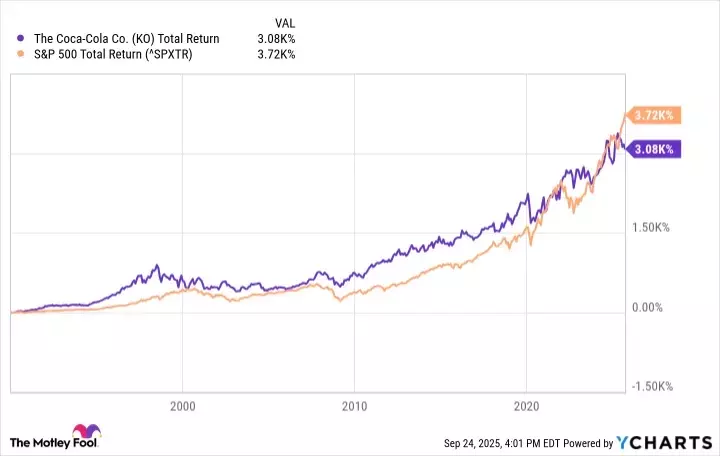

When evaluating investment opportunities, it's crucial to look beyond surface-level appeal. While Coca-Cola boasts a remarkable history of consistent dividend increases, earning it the prestigious 'Dividend King' status, a thorough examination reveals several aspects that may give new investors pause. The company's enduring legacy and widespread global presence, while impressive, inadvertently cap its future growth prospects and place its dividend yield below that of a major competitor, challenging the perception of its immediate investment attractiveness.
Digging deeper into its market performance, data indicates that Coca-Cola's stock has consistently trailed the broader market over extended periods, even when factoring in dividends. This underperformance stems partly from its near-ubiquitous market penetration, leaving minimal avenues for significant expansion. Despite diversifying into over 200 brands, its revenue growth largely remains in the single digits. This slow growth, coupled with a price-to-earnings ratio that, while slightly below its five-year average, doesn't present a compelling bargain, suggests that new investors seeking dynamic returns might find better alternatives elsewhere.
Adding another layer to this analysis is Berkshire Hathaway's long-standing ownership of Coca-Cola shares. While Warren Buffett's investment prowess is undeniable, it's important to note that Berkshire Hathaway has not actively traded these shares since 1994. Their continued holding primarily benefits from accumulated dividends, which now provide an exceptionally high yield on their original investment. This scenario, however, differs significantly for new investors, who would enter at a current yield of around 3%, making it a less attractive proposition compared to the substantial returns enjoyed by a decades-long holder like Berkshire Hathaway.
Ultimately, a comprehensive review of Coca-Cola's current market position, growth trajectory, and dividend competitiveness suggests that it may not be the optimal choice for investors looking to initiate new positions. While its legacy and stability are undeniable, the limited upside potential and more attractive alternatives available in the market argue against its purchase for those seeking robust growth or a superior income yield.
