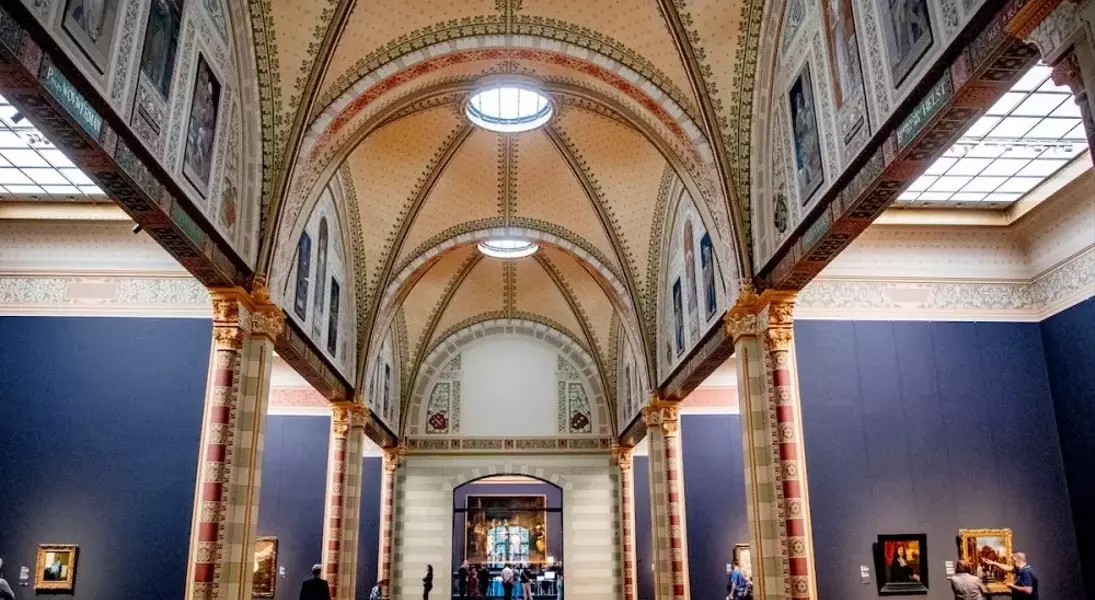
A groundbreaking collaboration has been forged between Amsterdam's esteemed Rijksmuseum and a dedicated research team, focusing on the profound impact of artistic engagement on individuals battling Parkinson's disease. This initiative stems from earlier observations that indicated heightened creativity among some Parkinson's patients, prompting a deeper scientific inquiry into art's potential as a therapeutic tool. The ongoing research endeavors to illuminate the intricate connections between creative expression, neurological health, and overall well-being, paving the way for innovative, personalized care strategies.
Building upon promising preliminary results, the latest phase of this study, generously supported by a significant research grant, will delve further into how different forms of artistic interaction can influence the progression and management of Parkinson's symptoms. This forward-thinking project underscores a growing recognition within the medical and art communities of the vital role that cultural institutions can play in public health, offering a beacon of hope and enrichment for those living with chronic conditions.
Exploring Art's Impact on Parkinson's Patients' Well-being
For decades, medical professionals have noted a curious phenomenon: some individuals afflicted with Parkinson's disease, a condition characterized by progressive movement impairments, often report a surge in creative impulses following the onset of their illness. This intriguing observation has now inspired a comprehensive, long-term research endeavor in the Netherlands. The study, significantly bolstered by a new partnership with the iconic Rijksmuseum in Amsterdam, aims to meticulously investigate the intricate relationship between heightened creativity and enhanced health outcomes for Parkinson's patients, suggesting that artistic engagement could be a powerful, yet underutilized, therapeutic pathway.
Between March 2021 and March 2022, a dedicated team comprising neuroscientist Blanca Spee, movement disorder specialist Bas Bloem, epidemiologist Sirwan Darweesh, and artist Marjoke Plijnaer meticulously monitored 800 Parkinson’s patients, specifically tracking shifts in their creative activities. Their findings revealed that a substantial portion of participants—41 percent—reported changes in their creativity, with 12 percent experiencing an increase, 22 percent a decrease, and 7 percent notable fluctuations. Notably, patients receiving dopamine agonists were more inclined to report an upswing in creativity. These results led the researchers to propose that personalized treatment plans for Parkinson's patients should integrate creativity not only as a potential consequence of the disease but also as a valuable therapeutic instrument. This initial phase laid crucial groundwork for the subsequent, more expansive research, emphasizing the multifaceted benefits that artistic expression might offer in managing this complex neurological disorder.
The Rijksmuseum Partnership: A New Frontier in Holistic Parkinson's Care
Following the compelling conclusions from their initial investigations, the research team established a "creative playground," inviting eight subjects to engage in various artistic practices, such as painting, music composition, and writing, over a ten-week period. The results, disseminated in January, demonstrated that participants reported diminished anxiety levels and a heightened sense of overall well-being. Furthermore, the researchers observed marginal improvements in cognitive functions and a reduction in healthcare visits among the group, underscoring the tangible benefits of creative engagement in a therapeutic context. These outcomes solidified the hypothesis that art could serve as a valuable complementary therapy for Parkinson's patients, extending beyond conventional medical interventions.
In a significant development on November 17, the Michael J. Fox Foundation recognized Dr. Bas Bloem's pioneering work in holistic Parkinson's care by awarding him the prestigious Pritzker Prize, accompanied by a $200,000 research grant. This substantial funding, as reported by The Art Newspaper, is earmarked for the team's upcoming 18-month study, which will involve three distinct groups. One cohort will explore the Rijksmuseum's extensive art collection, another will actively create art, while a control group will abstain from both producing and viewing art. In support of this endeavor, the Rijksmuseum will provide annual passes to participants and host exclusive evening viewings, allowing them to experience the collection in a tranquil, crowd-free environment. This partnership represents a pivotal moment, merging the worlds of art and medicine to push the boundaries of Parkinson's research and patient care.