
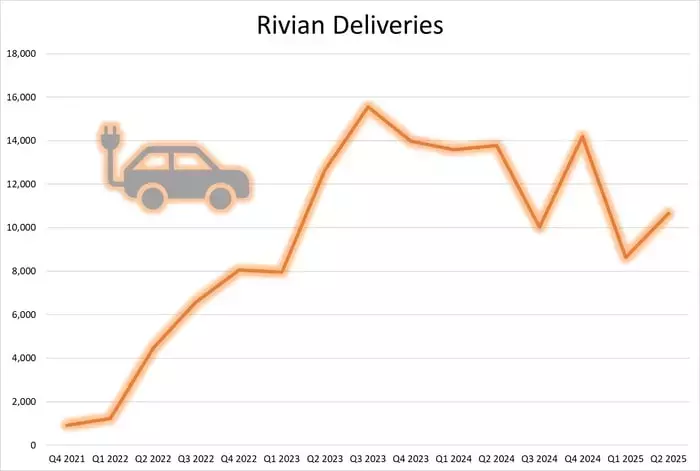
Rivian, a relatively new player in the electric vehicle (EV) sector, is currently at a critical juncture in its development. After experiencing a peak in demand for its R1 vehicles in 2023, the company observed a subsequent decline. This period, characterized by no new vehicle launches, has been uneventful but crucially free from major setbacks, contrasting with challenges faced by other automotive giants. Rivian's long-term success hinges on its ability to expand operations significantly, with strategic plans centered around the introduction of new, more accessible models like the R2 and R3. These initiatives are designed to cater to a wider customer base and enhance the company's financial health, despite the competitive landscape and evolving market conditions for EVs.
The company is poised to enter a transformative phase over the next three years, focusing intently on cost reduction and production optimization to achieve consistent positive gross profits and, eventually, overall profitability. The planned roll-out of the R2 and R3 models will be instrumental in this strategy, as these vehicles are designed to lower the entry price point for consumers, thereby broadening Rivian's market reach. This period will also see Rivian exploring opportunities within its commercial vehicle division, particularly by securing additional large fleet customers beyond Amazon, which could significantly boost its production volume and revenue streams. Successful execution of these plans is crucial for Rivian to solidify its position in the competitive EV market and transition from a high-growth, high-risk venture to a more stable, profitable enterprise.
Expanding Market Reach with New EV Models
Rivian is strategically shifting its focus towards more accessible and affordable electric vehicle models, starting with the R2, set to begin production and deliveries in 2026. This move is a direct response to the softening demand for its higher-priced R1 vehicles observed after 2023. The R2 model is anticipated to be priced around $45,000, aiming to capture a segment of the market that is more sensitive to cost. Following the R2, the R3, which shares the same platform, is expected to launch with an even lower price point, potentially under $40,000. These models are crucial for Rivian's strategy to scale its operations and increase its market penetration. The design of the R3, with its distinctive lifted hatchback aesthetic, is particularly aimed at attracting younger, first-time EV buyers, signifying a deliberate effort to diversify its consumer base. These new offerings are vital for the company's long-term viability and its ambition to achieve substantial growth and profitability in the highly competitive EV industry.
The introduction of the R2 and R3 is a cornerstone of Rivian's long-term growth strategy. The R2, scheduled for production in 2026, aims to tap into the more budget-conscious consumer market with an attractive starting price point. This model is critical for Rivian to expand its customer base beyond the initial luxury segment. Building on this momentum, the R3, expected to follow in mid-2028 from the future Atlanta factory, will further reduce the price barrier for entry into the EV market. Its unique design, which offers a 'lifted hatchback' feel, is intended to appeal specifically to a younger demographic. Furthermore, Rivian's CEO has hinted at future concepts like the R4 and R5, promising even lower price points and potentially sharing platforms to maximize cost efficiency. The company is also exploring the possibility of a smaller electric pickup truck, though this would be a later-stage development. These planned expansions into various segments underscore Rivian's commitment to broad market accessibility, aiming to secure a significant share of the evolving EV landscape by making electric mobility attainable for a wider audience.
Navigating Towards Financial Stability and Commercial Growth
Rivian's journey toward financial stability involves a rigorous focus on cost management and enhancing production efficiencies. The company faces immediate challenges, including the phase-out of federal tax credits for EVs and ongoing uncertainties surrounding tariffs, which could impact vehicle pricing and consumer adoption. To counteract these pressures, Rivian is targeting a production output of 40,000 to 46,000 vehicles in 2025, a critical step toward achieving economies of scale. Beyond consumer vehicles, the commercial sector presents a significant opportunity. Building on its successful partnership with Amazon for RCV deliveries, Rivian is actively seeking to expand its commercial client base. Securing additional large fleet customers for its commercial vans would provide a substantial boost to production volumes and revenue, serving as a key "X factor" in accelerating its path to profitability and establishing a more diversified income stream.
Achieving profitability and robust growth is a central objective for Rivian over the coming years. A key component of this strategy involves meticulous cost control and boosting manufacturing efficiency to ensure positive gross margins annually. This financial discipline is essential for the company to eventually turn a net profit. Concurrently, the successful launch and rapid scaling of the R3 production will be paramount. These new models are designed to be more affordable, aiming to attract a larger audience and broaden Rivian's market influence. The company anticipates a significant surge in revenue within approximately one year, driven by the increased sales volume from these accessible vehicles. If Rivian can effectively implement its cost-reduction initiatives and ramp up production as planned, it is projected to make substantial progress toward profitability within three years. Additionally, leveraging its established success with Amazon in the commercial vehicle segment by securing new, large fleet contracts will further strengthen its market position and accelerate its journey towards financial self-sufficiency.
