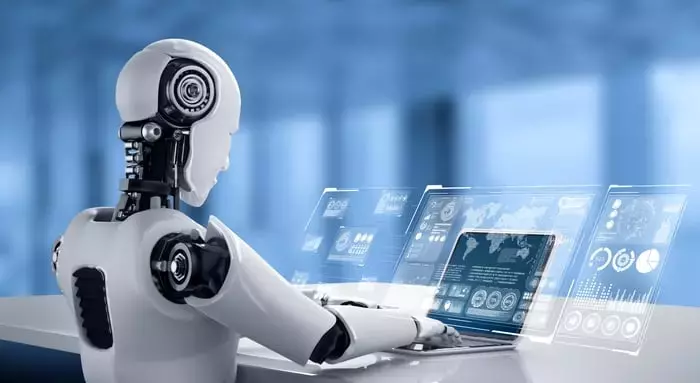
The robotics industry is on the cusp of a major transformation, with market forecasts predicting a monumental rise to $130 billion by 2035. While much attention has been given to AI-powered chatbots, the real financial gains are expected to come from practical robots capable of performing tasks like package handling, manufacturing, and inventory management. Goldman Sachs has significantly increased its projection for the humanoid robot sector, now estimating it to hit $38 billion by 2035, while industrial robotics could reach a staggering $94 billion. This surge is largely attributed to advancements in AI foundation models, which have drastically reduced robot training costs.
In this burgeoning landscape, three technology behemoths stand out: Tesla, Amazon, and Nvidia, each carving a unique path to dominate different facets of the robotics revolution. Amazon currently leads with an impressive fleet of over a million robots integrated into its fulfillment network, demonstrating a real-world, scalable application of robotics. These systems are not speculative prototypes but are actively moving billions of packages daily, showcasing proven economic viability. Tesla, under the ambitious vision of Elon Musk, is pushing the boundaries of humanoid robot production with Optimus, aiming for a cost point significantly lower than competitors. Despite initial production hurdles and leadership changes, Tesla's vertical integration strategy, leveraging its neural networks, EV battery technology, and large-scale manufacturing capabilities, positions it to potentially disrupt the market if it can meet its aggressive cost targets. Nvidia, on the other hand, is strategically positioned as the backbone of the entire robotics ecosystem. It provides the essential software and chips through its Isaac GR00T foundation model, Isaac Lab and Sim simulation environments, and Jetson Thor for edge inference. This approach allows Nvidia to capture value across the industry, irrespective of which specific robot designs ultimately prevail, by supplying the core intelligence and tools that power almost every significant robotics program.
As the robotics market continues its rapid expansion, these three companies represent critical infrastructure providers and innovators. Their diverse strategies—from direct application and hardware manufacturing to foundational software and AI—highlight the multifaceted nature of this technological wave. The integration of advanced AI is making robots more efficient and accessible, promising a future where physical AI plays an increasingly central role in various industries. This era of intelligent automation not only promises significant financial returns but also heralds a new chapter in technological evolution, where machines augment human capabilities and transform the way we live and work.
