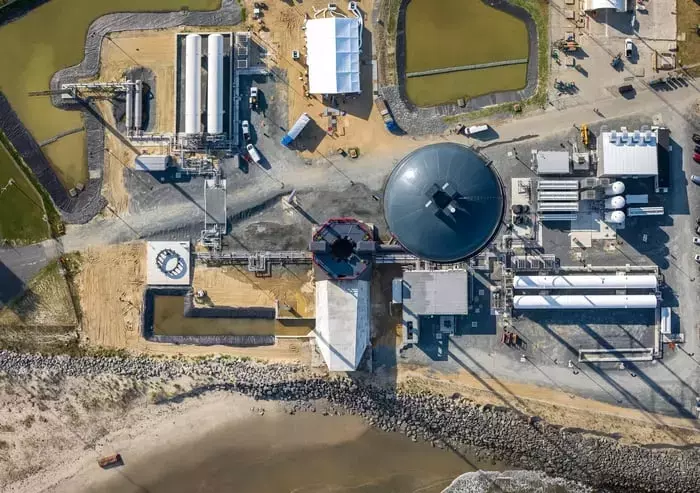

Rocket Lab has inaugurated its new launch facility, LC-3, located on Wallops Island, Virginia, paving the way for the debut of its groundbreaking Neutron reusable rocket. This strategic expansion is poised to transform the company's financial outlook, with projections indicating a substantial increase in yearly revenue, potentially reaching an additional $350 million. The eagerly awaited maiden flight of the Neutron rocket is slated for later this year, signaling a major milestone for both Rocket Lab and the broader commercial space sector.
On August 28, a significant ceremony marked the opening of Rocket Lab's third launch complex, LC-3, in Wallops Island, Virginia. This event was attended by notable figures including Rocket Lab CEO Peter Beck, Virginia Spaceport Authority CEO Ted Mercer, and Virginia Governor Glenn Youngkin, who collectively cut the ribbon to inaugurate the new facility. This site is designated as the primary operational base for Rocket Lab's innovative Neutron reusable rocket, a medium-lift launch vehicle designed to revolutionize space transportation.
The establishment of LC-3 elevates Virginia's prominence in the global rocketry landscape, placing it alongside established space hubs like California's Vandenberg Space Force Base and Florida's Cape Canaveral. Governor Youngkin highlighted during the opening that the Commonwealth of Virginia has invested $60 million in developing its Mid-Atlantic Regional Spaceport (MARS), underscoring the state's commitment to advancing space exploration and commercial ventures. Rocket Lab is one of three companies poised to operate from MARS, contributing significantly to the region's economic growth and technological advancement.
The Neutron rocket represents a critical turning point for Rocket Lab's business model. For an extended period, the company has allocated considerable resources to research and development, resulting in cash expenditure and reported losses as it worked to bring Neutron to fruition. However, CEO Peter Beck anticipates a \"flip\" in this trend once Neutron begins regular launches, transitioning from a cash-consuming project to a substantial revenue generator. This shift is expected to propel Rocket Lab into a new era of profitability and expansion.
While Rocket Lab has consistently projected the first Neutron launch for 2025, specific dates remained elusive until recently. At the LC-3 opening last month, Shaun D'Mello, Vice President in charge of the Neutron program, provided a more precise timeline. He confirmed that the rocket's second stage was already en route to Wallops Island, with other essential components also arriving by sea. The ambitious goal is to have the fully assembled rocket on site by November, ready for its inaugural launch by the end of the year. Governor Youngkin expressed his confidence in this schedule, humorously suggesting that even a Christmas Day launch would be a cause for celebration.
The successful launch of Neutron promises significant benefits for investors. According to Peter Beck's projections, the single launch in 2025 will be followed by three launches in 2026, five in 2027, and potentially seven or more annual Neutron launches in subsequent years. This ramp-up in Neutron missions will complement the ongoing launches of Rocket Lab's smaller Electron rocket fleet, which operates from both Wallops LC-2 and LC-1 in New Zealand. While Electron launches remain important, the Neutron missions are expected to become increasingly vital due to their higher revenue potential. Each Neutron launch is projected to generate at least six times the revenue of an Electron launch, which recently saw its price increase to $8.4 million per mission. At seven launches per year, Neutron could contribute an additional $350 million annually to Rocket Lab's coffers, tripling the revenue generated by Electron launches last year. This substantial financial infusion is crucial for the company's long-term growth and market position.
Industry analysts, including those surveyed by S&P Global Market Intelligence, anticipate that the increased revenue from Neutron launches will lead to Rocket Lab's profitability. While the company reported a loss of $0.38 per share last year, analysts project an earnings per share of $0.33 by 2028, the year Neutron is expected to achieve a seven-launch annual cadence. This valuation, however, means that Rocket Lab's stock is currently trading at nearly 140 times its projected 2028 earnings, suggesting an aggressive valuation that some investors may find steep. While personal investment decisions vary, those focused on growth stocks and less concerned with immediate valuations might still view Rocket Lab as an attractive investment given its promising trajectory and innovative technology.
