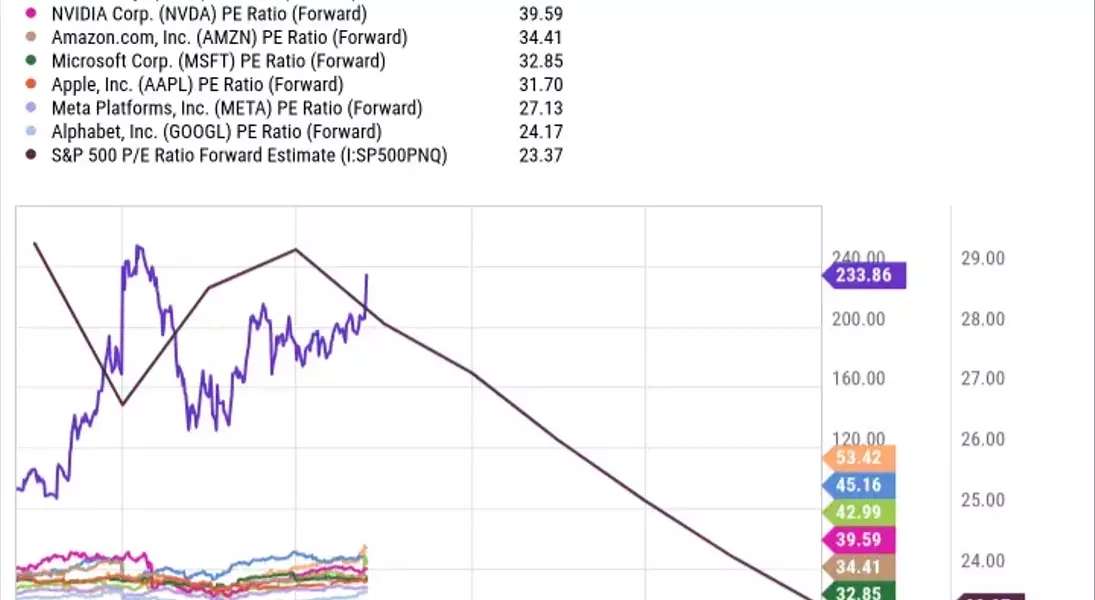

The S&P 500, a benchmark index with a historical annualized return of 10.3%, has long been recognized as a formidable instrument for long-term wealth accumulation. However, its current composition, heavily influenced by a select group of mega-cap growth stocks, signals a potential shift towards increased volatility. This concentration implies that while the index can experience substantial upward movements driven by these dominant companies, it is equally susceptible to accelerated declines during market corrections. Consequently, investors should anticipate a wider range of annual performance outcomes for the S&P 500, moving further away from its long-term average. Understanding this dynamic is crucial for strategic portfolio management, prompting a reevaluation of risk tolerance and investment allocations.
Market Dynamics: Mega-Cap Influence and Future Outlook for the S&P 500
On September 17, 2025, financial analyst Daniel Foelber highlighted a significant trend shaping the S&P 500's future: the increasing dominance of mega-cap growth stocks. These companies, often valued on future earnings potential rather than current fundamentals, introduce a new dimension of volatility to the index. For example, the 'Ten Titans' – Nvidia, Microsoft, Apple, Amazon, Alphabet, Meta Platforms, Broadcom, Tesla, Oracle, and Netflix – now constitute 39% of the S&P 500, with just 25 companies holding over half of the index's influence. This concentration means that the performance of a few key players can disproportionately affect the entire market.
Historically, the S&P 500's annual returns rarely align perfectly with its 10% average. Data from 1975 to 2024 reveals a median annual return of 13.1% and a standard deviation of 16%, indicating a wide spread of outcomes. Recent years, such as 2021 (26.89% gain) and 2022 (19.44% loss), exemplify this variance. Looking ahead to 2026, experts anticipate that this variance could intensify. Factors like successful AI investments and declining interest rates could propel the market to new heights, particularly benefiting hyperscalers and potentially revitalizing consumer-facing sectors. Conversely, a slowdown in growth rates or unexpected earnings shortfalls, possibly exacerbated by geopolitical tensions, could trigger a sharp downturn. Oracle's recent five-year forecast, projecting a more than 14-fold increase in its cloud infrastructure revenue, illustrates the high stakes and high rewards associated with these growth-driven valuations.
This evolving landscape underscores the importance of a well-considered investment approach. While the S&P 500 remains a viable long-term investment, its heightened sensitivity to the performance of a few large growth companies necessitates a strategic review for investors. It presents an opportunity to either double down on high-conviction growth holdings or, for those with a lower risk appetite, pivot towards more stable, dividend-paying companies that are valued based on established results rather than speculative future potential.
The increasing sway of a few mega-cap growth stocks on the S&P 500 offers a pivotal insight for investors. This concentration, while a catalyst for impressive gains during bull runs, also amplifies the potential for rapid corrections, transforming the index into a high-stakes arena. This shift reinforces the timeless wisdom of diversification and risk management. It prompts us to reflect on whether our portfolios are structured to withstand significant market swings or if they are overly reliant on the fortunes of a handful of tech giants. For the cautious investor, it's a clear signal to explore opportunities in established, dividend-yielding companies that offer more predictable returns. For the growth-oriented, it's an affirmation of conviction, but one tempered with the understanding that robust due diligence and a long-term perspective are more critical than ever. Ultimately, the market's evolving dynamics serve as a powerful reminder to regularly assess and adapt our investment strategies to navigate both the exhilarating highs and challenging lows with resilience.
