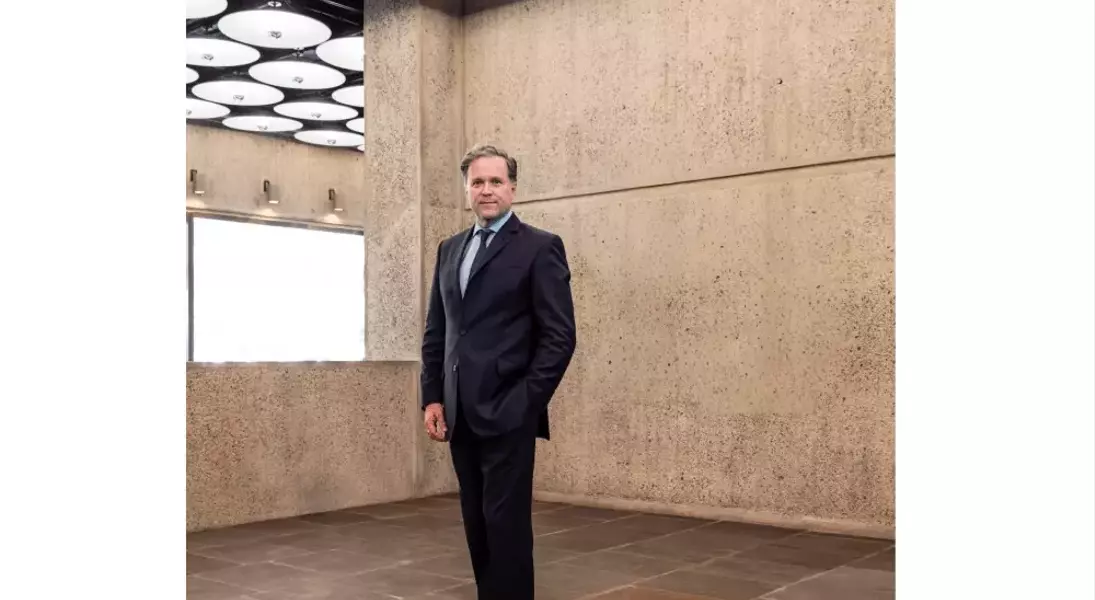
The art market is experiencing a significant shift, with supply now meeting strong demand, as highlighted by Sotheby's CEO Charles Stewart. This rebalancing is evident in the ambitious targets set for upcoming fall auctions, which are poised to reach unprecedented sales figures. This period represents a crucial test for the market's resilience and signals a potential recovery after a downturn, driven by renewed confidence from both sellers and collectors.
A critical examination of the art market reveals a dichotomy between its upper and lower echelons. While high-value sales have faced challenges, the broader market, particularly at its more accessible price points, demonstrates considerable growth. This suggests that the future trajectory of the art market may be defined by a broader base of collectors rather than solely by high-net-worth individuals, indicating an evolving landscape for art transactions and acquisitions.
Art Market Dynamics and Auction Outlook
Sotheby's chief executive, Charles Stewart, has observed a pivotal moment in the art market, noting that the availability of art is finally catching up with the heightened demand. This adjustment follows a period of intense bidding activity and sets the stage for a potentially transformative season for the major auction houses in New York. With sales projected to surpass $1.4 billion, a substantial increase from the previous year, the art world is anticipating a significant turning point after three consecutive years of market contraction. The upcoming November auctions will be a litmus test for the enduring confidence of consignors and buyers, determining whether the current momentum can sustain a broader market recovery.
The fall auction calendar is packed with high-profile collections that underscore this optimistic outlook. A prime example is the estate of Leonard Lauder, which alone features 55 works at Sotheby's valued at over $400 million. This collection includes Gustav Klimt's 'Portrait of Elisabeth Lederer,' estimated at more than $150 million, alongside two other Klimt landscapes each valued above $70 million and $80 million, respectively. Additionally, Sotheby's will present a selection of six bronze Matisse sculptures and Edvard Munch's 'Midsummer Night.' Christie's also boasts an impressive lineup, with highlights such as a Monet 'Nymphéas' and David Hockney's 'Christopher Isherwood and Don Bachardy,' each expected to fetch between $40 million and $60 million, in addition to a Mark Rothko piece projected to exceed $50 million. These offerings, combined with favorable macroeconomic conditions like lower interest rates and a robust stock market, have re-energized sellers, contributing to the observed equilibrium between supply and demand.
Market Segmentation and Future Growth Paths
While the overall art market shows signs of revitalization, a closer look reveals a divergence in performance between its high-end and lower-tier segments. Despite the ambitious targets for upcoming auctions, sales of artworks priced above $10 million experienced a 44 percent decline in the first half of 2025 compared to the previous year, and remain significantly below their 2022 peak. In fact, no single lot exceeded $50 million in the first half of the year, a stark contrast to the 13 sales that reached this level in 2022. This indicates persistent pressure at the very top of the market, where ultra-high-value transactions are still grappling with a cautious environment, challenging the perception of a uniform recovery across all price points.
Conversely, the more accessible segments of the art market continue to demonstrate robust growth. Dealers with annual turnovers below $250,000 reported a notable 17 percent increase in sales last year, showcasing the vitality and expansion of the lower tiers. In contrast, dealers exceeding $10 million in turnover saw a 9 percent decrease, further highlighting this disparity. This trend suggests that the future growth of the art market might not mirror past cycles, which were often dominated by a few trophy-hunting megacollectors. Instead, the current landscape points towards a burgeoning cohort of new collectors and an evolving demand structure that could reshape the market from the ground up. The upcoming auctions will be pivotal in confirming whether this is a genuine rebound or a temporary adjustment, and in clarifying the long-term direction of art acquisition and investment.