
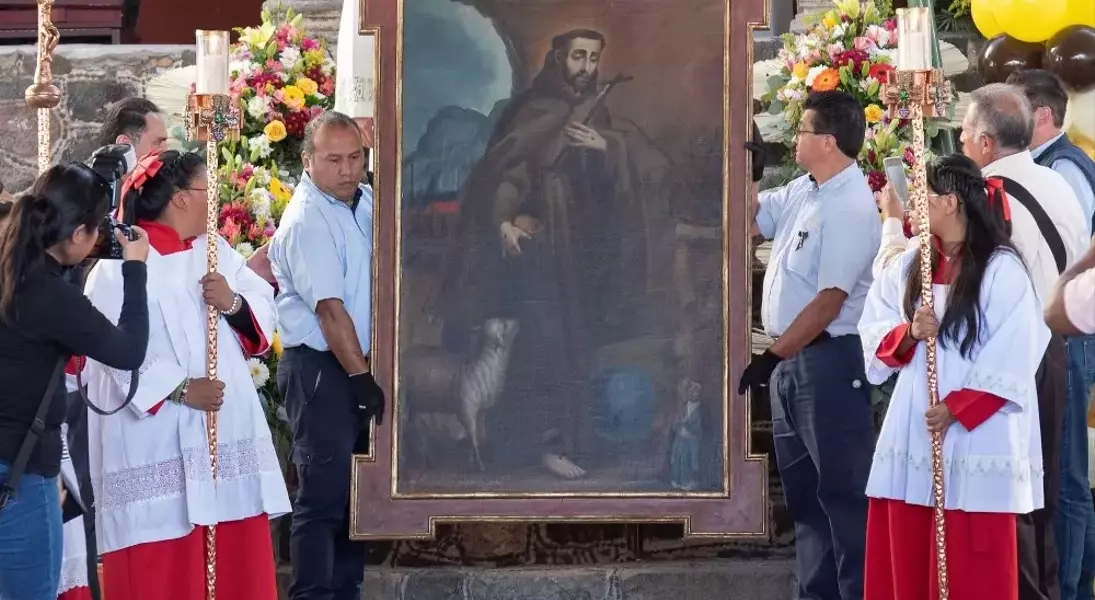
A significant 18th-century painting depicting Saint Francis of Assisi, which was stolen from a Mexican church nearly a quarter-century ago, has been successfully returned to its rightful home. This recovery not only marks a momentous occasion for the local community's faith and history but also serves as a poignant reminder of the persistent global challenge of art theft. The incident underscores the crucial role played by art loss registers and diligent auction houses in combating the illicit trade of cultural heritage, offering a beacon of hope for other stolen artworks worldwide.
The return of this valuable piece to the Church of San Francisco de Asis in Teotihuacán, Mexico, following its disappearance in a 2001 heist, highlights the long and arduous journey often involved in reclaiming stolen cultural artifacts. The painting, an important symbol for the community, was discovered through standard art market procedures, demonstrating the effectiveness of international cooperation and robust vetting processes in bringing such treasures back to public view and appreciation. This event is a testament to the enduring power of art and its profound connection to community identity and shared heritage.
A Long-Awaited Homecoming for St. Francis of Assisi
In a story spanning over two decades, an 18th-century artwork portraying Saint Francis of Assisi has been successfully repatriated to a Mexican religious institution, nearly 24 years after its theft. The painting, a significant piece for the Church of San Francisco de Asis in Teotihuacán, disappeared during a nocturnal raid on January 6, 2001. This incident saw thieves abscond with 18 valuable art pieces, including the prominent six-foot-tall depiction of the church's namesake, which had adorned its walls for two centuries. The recovery of this particular piece, while seven 17th-century miniature paintings from the altar remain missing, underscores a challenging period for the church and the ongoing pursuit of justice for stolen cultural heritage.
The theft, promptly reported to Interpol and subsequently listed with the Art Loss Register—a comprehensive database cataloging missing artworks globally—initiated a prolonged search. The painting resurfaced when it was consigned to Morton Subastas, a Mexico City auction house. As part of their standard due diligence, the auction house submitted its catalog to the Art Loss Register in 2018, leading to the identification of the stolen piece. Valued at approximately 280,000 Mexican pesos (around $15,000 USD), the artwork's consignor had acquired it from a Mexican dealer who cited a dubious Texas provenance. This complex journey from theft to recovery highlights the intricate and often clandestine nature of art trafficking, emphasizing the critical need for international collaboration and rigorous authentication processes in the art market. The return of the painting symbolizes a victory for cultural preservation and the collective efforts to safeguard historical artifacts from illicit trade.
The Broader Implications of Art Recovery and Diligence
The successful return of the Saint Francis of Assisi painting to its Mexican church home is not merely an isolated incident but rather a significant case study illuminating the broader challenges and triumphs within the realm of art recovery. This event serves as a powerful testament to the unwavering determination of communities and the effectiveness of specialized organizations like the Art Loss Register. In an era marked by increasing art thefts from public institutions and places of worship worldwide, this particular recovery instills hope among victims and underscores the profound cultural and historical value inherent in these irreplaceable artifacts. It reinforces the idea that even after decades, stolen heritage can indeed find its way back to its rightful custodians.
The diligence exhibited by Morton Subastas, the auction house, played a pivotal role in this success story. Their adherence to stringent due diligence standards, including cross-referencing their catalog with the Art Loss Register, was instrumental in identifying the stolen painting. This proactive approach, coupled with their generosity in facilitating its return, sets a commendable precedent for the art market. The incident also brings to light the sophisticated nature of art theft rings, as the Teotihuacán church robbery was part of a larger pattern of coordinated thefts in the region. The cultural significance of such recoveries extends beyond monetary value, deeply impacting the faith and historical identity of affected communities. As Padre Teodoro García Romero of the San Francisco de Asis church articulated, the painting's return is a moment of immense excitement and faith, signifying a historic occasion for the community and reaffirming the collective commitment to preserving shared cultural narratives against the backdrop of illicit activities.