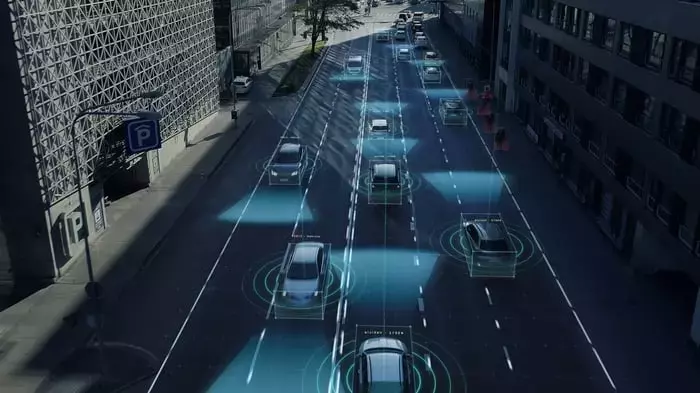
Tesla's strategy for achieving full autonomy centers on a camera-based system powered by artificial intelligence, a distinctive choice in an industry often favoring LIDAR technology. This approach, championed by CEO Elon Musk, aims to mimic human visual perception and neural processing. While this vision promises streamlined hardware and cost efficiencies, current automotive market conditions show pressures on Tesla's core vehicle business. The long-term financial outlook for the company, particularly its ambitious Robotaxi service, is heavily reliant on the successful commercialization and regulatory acceptance of this AI-driven autonomous platform, shifting the investment focus from mere car sales to the profitability of its software and network services.
Report on Tesla's Autonomous Driving Strategy and Financial Performance
In recent weeks, investor confidence in Tesla (NASDAQ: TSLA) has surged, driven by renewed focus on the company's artificial intelligence (AI) ambitions, particularly its plans for an autonomous ride-hailing network dubbed Robotaxi. This system is designed to operate exclusively using the vision-based technology already integrated into its vehicles.
A central point of discussion and, for some investors, concern, revolves around Tesla's decision to forgo Light Detection and Ranging (LIDAR) sensors. LIDAR uses lasers to create detailed 3D maps, a technology widely adopted by many other autonomous driving developers. However, Tesla CEO Elon Musk has consistently articulated a clear rationale for this exclusion, emphasizing that human drivers rely solely on their eyes and neural networks, not laser-emitting devices. He posits that cameras coupled with digital neural networks are the digital equivalent of human sight and cognition, arguing that the existing road infrastructure is fundamentally designed for such passive optical systems.
This steadfast commitment to a vision-only approach, articulated during Tesla's fourth-quarter 2024 and first-quarter 2025 earnings calls, aims to simplify hardware, reduce manufacturing costs, and leverage the vast amount of real-world video data collected from its existing fleet to continuously refine its AI models. If successful, this strategy could enable Tesla to layer high-margin software revenues—from Full Self-Driving subscriptions and ride-hailing fees—onto its extensive vehicle base, fundamentally altering its earnings profile from a traditional automaker to a software and network service provider.
Despite the optimism surrounding its AI endeavors, Tesla's core automotive business has faced challenges. In the second quarter of 2025, operating income declined by 42% year-over-year to approximately $0.9 billion, resulting in a 4.1% operating margin. This contraction was attributed to pricing pressures and shifting product mix. The company produced over 410,000 vehicles and delivered more than 384,000 during this period. A notable positive was the energy storage segment, which deployed 9.6 gigawatt-hours, demonstrating promising growth in this nascent area. The first quarter presented a similar scenario, with a year-over-year decrease in revenue, compelling management to emphasize cost control and software advancements as critical mitigators. Shares, having rebounded from summer lows to around $395, currently value Tesla's market capitalization at approximately $1.3 trillion, indicating significant investor confidence in the future potential of its autonomy and AI initiatives.
However, the vision-only system faces rigorous validation, particularly in complex scenarios such as adverse weather, unusual road configurations, and unpredictable human behavior, where LIDAR's redundancy might offer advantages to competing systems. Regulatory approvals for fully autonomous vehicles remain uncertain, and any limitations on driver monitoring or operating domains could impede the Robotaxi's deployment. The company's recent financial results underscore that despite its focus on software, automotive margin pressures can persist if competitive pricing continues and software adoption rates, such as for paid Full Self-Driving features, fall short of expectations.
For investors, the crucial question is whether Tesla can achieve safe and scalable autonomy—with appropriate regulatory oversight—using only cameras and neural networks, and subsequently monetize this technology effectively across a massive installed base. If this ambitious goal is realized, Tesla's long-term earnings potential could resemble that of a software and network enterprise layered over a manufacturing base. Conversely, if these autonomous capabilities do not fully materialize or gain widespread acceptance, the company's current valuation, which already incorporates substantial optimism, might prove challenging to sustain solely on vehicle sales.
Therefore, understanding Musk's analogy is key to comprehending the fundamental bet Tesla bulls are making. The company is pursuing a capital-efficient path to autonomy, aligning with how humans intrinsically drive. This approach could lead to quicker deployment and superior unit economics if the vision-only system surpasses the safety and performance benchmarks demanded by regulators and consumers. Yet, it simultaneously elevates the importance of rapid software advancements and robust real-world validation data in the forthcoming quarters.
Insights on Tesla's Vision-First Approach to Autonomy
Tesla's unwavering commitment to a vision-only autonomous driving system, eschewing LIDAR in favor of cameras and AI, presents a compelling yet audacious strategy. From a journalistic perspective, this approach highlights a fascinating divergence in technological philosophy within the self-driving industry. While many competitors opt for a multi-sensor fusion strategy (including LIDAR, radar, and cameras) for redundancy and robustness, Tesla's bet on pure vision is a testament to its belief in the power of artificial intelligence to replicate and even surpass human visual perception. This creates a high-stakes scenario: if successful, Tesla could revolutionize autonomous driving with a more cost-effective and scalable solution; if not, the implications for its long-term valuation and market position could be significant. It also raises profound questions about how AI learns from real-world data and its capacity to handle edge cases without the benefit of other sensor inputs. For the public, the development offers a glimpse into a future where technology is designed to mimic biological functions, challenging conventional engineering wisdom and pushing the boundaries of what is possible in artificial intelligence.
