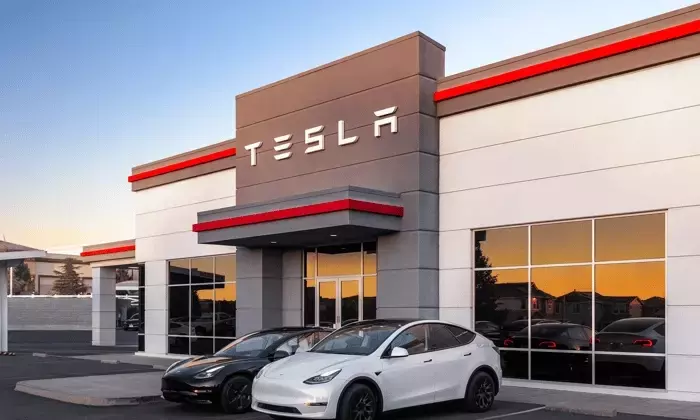
Tesla is at a pivotal juncture, grappling with a contracting electric vehicle market while simultaneously venturing into the ambitious realm of autonomous technology. Ark Investment Management foresees a monumental shift, predicting that the majority of Tesla's future profits will be generated from self-driving robotaxis. This vision, while potentially lucrative, faces significant hurdles, including regulatory challenges and intense competition, raising questions about the company's ability to meet such aggressive timelines and justify its current market valuation.
Tesla Navigates Evolving Landscape: From EV Dominance to Autonomous Ambitions
In a detailed analysis published on September 14, 2025, investment firm Ark Investment Management articulated a transformative outlook for Tesla, led by CEO Elon Musk. While Tesla has historically dominated the electric vehicle (EV) sector, generating the bulk of its income from passenger car sales, this core business is now experiencing a downturn. Recent figures for 2024 showed a 1% dip in EV deliveries, marking the first annual decline since the Model S launched in 2011. The first half of 2025 has seen an even steeper 13% drop in deliveries, leading to a 14% decrease in revenue and a 31% fall in earnings per share.
This contraction is largely attributed to escalating global competition, particularly from low-cost manufacturers like China's BYD. In July, Tesla's sales in Europe plummeted by 40%, even as overall EV registrations in the region surged by 33%. In stark contrast, BYD's sales in Europe skyrocketed by 225% during the same period, indicating a rapid erosion of Tesla's market share in its traditional segment.
Amidst these challenges, Ark Invest projects a dramatic reorientation for Tesla. The firm predicts that by 2029, a staggering 86% of Tesla's earnings will originate from its nascent self-driving robotaxi division, potentially boosting the stock price to $2,600 – a remarkable 615% increase from its present trading value. This ambitious forecast hinges on the successful deployment of Tesla's FSD (Full Self-Driving) software in a network of Cybercabs, slated for mass production in 2026. These autonomous vehicles are designed to operate without human intervention, creating a novel revenue stream from ride-hailing and commercial transport.
However, the path to this future is fraught with obstacles. A primary concern is the lack of regulatory approval for unsupervised use of Tesla's FSD software in the U.S. Furthermore, Tesla will need to contend with established ride-hailing behemoths like Uber Technologies, which already boasts 180 million monthly users and has forged partnerships with numerous autonomous driving companies. While Ark's model anticipates Tesla's annual revenue reaching $1.2 trillion by 2029, with $756 billion from robotaxis alone, and $440 million in EBITDA, 86% of which would be attributed to the highly profitable robotaxi segment due to the elimination of human driver costs, the sheer scale of growth required to meet these targets is immense.
A Realistic Look at Tesla's Autonomous Future
While Ark Invest's vision for Tesla's future driven by robotaxis is undeniably bold, it prompts a critical examination of feasibility and current market realities. The projected revenue growth of nearly 1,200% over four years, fueled by a product that has yet to secure full regulatory approval and widespread deployment, appears exceedingly optimistic. Tesla's current valuation, with a price-to-earnings (P/E) ratio of 209, significantly higher than the Nasdaq-100's 31.6, is already steep, especially given the ongoing decline in its core EV earnings. This high valuation, coupled with the persistent delays in realizing Elon Musk's long-standing promises of unsupervised self-driving capabilities, suggests that investors should approach such aggressive growth forecasts with caution. The journey from EV manufacturer to dominant autonomous ride-hailing provider is complex, requiring not just technological prowess but also successful navigation of regulatory landscapes and competitive markets, making a rapid, exponential surge in stock value less certain.
