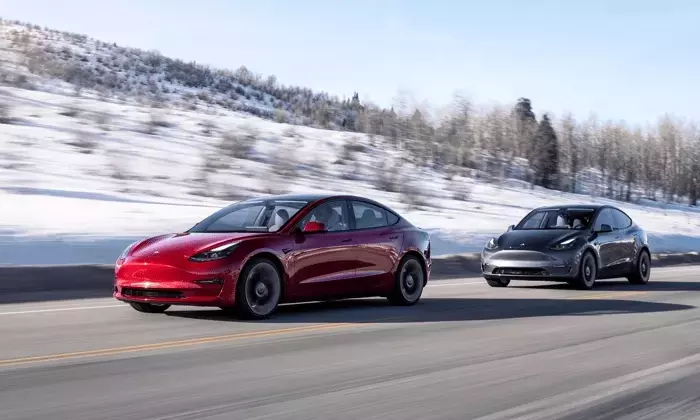

While some analysts predict a challenging fourth quarter for Tesla, largely due to the expiration of federal tax credits impacting electric vehicle purchases, the company is strategically positioned for future expansion. The introduction of a more affordable Model Y, coupled with advancements in its Full Self-Driving (FSD) technology, offers promising avenues for revenue growth and market leadership in the coming years. Investors are encouraged to look beyond short-term fluctuations and consider the long-term potential of these key initiatives.
Upcoming Q4 Performance and Strategic Sales Initiatives
Tesla's fourth-quarter sales volumes are expected to experience a decline compared to the third quarter, a direct consequence of federal tax credit expirations that likely pulled forward many vehicle purchases. However, this anticipated dip may not be as severe as some market observers fear, given Tesla's significant international sales presence, which mitigates the impact of U.S. policy changes. Furthermore, the company's proactive launch of a new, lower-cost Model Y is a critical strategic move designed to stimulate demand and broaden market access, potentially offsetting some of the sales headwinds.
In light of the expiring tax incentives and a broader trend towards higher EV pricing amid elevated interest rates, Tesla's focus on a more budget-friendly Model Y is timely and essential. This new model, which began production in the first half of the year with a planned ramp-up for a Q4 launch, directly addresses the need for more accessible electric vehicles. By lowering the initial purchase price, Tesla aims to enhance the overall value proposition for consumers, making EVs more attractive over their lifespan due to inherent savings on fuel and maintenance. This strategy could also make Tesla vehicles eligible for various global incentives, such as the U.K.'s electric car grant, further boosting its competitive edge and driving sales growth in diverse markets.
Advancing Autonomous Driving and the Robotaxi Revolution
Tesla's continuous innovation in full self-driving (FSD) software, evidenced by the recent release of version 14, is a cornerstone of its long-term investment appeal. This technology is crucial for the eventual deployment of robotaxis and fully unsupervised FSD capabilities, which are anticipated to unlock substantial revenue streams and transform urban mobility. The company's unparalleled volume of real-world driving data, significantly surpassing competitors like Waymo, provides a distinct advantage in refining its neural networks and addressing complex driving scenarios, known as 'edge cases,' essential for achieving true autonomy.
The potential for a dramatic increase in future revenue and earnings hinges on the successful commercialization of unsupervised robotaxis, either through Tesla's dedicated Cybercab initiative, projected for mass production by 2026, or by enabling existing Tesla vehicles with advanced FSD. To realize these ambitious goals, Tesla must consistently enhance its FSD offering, relying on its vast data collection to improve system reliability and safety. The continuous influx of data, particularly from newer hardware 4 vehicles that boast enhanced processing power, camera resolution, and field of view, reinforces Tesla's leadership in autonomous driving development. This technological superiority positions Tesla to capitalize on the transformative potential of self-driving technology, promising a future where autonomous vehicles generate significant ride-sharing revenue.
