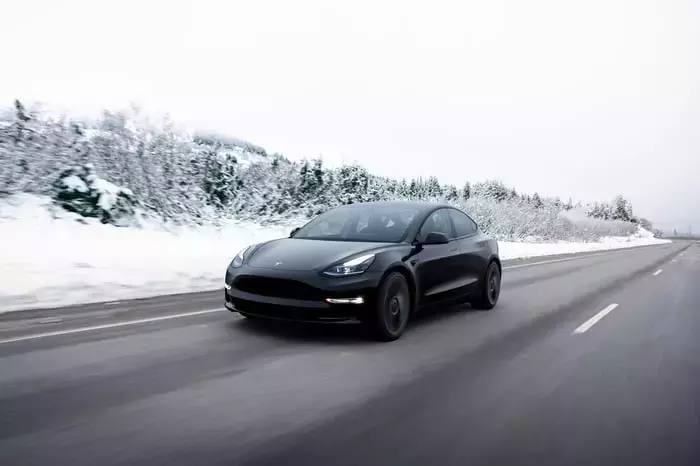

This analysis delves into why Tesla currently stands as the most favored stock among retail investors using the Robinhood platform, examining its potential for market growth alongside the substantial risks that could impact its future performance. The article highlights how Tesla has overtaken previously dominant companies like Apple and Nvidia in investor popularity, primarily due to its visionary expansion into various sectors such as electric vehicles, self-driving technology, and robotics. However, it also critically evaluates the challenges the company faces, including increasing competitive pressure, fluctuating profit margins, and concerns surrounding the execution of its ambitious projects, offering a comprehensive perspective on Tesla's investment landscape.
Tesla Dominates Robinhood's Retail Investor Holdings Amidst Ambitious Vision and Mounting Challenges
In a compelling shift in the landscape of retail investing, Tesla (NASDAQ: TSLA) has ascended to the top position as the most-held stock on the popular trading platform, Robinhood. This achievement marks a significant milestone, as Tesla has managed to outpace technology stalwarts like Apple (NASDAQ: AAPL) and Nvidia (NASDAQ: NVDA), which previously held this coveted spot among individual investors. The rise of online trading platforms has democratized access to financial markets, empowering a new generation of retail investors to actively participate in stock trading.
The internet's advent fundamentally altered the investment world, dismantling information barriers and paving the way for the retail investor revolution. Unlike the past, where market information was a privilege, today's investors have instant access to a wealth of data, from financial statements to real-time market news. This accessibility, combined with commission-free trading offered by platforms like Robinhood, has fostered a vibrant community of growth-oriented investors, often drawn to innovative, industry-leading companies.
Tesla's appeal to this demographic is multifaceted. Beyond its status as a leading manufacturer of electric vehicles (EVs) in North America, the company, under the visionary leadership of CEO Elon Musk, is actively diversifying its portfolio. Tesla's ventures into energy generation and storage, self-driving robotaxis, and the development of humanoid robots (Optimus) project a future of expansive addressable markets. Notably, a May research note from Morgan Stanley suggested that the humanoid robot market alone could exceed $5 trillion globally by 2050, potentially dwarfing the automotive sector.
However, this ambitious vision is not without its considerable risks. Tesla's competitive edge in the EV market, once unassailable, shows signs of erosion. The company has implemented multiple price reductions for its EV fleet over the past three years, signaling intensified competition and a potential squeeze on its vehicle margins. Furthermore, a closer examination of Tesla's profitability reveals a reliance on automotive regulatory credits and interest income from cash reserves, sources that are neither sustainable nor indicative of core innovation. The recent move by President Donald Trump to eliminate domestic automotive regulatory credits further underscores the fragility of these income streams.
Perhaps the most significant risk, as highlighted by some analysts, lies with Elon Musk himself. While Musk's leadership has undeniably propelled Tesla to unprecedented heights, his track record includes numerous unfulfilled promises. Claims of achieving 'Level 5' full self-driving (FSD) capabilities within a year have persisted for over a decade, yet the technology remains at Level 2. Similarly, the highly anticipated Cybertruck's pre-sales failed to meet expectations, and the limited geofenced launch of robotaxis in Austin, Texas, suggests a slow rollout. Critics argue that if investors were to adopt a 'show-me' approach and discount the value of Musk's future promises, Tesla's stock could face substantial corrections.
In conclusion, while Tesla undeniably possesses revolutionary potential and operates in markets with immense growth opportunities, its investment profile is characterized by significant volatility and inherent risks. Retail investors, while drawn to its innovative narrative, must weigh these potential pitfalls against the allure of future growth.
The Dual Nature of Disruption: Visionary Growth Versus Unforeseen Challenges
The journey of Tesla, a company that has captured the imagination and capital of countless retail investors, offers profound insights into the dynamics of modern financial markets. It underscores the dual nature of disruptive innovation: while it promises exponential growth and transformative change, it is also frequently accompanied by heightened risks and unpredictable challenges. For investors, the narrative of Tesla serves as a compelling case study on the importance of distinguishing between visionary aspiration and tangible execution. It highlights that even the most charismatic leaders and groundbreaking technologies must ultimately contend with market realities, competitive pressures, and the rigorous demands of sustained profitability. The enthusiasm of the retail investor community, while powerful, needs to be tempered with a thorough understanding of a company's financial fundamentals and operational hurdles. This situation encourages a deeper reflection on how technological breakthroughs, market sentiment, and leadership credibility collectively shape investment outcomes in an increasingly complex global economy.
